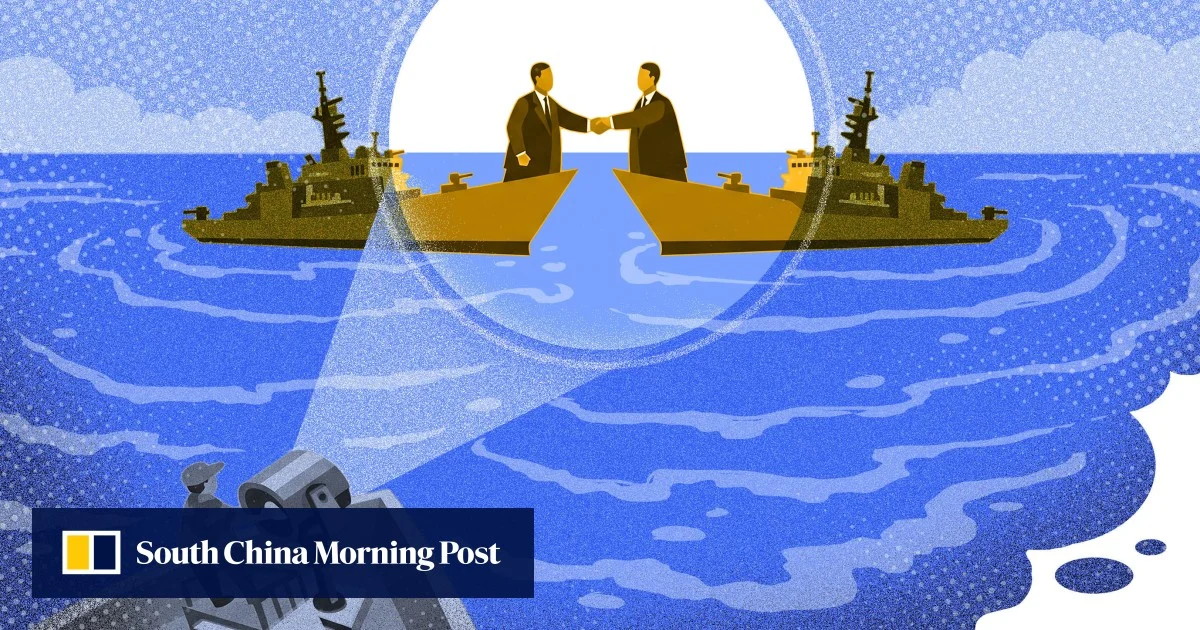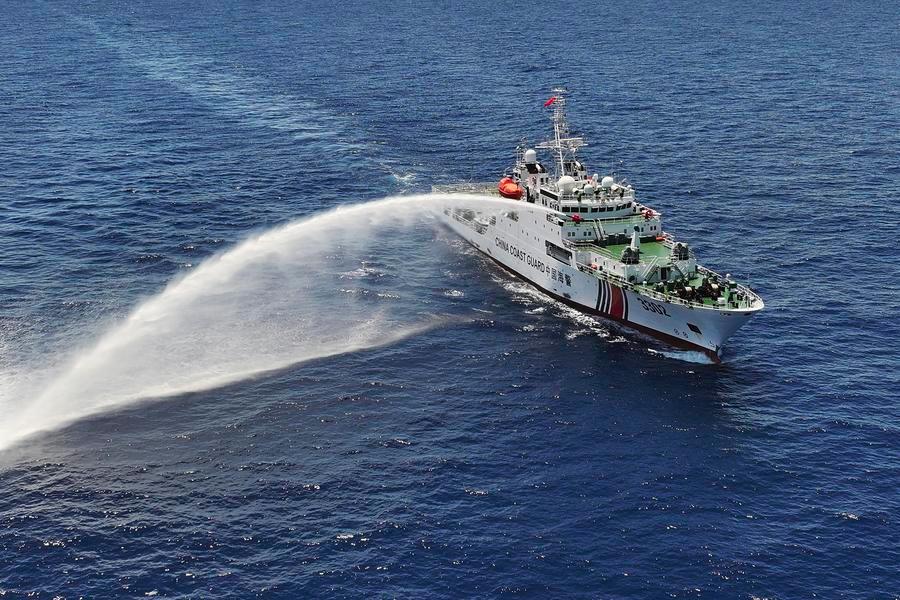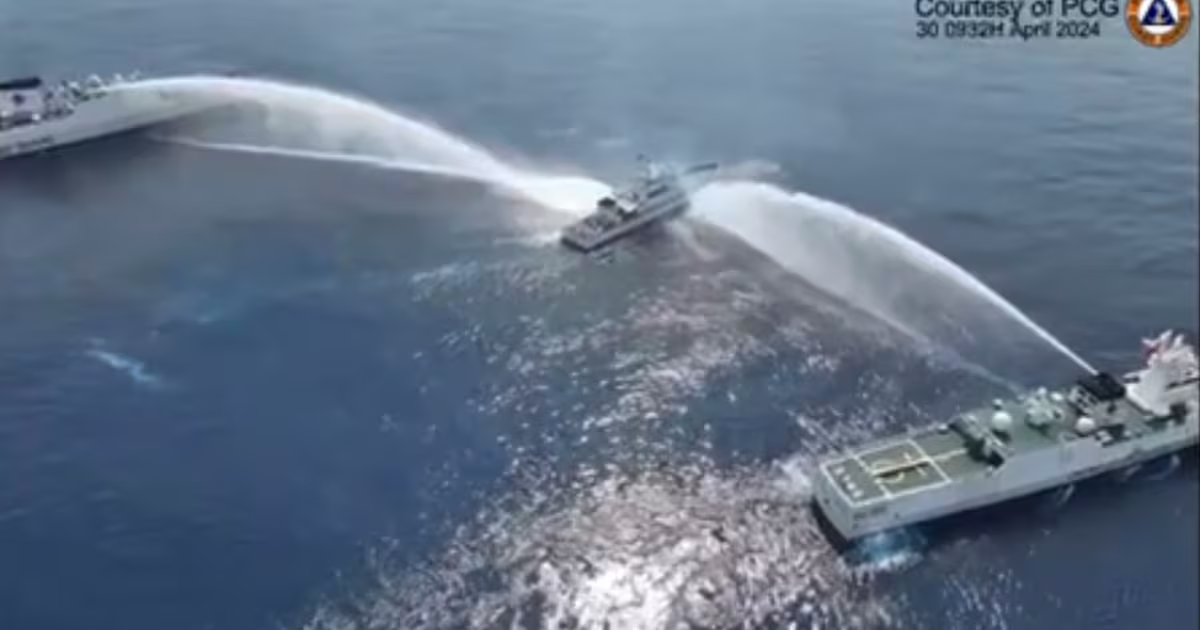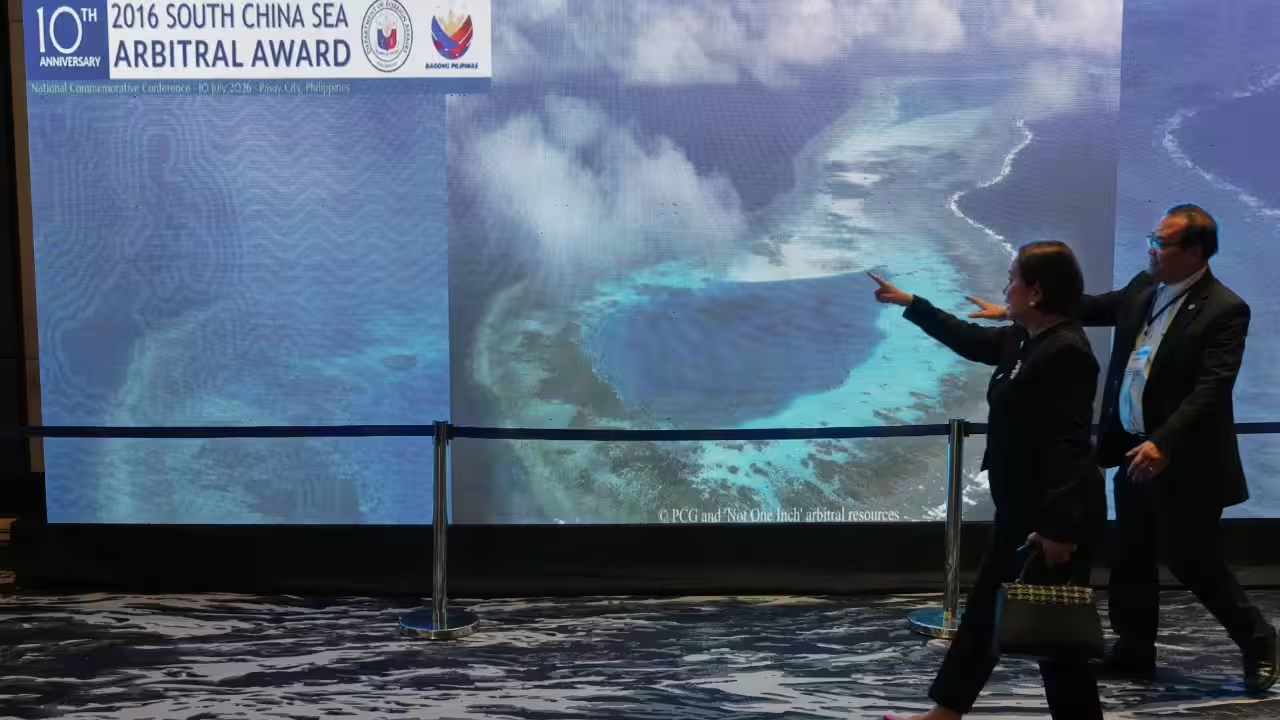
A decade after a South China Sea ruling, analysts said Beijing should continue engaging in good-faith diplomacy and explore international mediation, arguing that the unenforced ruling had failed to curb rising regional maritime tensions.The observations came after a weekend of fresh accusations over the 2016 decision by an international tribunal in The Hague ruling that most of China’s claims to historical and economic rights in the South China Sea were invalid. Beijing firmly rejected the decision.On the ruling’s 10-year anniversary, a coalition of 14 countries led by the United States and the Philippines in a joint statement called it “legally binding and definitive”, while criticising Beijing for refusing to recognise or implement it.In a strongly worded response on the same day, Beijing described US-led military deployments as the “primary threat” to regional peace in the South China Sea.US Secretary of Defence Pete Hegseth (right) confers with Philippine Defence Secretary Gilberto Teodoro Jnr during a meeting of the Association of Southeast Asian Nations (Asean) in Kuala Lumpur on November 1, 2025. Photo: EPAChina dismissed The Hague ruling as “null and void”, calling it a politically motivated process that lacked state consent. It has also refused to recognise the tribunal’s authority to hear the case and said it would not implement its findings.
Beijing’s plan to solve South China Sea disputes, 10 years after Hague ruling
China should keep engaging in good-faith diplomacy and use International Organization for Mediation to help ease tensions, analysts say.
211 words~1 min read