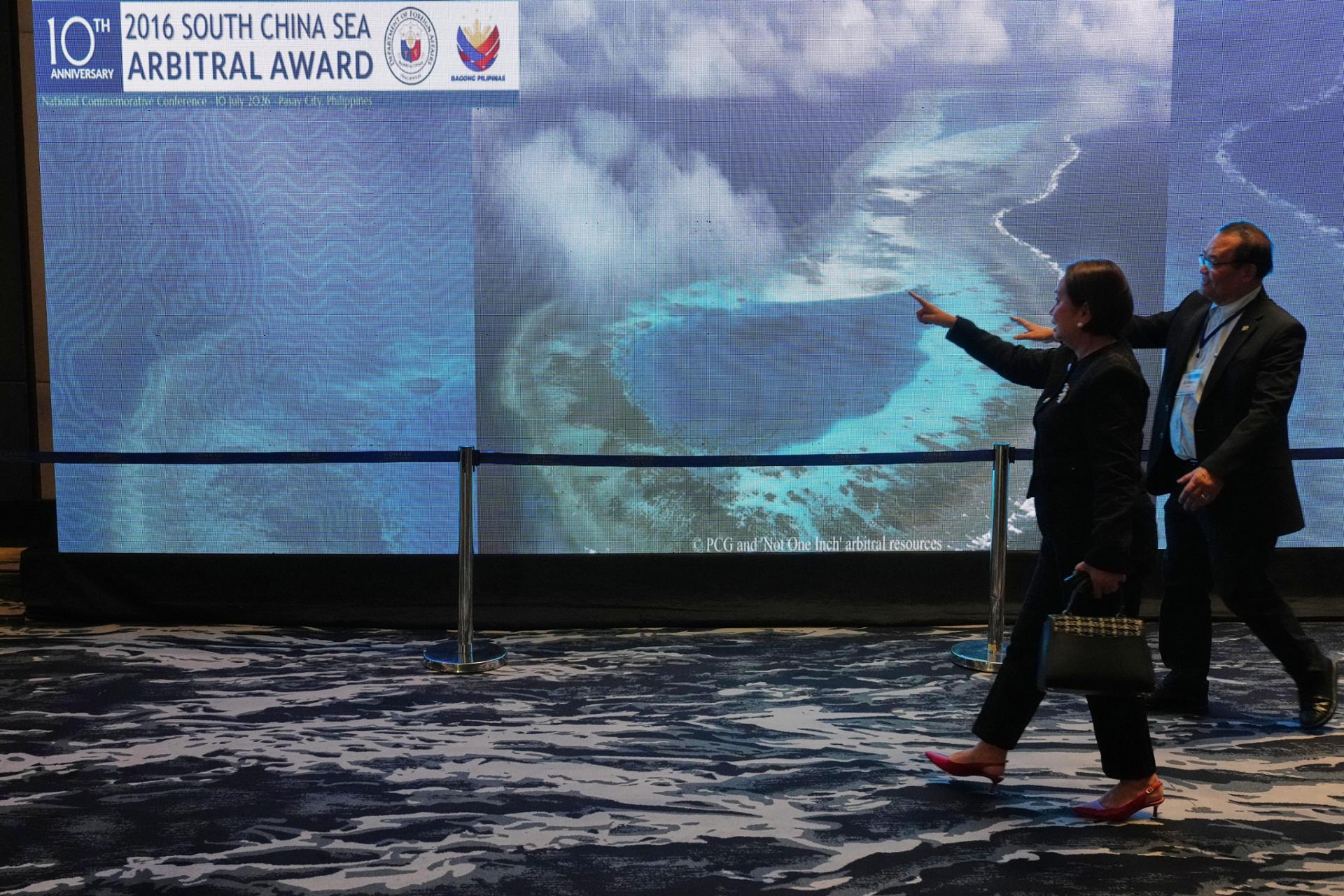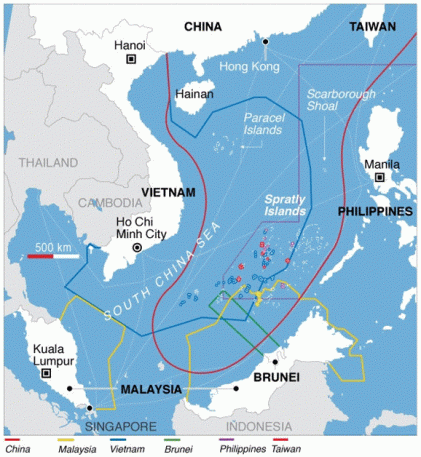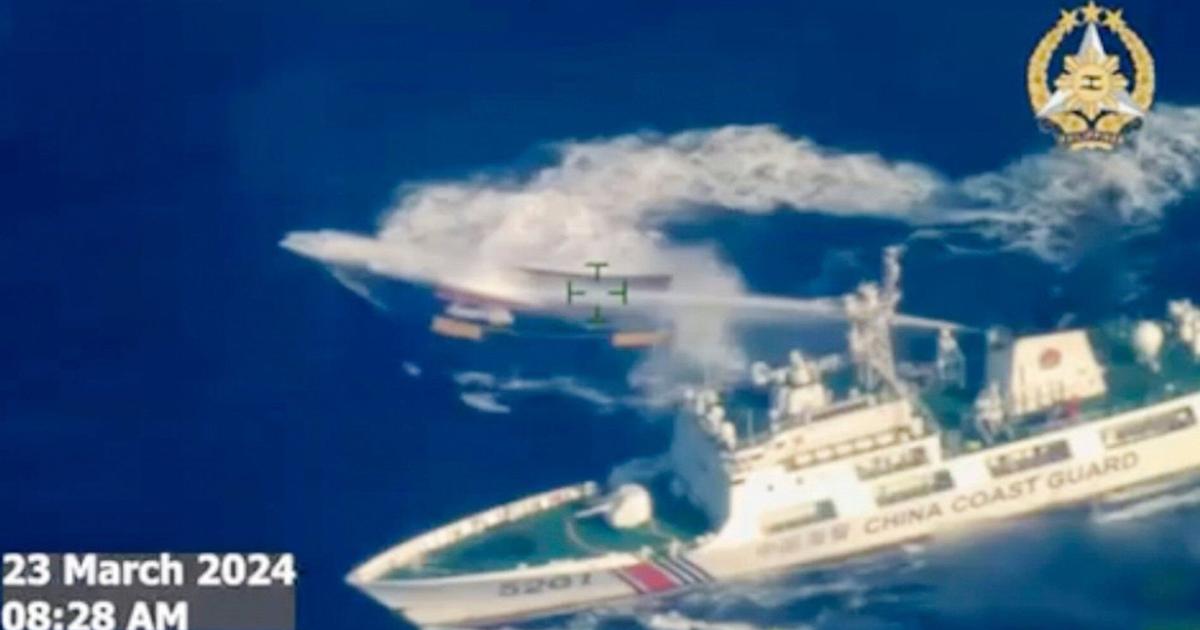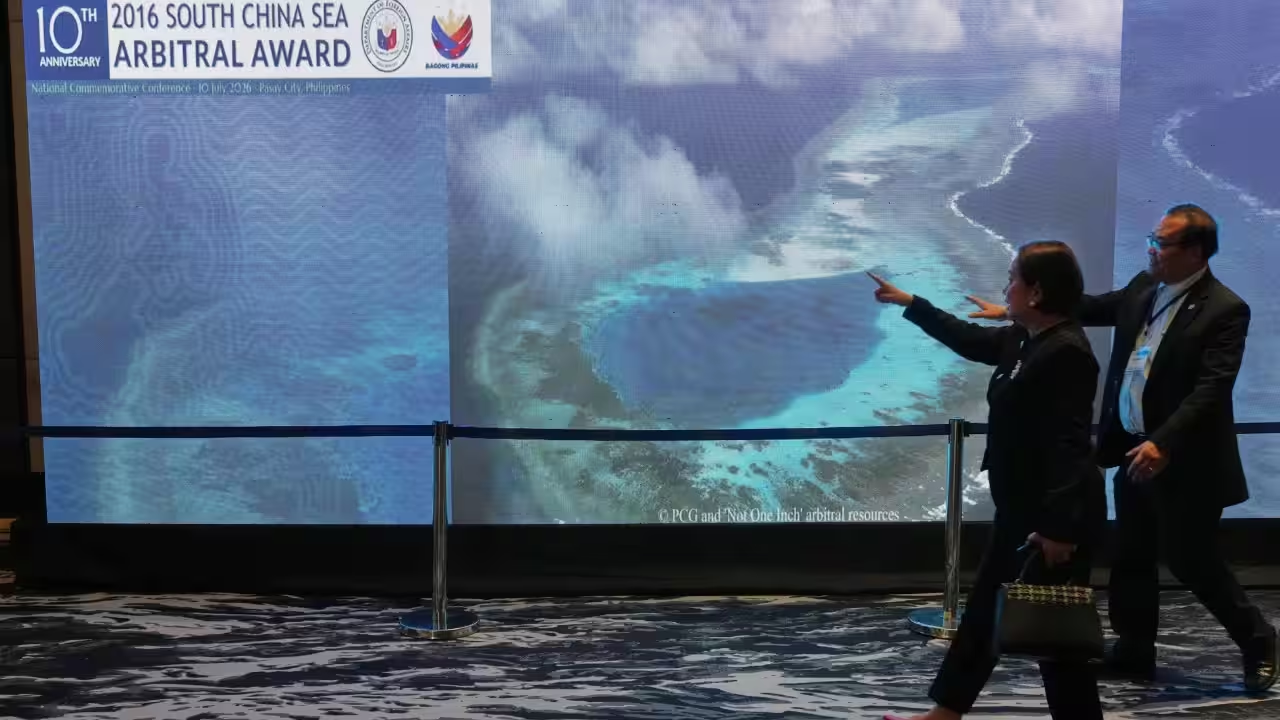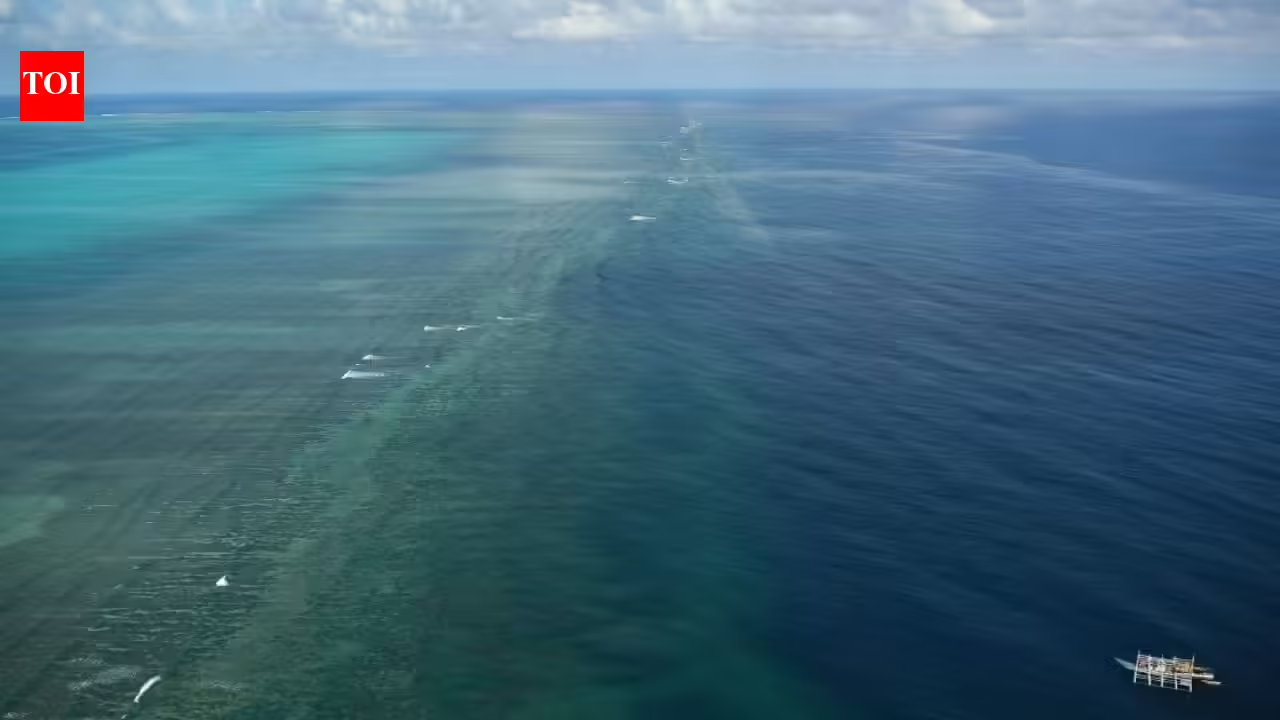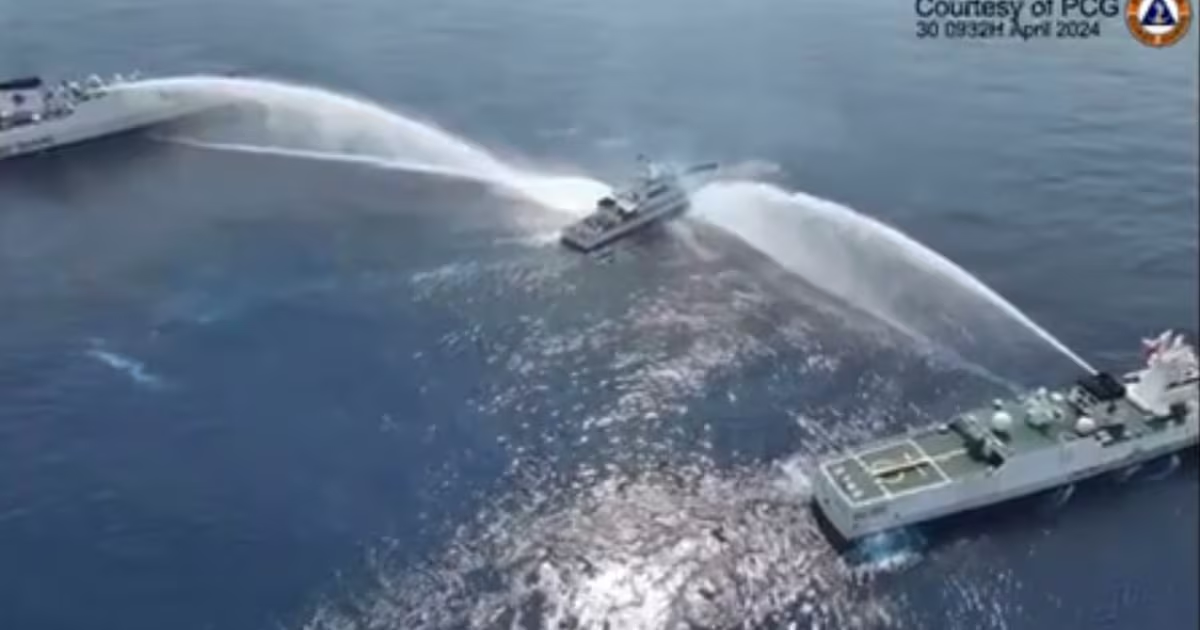
Ten years after an international arbitration panel rejected Chinese claims of jurisdiction over some islands in the South China Sea that are also claimed by the Philippines, Beijing continues to dismiss the ruling as null and void. But that may not be the end of the story.Storms over the South China SeaThe United States, Britain, Japan and about a dozen like-minded countries joined the Philippines on Sunday in demanding that China should respect and implement the ruling made by the Permanent Court of Arbitration in The Hague on July 12th, 2016. The ruling said that under the United Nations Convention on the Law of the Sea (UNCLOS) China’s claim to historic rights over certain maritime features had no legal basis and that none of the features it claimed in one part of the South China Sea qualified as islands.Under UNCLOS, islands can generate an 200-mile exclusive economic zone whereas maritime features such as rocks, reefs and shoals can only claim 12 miles of territorial waters. China claims jurisdiction over almost all of the waters in the South China Sea on the basis of a “nine-dash line” on the map asserted before the communist state was founded in 1949.“We reaffirm that the Award rendered ten years ago by the Arbitral Tribunal is a significant milestone and is final, legally binding, and definitive between China and the Philippines with respect to the maritime entitlements and claims addressed by the Arbitral Tribunal,” the US-led statement said.“We reiterate our strong opposition to any destabilizing or unilateral actions including by force or coercion that threaten peace and stability in the region. We reaffirm our strong opposition to the use of coast guard, military, and maritime militia forces to harass, obstruct, or intimidate lawful operations by other States at sea or in the air, and in so doing endanger the safety of personnel and fishermen and seriously degrade regional peace and security.”Chinese and Vietnamese coast guard vessels have clashed a number of times in recent years near the disputed Scarborough Shoal, with China sometimes using water cannon. Tensions between China and the Philippines have heightened in recent months after Manila, which has a long-standing mutual defence pact with the US, deepened its defence ties with Japan.Although China is, unlike the US, a party to UNCLOS it refused to take part in the arbitration tribunal in 2016 and has always dismissed its findings as biased and invalid.“Like a poisoned tree, the award was rotten at the root and can never bear good fruit. The so-called arbitration and its award were, at best, a cynical parody of justice. It distorted international law, abused legal procedures and betrayed their basic principles,” the official news agency Xinhua said in a commentary last week.Although a number of European countries joined the US and the Philippines in signing the anniversary statement and the European Union issued a similar communique of its own, Japan was the only other Asian country to join in. The Association of Southeast Asian Nations (ASEAN), which includes a number of countries that have with maritime disputes with China, stayed out of it.Vietnam and Malaysia, which also claim jurisdiction over disputed parts of the South China Sea, have seldom used the arbitration ruling in their diplomatic efforts to press their claims. They have focused instead on ASEAN’s attempt to agree with China a code of conduct for the South China Sea, a process that has been under way for a number of years.The Philippines, which is chairing ASEAN this year, wants the code of conduct to be a binding dispute-resolution mechanism whereas China insists it should be limited to crisis management, leaving disputes to be settled bilaterally. And Manila will seek to incorporate the 2016 ruling from The Hague into any new code of conduct, a move Beijing rejects.Another tough issue surrounds the role of third parties in the South China Sea and whether non-regional actors (like the US, Japan and the Europeans) should be allowed to conduct military exercises and engage in oil and gas exploration in the South China Sea. The code is unlikely to be agreed while the Philippines is in the ASEAN chair but there could be more progress when Singapore takes over next year. Please let me know what you think and send your comments, thoughts or suggestions for topics you would like to see covered to denis.globalbriefing@irishtimes.com
Storms over the South China Sea
Global Briefing: Beijing continues to dismiss a ruling made 10 years ago that dismissed its jurisdiction claims over some islands also claimed by Philippines
724 words~3 min read