READ MORE: 'Holy Grail' blood test could prevent one in five cancer deaths See more Daily Mail on Google - save us as a Preferred SourceBy CIARAN FOREMAN, HEALTH REPORTER Published: 10:06 BST, 14 July 2026 | Updated: 10:08 BST, 14 July 2026
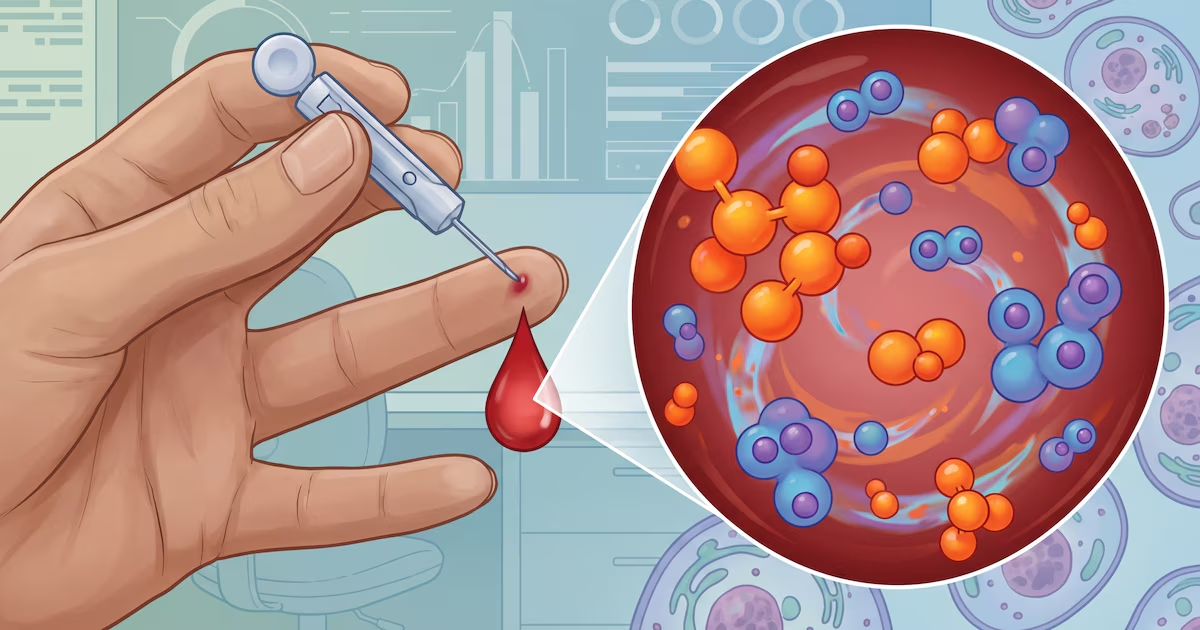
A simple finger-prick test could help identify people at risk of developing major diseases, research suggests.Scientists have found that the ratio of sugar and acids in the blood could uncover a person's likelihood of one day having cancer, heart disease, type 2 diabetes and obesity.It could also help identify risk factors associated with neurodegenerative disorders like Alzheimer's disease, Parkinson's disease, Huntington's disease and multiple sclerosis.These non-communicable diseases (NCDs) – long-term conditions that cannot be passed from person to person – are responsible for around three-quarters of deaths worldwide.By 2050, they are expected to surpass infectious diseases as the leading global health burden.However, researchers say the glucose ketone index (GKI), which requires only a finger-prick blood sample, could be a valuable tool. The method measures levels of glucose - blood sugar - and ketones, chemicals produced by the liver when the body burns fat for energy instead of glucose. It then combines the blood sugar and ketone readings into a single score, known as the GKI, which researchers say may give a better picture of a person's health than measuring blood sugar alone. A simple finger-prick test could help identify people at risk of developing major diseases, research suggestsAuthors of the study, published in Frontiers in Science, say the GKI could provide a simple way to assess a person's health.Lead author Prof Thomas Seyfried, from Boston College, said: 'Within the next few decades, NCDs could account for up to 75 per cent of all disability-adjusted life-years, contributing to a substantial decline in life expectancy. 'These conditions are not the result of genetic fate but are largely shaped by lifestyle factors. This GKI-based metabolic roadmap outlines a proposed clinical pathway that could support the prevention and management of cancer and chronic disease.' The researchers did not test the blood test itself. Instead, they reviewed previous studies and concluded that assessing blood sugar and ketone levels could provide a simple way to measure metabolic health and potentially identify people at greater risk of developing chronic diseases. The GKI was originally developed to help monitor whether cancer patients were sticking to a ketogenic diet. They say a lower GKI - meaning lower blood sugar and higher ketone levels - could indicate healthier metabolism, while a higher score may suggest poorer metabolic health.They believe the test could help doctors monitor how diet and exercise affect metabolism and inflammation. However, they stress that larger clinical studies are needed to show whether the test can accurately predict disease risk or improve treatment.Lead author Dr Derek Lee, of Boston College, said: 'If validated in larger studies, this could inform efforts to address the wide health burden of NCDs.'Co-author Dr Isabella Cooper from the University of Westminster, said: 'NCDs cause an unacceptably high, rapidly rising toll on global health across nearly all age groups.'Introducing quantitative GKI testing could provide a clear, cohesive readout that goes beyond weight loss, and one that supports and tracks sustained behaviour change to help assess disease risk and treatment response.'To move this forward we urgently need larger, standardized clinical studies to test how well GKI values can predict health outcomes across different diseases, and to define disease-specific target ranges.'