in History, Sci Fi | July 14th, 2026 Leave a Comment
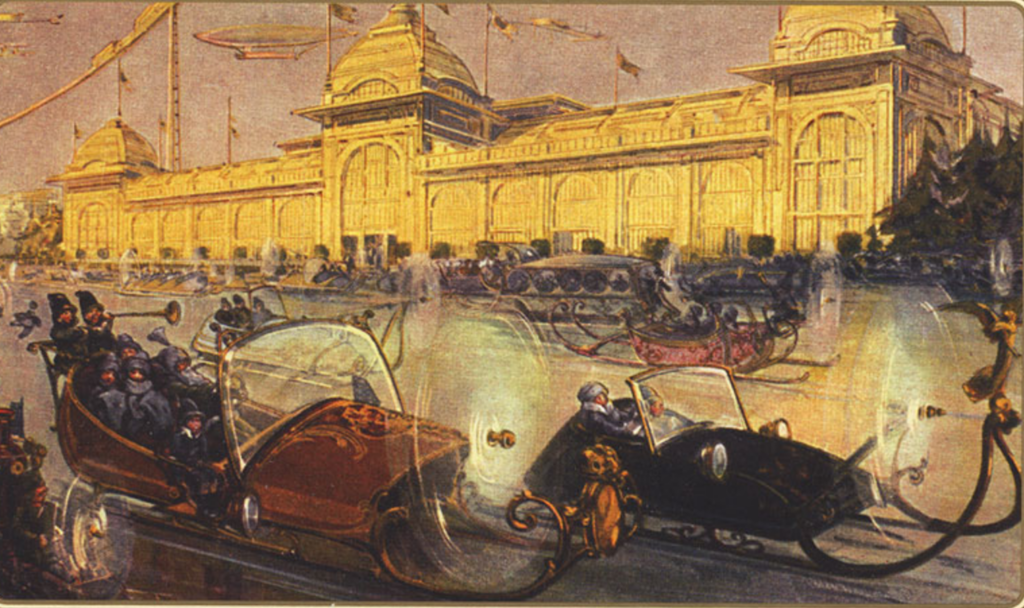
In the days of popular retrofuturism—say, the first half of the twentieth century—people tended to imagine the world of tomorrow looking very much like the world of today, only with a lot more flying cars, monorails, and videophones. This is true whether those doing the imagining were titans of industry, marketing mavens, idealistic Soviets, or subjects of the Tsar, though we might think that people living under an ancient monarchical system might not expect much change. In some ways we might be right, but as we can see in the 1914 postcards here—printed as Russia entered World War I—the country did anticipate a modern, technological future, though one that still closely resembled its present.
Perhaps few but the most far-sighted of Russians predicted what the ailing empire would endure in the years to come—the disaster of the Great War, and the waves of Revolution and Civil War. Certainly, whoever painted these images foresaw no such catastrophic upheaval.
Although purporting to show us a view of Moscow in the 23rd century, they show the city very happily “still under monarchical rule,” writes A Journey Through Russian Culture, going about its daily life just as it did over three hundred years earlier, “with the addition of everything from subways to airborne public transportation, things probably seen as standard methods of transport for the future.”