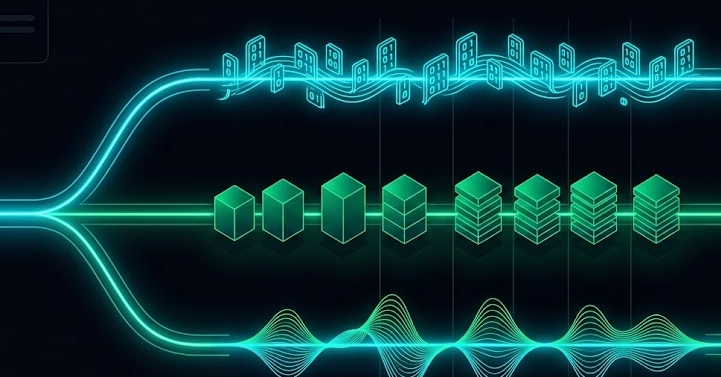
Imagine you are building the next generation of "always-on" smart assistants. Your app needs to listen for a specific wake word, suppress background noise in a crowded cafe, or provide real-time transcription—all while the user’s smartphone sits in their pocket.
If you attempt to run these heavy neural networks on a standard mobile CPU, you will run into a brutal reality: your user's battery will drain in hours, and the device will run hot enough to cause discomfort.
This is the fundamental challenge of Edge AI. To build performant, low-power audio intelligence, you cannot simply throw raw compute power at the problem. You have to understand the architectural niche of the Digital Signal Processor (DSP) and how to bridge the gap between low-level hardware and high-level Kotlin code.
The Hardware Paradox: Why the CPU Isn't Enough
In a modern Android System on Chip (SoC), developers are spoiled for choice. We have high-frequency CPU cores for logic, massively parallel GPUs for graphics, and dedicated NPUs (Neural Processing Units) for heavy-duty machine learning. So, why do we need a DSP?