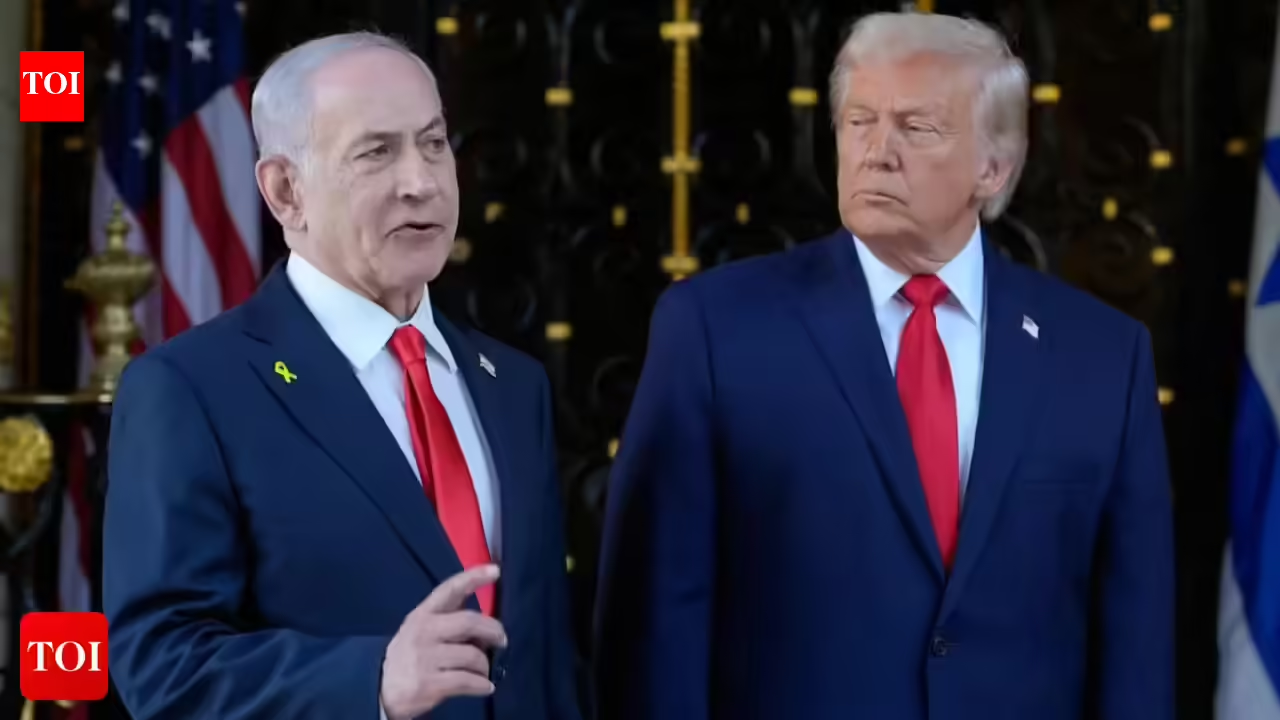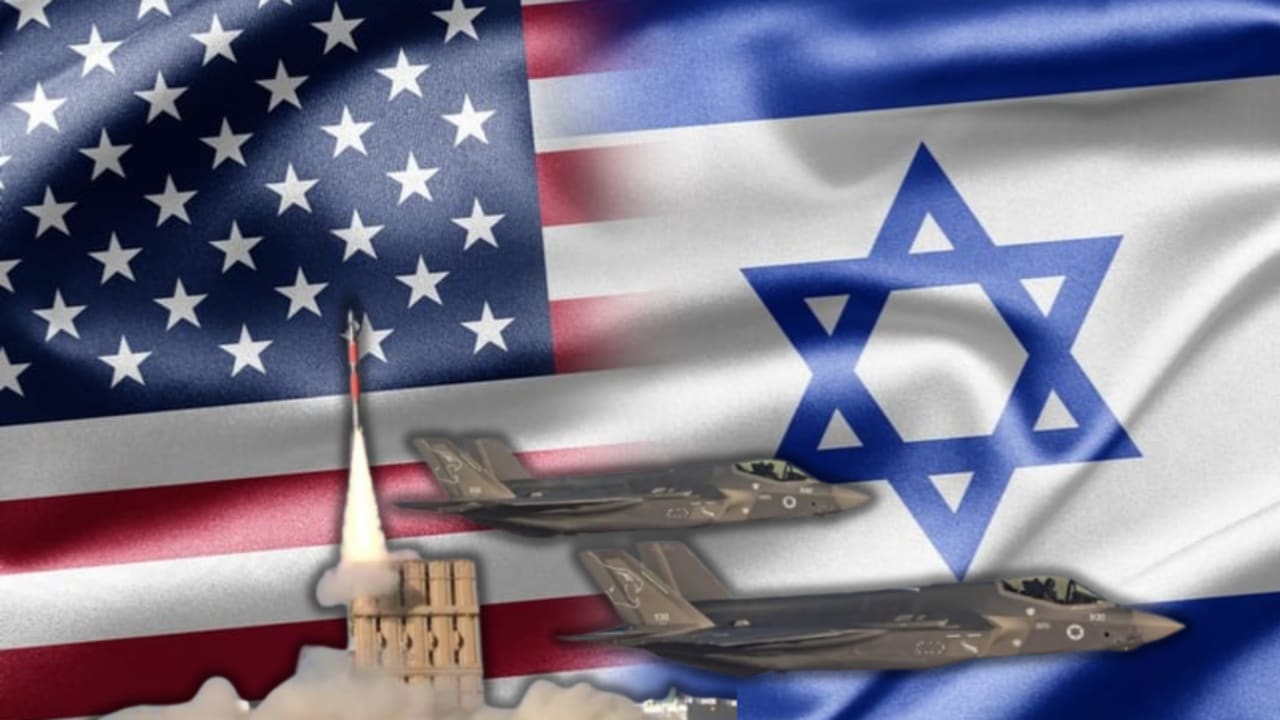
ByYONAH JEREMY BOBJULY 13, 2026 19:55Israel will try to speed up the talks with the Trump administration over the future Memorandum of Understanding (MoU), starting with an expected return visit to Washington this week, The Jerusalem Post has learned.Despite Israeli efforts to move the talks forward, the pace of negotiations has been so slow that it is unclear whether Israel will be able to secure approval of a renewed MoU before a new US Congress takes office in January, the Post understands.The MoU, for decades, usually runs on a 10-year cycle and is renewed and updated once a decade, and has been the main strategic document governing US military assistance and relations with Israel.If the MoU is not signed by January, and even this week's visit is not final, any new deal could face heightened opposition from a likely Democrat-controlled US House of Representatives and possibly even a Democrat-controlled US Senate.Given that on April 16, 40 out of 47 Democratic senators voted to block various weapons sales to Israel, such a change in control could significantly impact the MoU, even as the US executive branch can carry out certain foreign affairs decisions on its own.The US House of Representatives chamber is seen December 8, 2008 in Washington, DC; Illustrative. (credit: Brendan Hoffman/Getty Images)Originally, the talks were supposed to go forward at a steady pace at the start of 2026, defense sources have told the Post.That process was delayed by the Iran war until April. Next, in April, the Post reported that the talks would charge forward in May.Talks continue to dragEither because even the shakiness of the post-Iran war period and the conflict in Lebanon have continued to distract the US administration, or because the politics of perception around how military assistance, or even partnerships, with Israel have radically changed in America in recent years, the talks have continued to drag on until now.If originally the plan was to lock in the MoU before Israeli elections and prior to American midterm elections, now it appears that the best-case scenario might be to nail down a new MoU after both elections occur, but in the two-month period before the new US Congress takes office – and even that is now seen as a long shot.In a radical departure from the historical reason for such talks, which have focused on maintaining or increasing military aid to Israel, the upcoming discussions are expected to focus on a process that will eventually wind down US military aid to Israel, in exchange for funds tied to a joint partnership.The winding-down period of US military aid to Israel is expected to last 10 years.The existing MoU runs from January 2019 to 2029, such that the next agreement would be expected to run from January 2029 to 2039.Besides the political winds in Washington, the rush to negotiate also stems from the fact that many of the programs funded by an MoU require multi-year planning.If Israel wants to receive certain military items in 2039, the deal and parameters for those items must be agreed upon several years in advance.The sides will negotiate over the substance, timelines, and scope of future joint military and technological ventures between the two countries.New weapon technologies as part of joint projectsAccording to Israeli officials, laser air defense and other new defense systems against threats such as hypersonic missiles, drones, and artificial intelligence are expected to be part of the menu of joint projects.Regarding laser air defense, Israel believes it has a greater advantage over American progress in the area than in other kinds of interceptor-based defense, where US capabilities are also considerable.Last week, the US published that it had signed deals with American companies for major progress in the laser air defense arena, and yet Israel may still be able to fill in aspects of the technology and operations where it is more advanced.In return, the US may pour more funds into Israeli laser technologies even as Washington is investing in homegrown processes.Notably, quantum computing does not appear to be high on the list of priorities for joint cooperation at this time, unlike laser and AI technologies, although that does not mean joint investments in the technology cannot advance in the future.One issue with quantum computing is that the US is so far ahead of Israeli capabilities in that sector that Jerusalem may focus on dominating specific private-sector applications rather than pursuing a high-profile government-to-government approach.Defense Ministry Director-General Maj.-Gen. (res.) Amir Baram, Israeli Ambassador to the United States Michael Leiter, and officials from the IDF, the Defense Ministry, the Finance Ministry, and the National Security Council will all be involved in the wide-ranging talks on behalf of Israel.The US negotiating team has included US Secretary of State Marco Rubio, his senior adviser Michael Needham, and US Ambassador to Israel Mike Huckabee.The Defense Ministry has told the Post, “The defense-strategic cooperation between Israel and the United States is deep, unprecedented, and rooted in shared values.”According to the ministry, it is “committed to deepening this partnership for the long term – from aid to partnership – leveraging Israel’s standing as a model ally to ensure the qualitative and competitive edge of both nations.”American foreign aid to many countries was already scaled back by the Trump administration earlier in 2025 as part of his “America First” ideology.Prime Minister Benjamin Netanyahu has announced a plan to add around NIS 35 billion per year to the defense budget, focusing on increasing Israel’s capacity to produce munitions and technologies domestically and to achieve greater military independence.Netanyahu and Israeli defense officials have wanted to avoid a recurrence of the May 2024 Rafah situation, where they delayed the invasion and reduced its intensity out of concern that otherwise Israel might run out of American-provided munitions.There is a wide-ranging debate about whether there will be sufficient funds, with some worrying that reducing US aid will leave a major gap, while others believe that it is still unclear whether, or how, a monumental new funding surge would be spent properly.More specifically, Israel does not produce its own fighter planes and is expected to seek additional F-35 fighters beyond the squadrons it has already purchased.It is unclear what Israel would do to maintain its regional air superiority if a future US government refused to continue to sell the state its F-35 aircraft.Netanyahu first publicly proposed shifting US military aid toward joint US-Israel ventures, apparently in anticipation of new, harsher political winds in Washington.In December 2025, the Heritage Foundation proposed a process of zeroing out US military aid to Israel between 2032 and 2047.At the time, the suggestion received heavy criticism, and Leiter even canceled his participation at a Heritage event where the proposal was due to be rolled out.But since then, the ground has shifted, and Israel itself is proposing an earlier end to the aid, to be replaced by joint ventures.The last MoU was signed in 2016 as the Obama administration was winding down, providing Israel with $38 billion over 10 years.That deal focused on F-35 and F-15EX fighter jets, KC-46 tanker aircraft, helicopters, and $500 million annually for the development of more Iron Dome and other aerial defenses.Overall, Israel’s defense budget post-October 7 has skyrocketed to NIS 144 billion (growing by dozens of billions of shekels since early 2026), with the defense establishment pushing for tens of billions more per year.Follow us on Google
Gov't pushing Israel-US MoU negotiations as midterm elections loom | The Jerusalem Post
If Israel wants to receive certain military items in 2039, the deal and parameters for those items must be agreed upon several years in advance.
1,222 words~6 min read