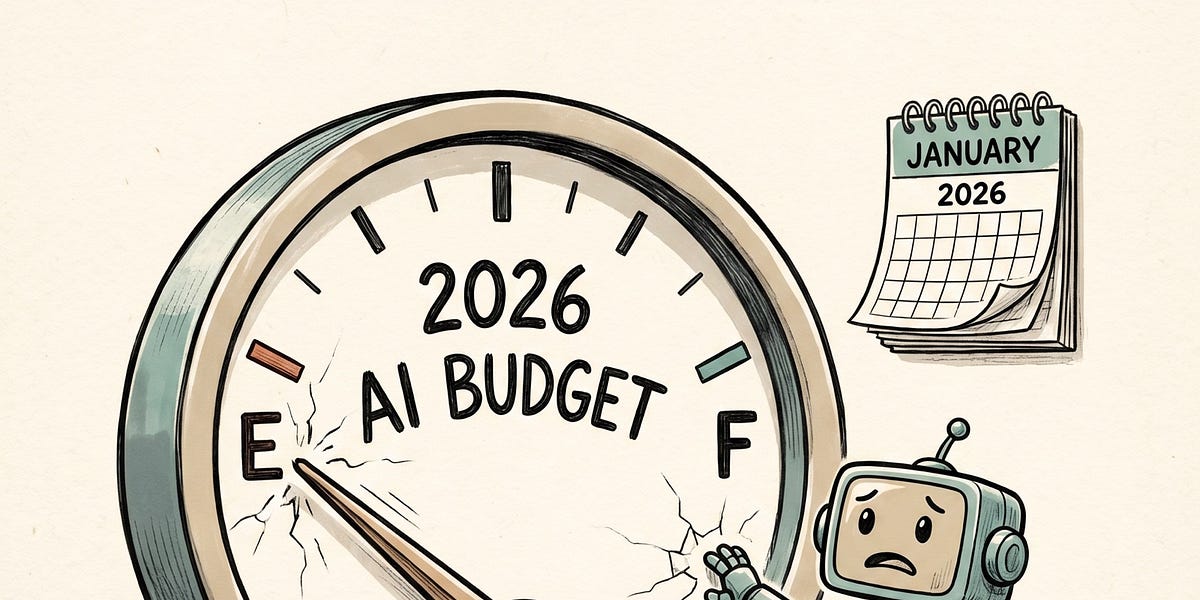
Ashwin Ballal is the Chief Information Officer at Freshworks.gettyA colleague told me recently that his team had consumed over a million AI tokens last month. I asked how much cost he had saved the business. He didn't know. I asked how much faster his team was shipping. He still didn't know. So I said: "You didn’t tell me you adopted AI. You told me you spent more money."This is where we are with enterprise AI right now. Boards are mandating it, CEOs are directing it, chief information officers are deploying it, and in many organizations, the primary evidence of progress is a utilization dashboard. That’s activity theater, where dashboards have become a substitute for outcomes. McKinsey found that only 39% of organizations report any EBIT (earnings before interest and taxes) impact from AI at the enterprise level, despite almost all saying they're using it. We have an industry-wide adoption problem masquerading as a progress story.I’ve seen this firsthand. In one rollout, we pushed AI tools across the company from the top down with full access and everything in place. Adoption stayed under 10%. The issue wasn’t availability, but that we handed people tools without changing how work gets done.Technology’s not the problem.Most AI disappointments are process failures that AI made visible.The processes most enterprises are running were designed for human constraints—handoffs, approvals, sequential thinking. AI agents don’t have those constraints. When you drop an agent into one of these existing workflows, you are not accelerating the process. You are encoding its dysfunction at scale. If your workflow is broken, AI just helps you break things at machine speed.Before you automate anything, the first question should be: Do we actually need this process at all? The second: Can we redesign it for how agents operate? Most organizations skip both and go straight to automation. Then they wonder why the ROI isn't there.When I joined Freshworks, I made a deliberate call to implement out-of-the-box technology and resist customizing it. That requires complex coding or an army of consultants. Customization is where ROI goes to die. Every exception, every workflow tweak, every “just this one change” adds long-term tax to the system. And AI doesn’t remove that tax. It compounds it. What feels like flexibility in the moment becomes friction at scale.Standardization business processes and workflows isn’t a compromise. It’s a prerequisite for making AI work. Agents don’t need beautifully intricate processes. They need clean, predictable paths. The companies seeing real returns from AI aren’t the ones with the most tailored environments. They’re the ones with the least.Hope won’t fix a Frankenstack.In one environment I walked into, there were more than 400 systems stitched together with custom integrations. That’s not architecture. That’s institutional memory held together by hope.Most large enterprises are running some version of this: hundreds of disconnected platforms held together by custom integrations and tribal knowledge in the heads of people who left two re-organizations ago. AI does not fix that. It struggles against it. If your data is siloed and your processes are fragmented, your agents will be too.This is the part of the AI conversation that gets glossed over in vendor decks and board presentations. You can't agent your way out of a broken operating model. The work that has to happen first—consolidating systems, retiring shadow processes, getting your data house in order—isn't glamorous. This foundational work means embracing consolidation across key domains like IT services, operations and asset management, all resting on a single, shared data model to create the clean paths agents need. It's also non-negotiable.The Governance Gap Nobody Wants To DiscussAgents give me indigestion more than anything else because we are deploying autonomous systems with privileged access to enterprise data, workflows and APIs. And the oversight infrastructure is not ready. We have given agents keys to systems we barely control ourselves. Deloitte's latest research found that only one in five companies has a mature governance model for autonomous AI agents. One in five.I lived through the consumerization of IT. Personal tools poured into enterprise environments faster than policy could keep up, and we spent years cleaning up the mess. What’s happening with AI now is that story on fast forward, with higher stakes. I'm told we are moving too slowly. My answer: Sometimes the fastest path to scale is slowing down to build the foundation first. Scale chaos and you don’t get growth. You get a bigger mess. What This Actually RequiresStop reporting token consumption and start reporting outcomes. If you cannot connect your AI investment to a specific business result—cost reduced, revenue generated, capacity actually freed up for something that matters—you do not have a measurement framework. You have a vanity metric.Clean up before you scale. The Frankenstack won’t fix itself, and AI won’t fix it for you. Take governance seriously now, while the stakes are still manageable. The organizations building oversight frameworks today will be the ones that can scale agentic AI responsibly when they have to. Everyone else will be managing a crisis.The era of handing everyone a Copilot license and calling it a strategy is ending. What comes next requires harder questions, more fundamental redesign and more honest measurement. AI is not exposing your technology gaps. It’s exposing your operating model. The CIOs who understand that distinction will spend the next two years building something real. The ones who don’t will spend it explaining their dashboards. Forbes Technology Council is an invitation-only community for world-class CIOs, CTOs and technology executives. Do I qualify?
Your AI Rollout Isn’t The Problem. Your Operating Model Is.
If AI adoption is lagging or not bringing any real value, the problem might be your operating model.
911 words~4 min read