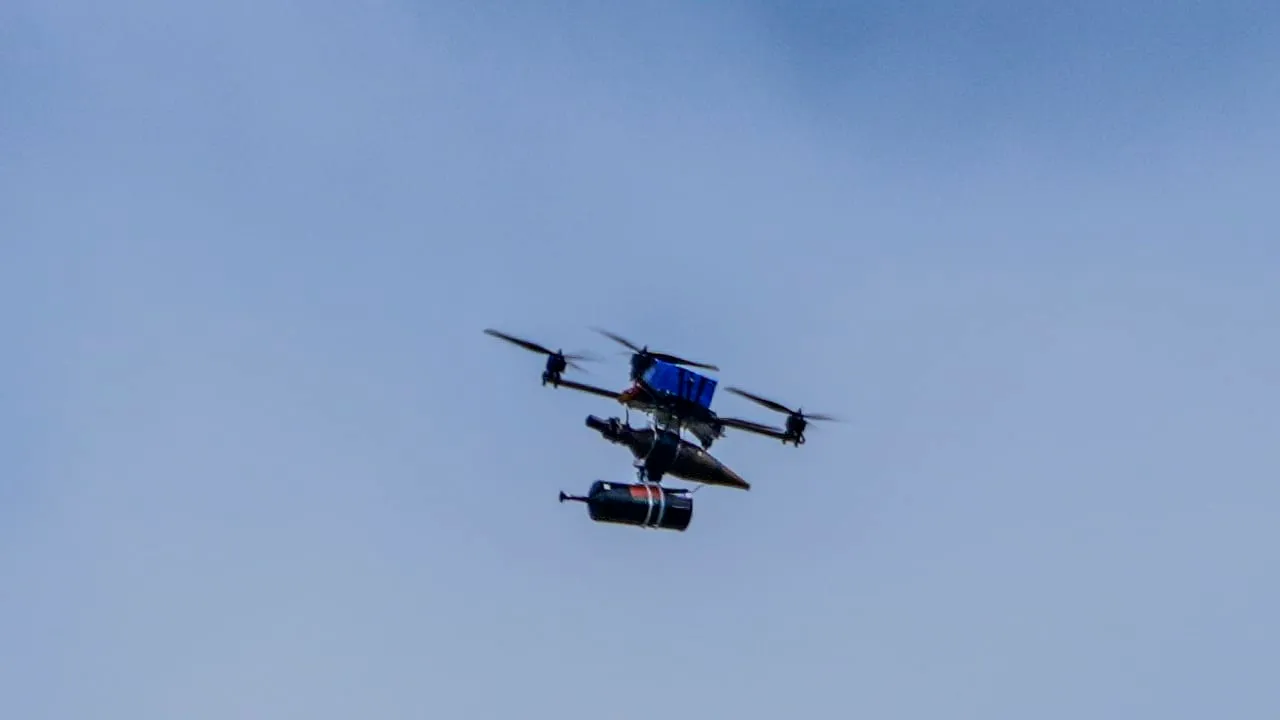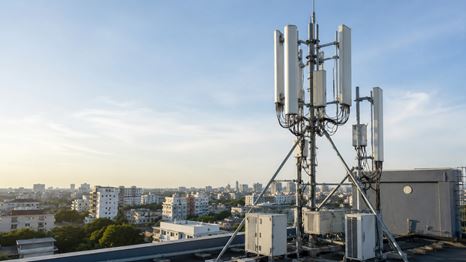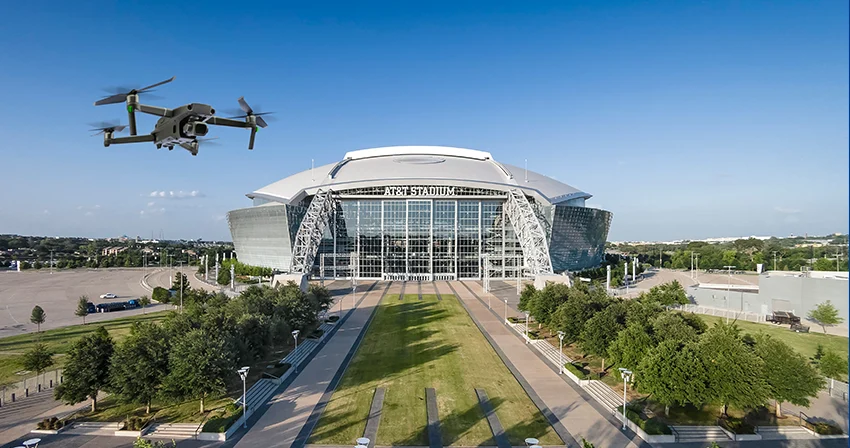
AT&T and Ericsson have partnered to trial drone detection over a 5G network using sensing technology.The two companies demonstrated drone detection outside of the AT&T Stadium in Arlington, Texas.The demo was carried out in authorized airspace using Ericsson's technology and AT&T networks to detect and locate multiple drones.This also enabled the duo to track the drone's movement. According to AT&T, the purpose of the demo was to showcase how wireless infrastructure could help protect major venues, critical infrastructure, and other key locations, ahead of the 6G era.Integrated sensing is tipped to be a key use case when 6G arrives, with Ericsson and AT&T pledging to carry out more Integrated Sensing and Communication (ISAC) demos in the future, including at the Olympic Games in Los Angeles in 2028.ISAC aims to transform mobile networks from communication systems into spatially aware platforms, merging high-speed communication and environmental sensing into a single unified infrastructure.Despite talk of sensing as a key 6G capability, both AT&T and Ericsson set out to show that 5G can deliver sensing.“As networks evolve, the opportunity is not just to prepare for 6G someday, but to begin introducing important building blocks now,” said Dyon Agnew, SVP and head of customer unit AT&T, Ericsson Americas.“This demonstration with AT&T shows a product roadmap in action: using advanced 5G capabilities today to explore how sensing and connectivity can work together, then evolving those capabilities over time as the path to 6G becomes clearer.”The demo was supported through Ericsson's deployment of its Massive MIMO radios across multiple existing cell towers, which it notes created a "multi-static sensing configuration."The demonstration combined sensing-enabled radio transmissions with advanced signal processing and AI-enabled sensing algorithms to detect, locate, and track the drones in real time, while the network utilized the radio signals typically used for communications to enable real-time environmental sensing.During the demo, multiple drones flying at altitudes between 300 and 400 feet (91 - 122 meters) within the coverage area were successfully detected, localized, and continuously tracked by the sensing technology.Through the use of multiple synchronized sensing nodes, the technology provided enhanced detection reliability, improved positioning accuracy, and robust target tracking performance.The sensing tech was able to generate real-time target metrics, such as the drone's location, velocity, and elevation, enabling full tracking and monitoring throughout the flight path.“Integrated sensing is an important part of the road to 6G, and this work helps show how we can start bringing that future to life right now,” added Yigal Elbaz, SVP and network CTO, AT&T.“By working with Ericsson, we are exploring how advanced wireless networks can add sensing capabilities to connectivity in ways that could support safer operations, smarter venues, and stronger customer experiences, while creating a path to evolve these capabilities responsibly over time.”The roadmap that AT&T and Ericsson are working towards aims to help event and facility teams improve planning and staffing by providing broader visibility into how vehicles move through large environments.It also aims to improve coordination around temporary event infrastructure and logistics by adding network-based environmental awareness alongside connectivity, plus support a wide-area drone awareness system for public-sector stakeholders, improving visibility into low-altitude drone activity as the low-altitude economy develops across cities and regions.
AT&T, Ericsson trial sensing during drone test outside AT&T Stadium
The carrier worked with Ericsson to trial Integrated Sensing and Communication (ISAC) technology
527 words~2 min read