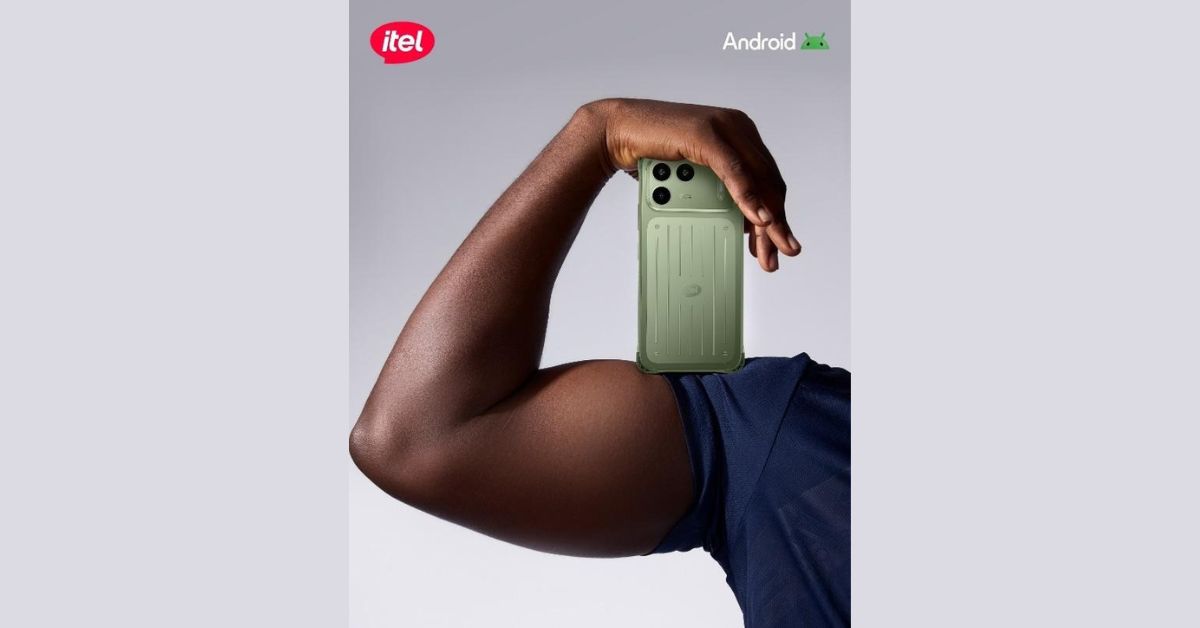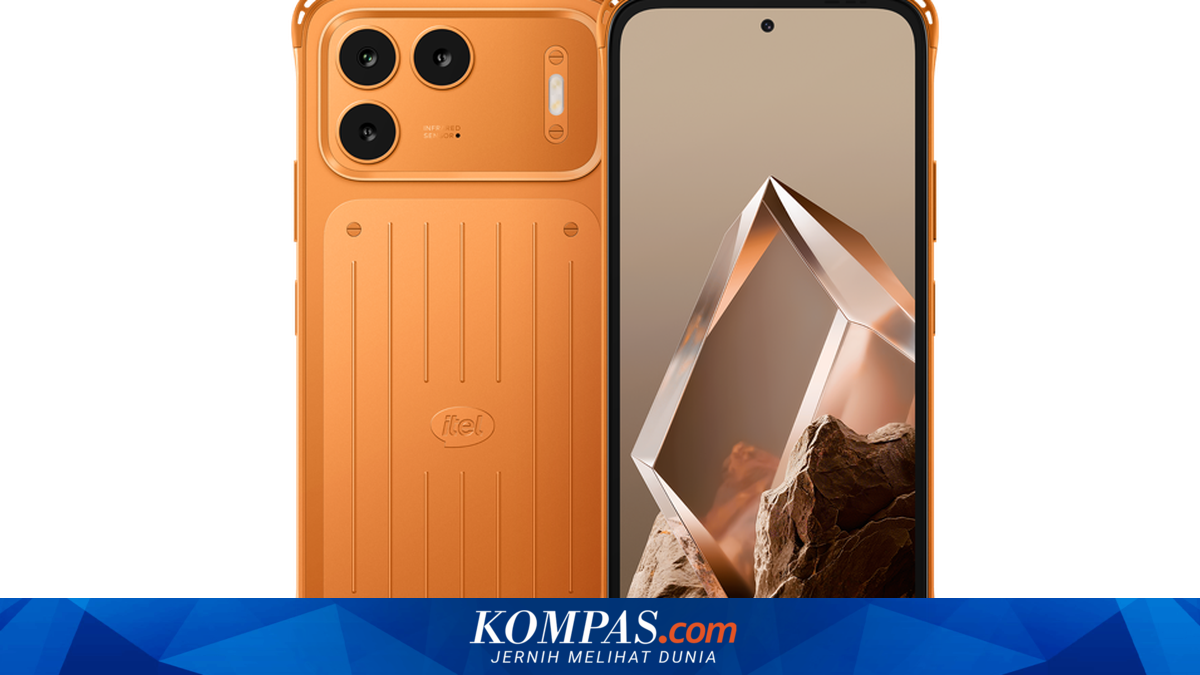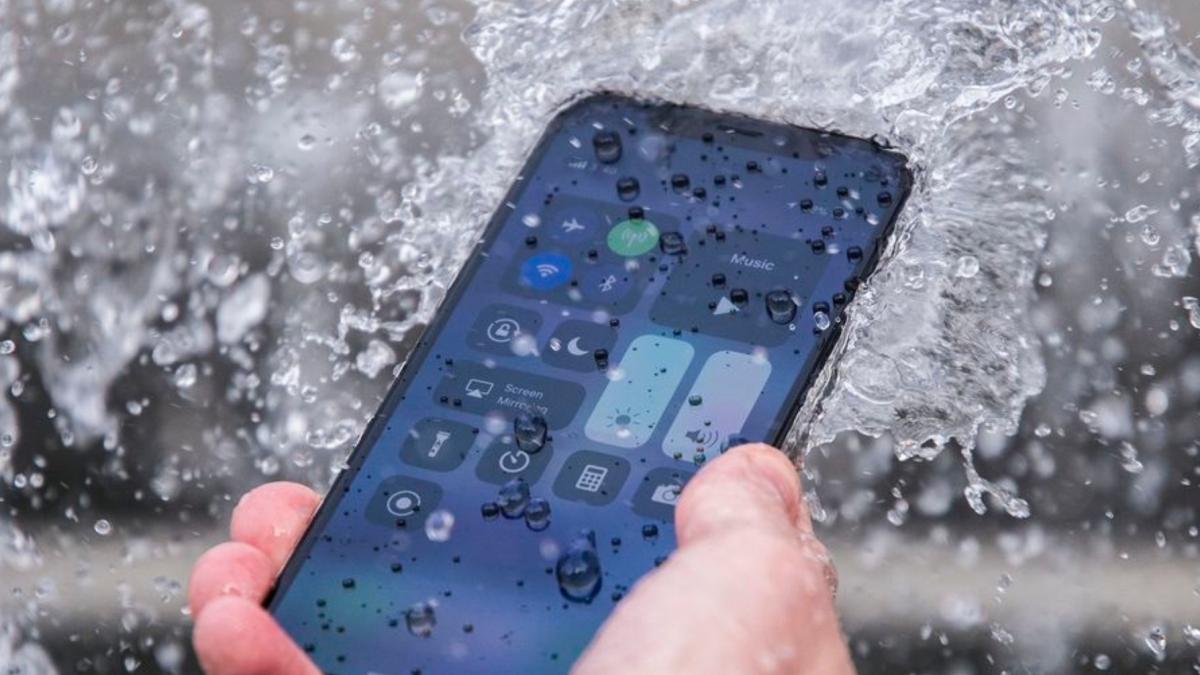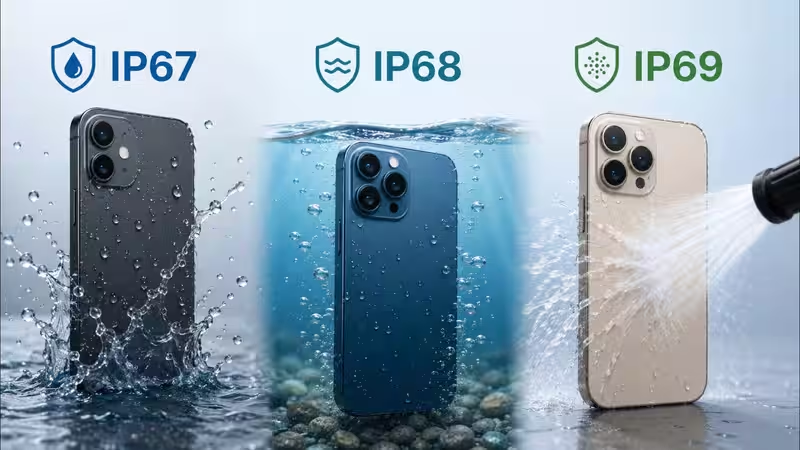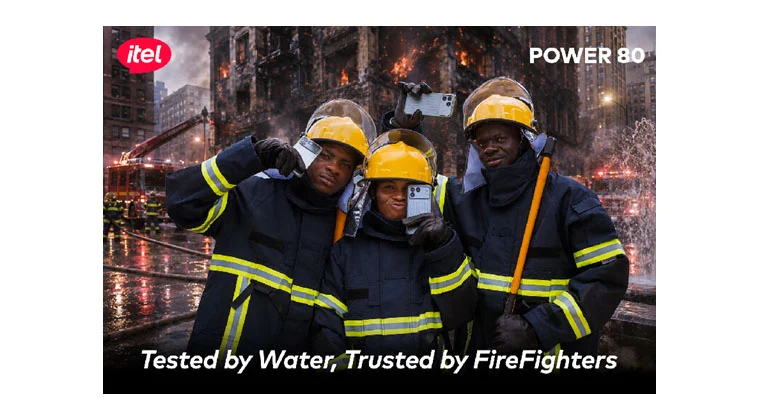
Smartphone durability is often communicated through specification sheets and laboratory certifications. Water resistance ratings, drop tests and impact claims have become common across the industry. But for consumers, the real question is simpler: can a phone continue working when conditions are far from ideal? Recently, members of the Lagos State Fire & Rescue Service (LSFRS) took part in a field demonstration involving the new itel Power 80, placing the device in scenarios inspired by the challenging environments firefighters encounter every day. For a profession where equipment failure is not an option, reliability matters more than marketing language. When Water Resistance Meets Real-Life Conditions Rain, accidental spills, splashes, or dusty environments are all part of everyday life. While many devices claim protection against these situations, few have the opportunity to demonstrate their capabilities alongside professionals whose work routinely involves water, pressure and unpredictable conditions. During the demonstration with LSFRS personnel, the itel Power 80
underwent a series of water-related tests designed to showcase its resistance in wet environments. The device carries IP68 and IP69 water and dust resistance certifications, standards typically associated with protection against water immersion, splashes and dust ingress. More importantly, the demonstration highlighted how those certifications translate into practical confidence in everyday use. For firefighters observing the exercise, the takeaway was straightforward: durability is no longer a premium luxury feature, but an increasingly necessary requirement for modern users. Why Firefighters Value Reliability Firefighters operate in environments defined by uncertainty. Heat, water, impact and constant movement place enormous demands on the tools they depend on. While consumer smartphones are obviously not professional rescue equipment, the qualities firefighters look for in their gear — resilience, dependability and the ability to continue performing under pressure — are qualities ordinary users increasingly expect from their devices as well. The involvement of the Lagos State Fire & Rescue Service provided something that specification sheets alone cannot offer: practical validation from