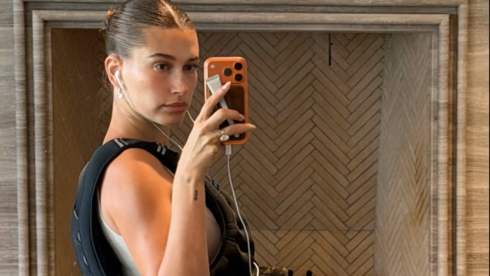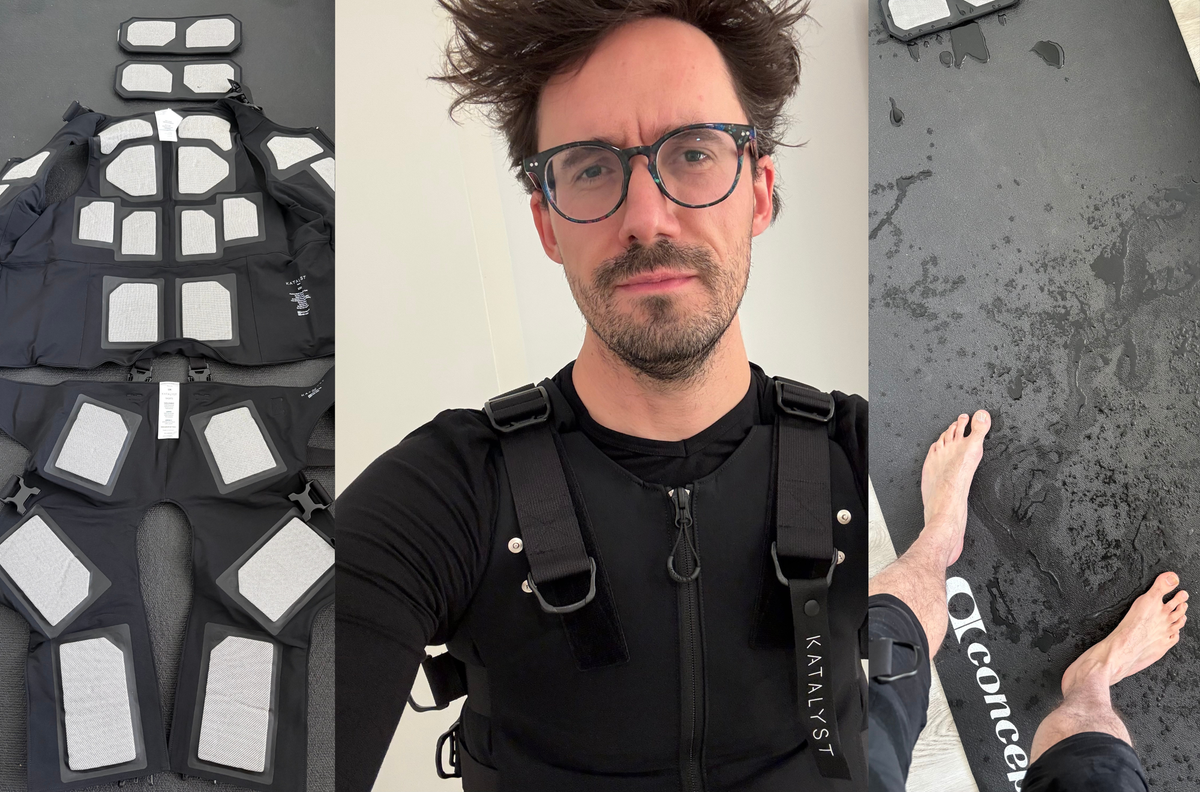
Putting on the $3,000 Katalyst suit is like sliding around with an electric eel. First you lay out the vest, shorts, and arm straps (on a towel if you don’t want to make a mess) and spray their electrode pads with a lot of water. “More water is better,” Katalyst’s CEO Brendan Kennedy told me. You then clip the vest and shorts together, creating a single, dripping suit. After wrapping those around your body and zipping up, you put on the arm straps and connect them to the main suit with a pair of delicate cables. You slip a battery pack into a pocket near your thigh, snap its magnetic plugs to the vests and shorts, and you’re ready to work out, soaking wet and maybe cold if you took too long to assemble the contraption.The pitch is that Katalyst will essentially supercharge your workouts. The suit electrocutes your muscles while you do basic movements alongside a virtual instructor in the accompanying app. Think lunges, squats, and the movement of a deadlift. You can get the equivalent of a 2 hour strength session in just 20 minutes, Katalyst says. George Clooney has praised the suit, telling Esquire “my arms are twice the size they’ve ever been. It’s crazy.” Bloomberg Businessweek has covered the suit too, writing, “here’s the thing: The Katalyst suit worked.”I already own a bunch of exercise and wellness tech, from smart swimming goggles to the Oura ring. I often plan my workout time as efficiently as I can. That’s one reason why my main form of exercise is rowing, which uses a lot of muscles at once, and why I sometimes wear resistance gloves during swimming to squeeze out as much benefit as possible. So, as a tool that promised super-efficient sessions even if the price tag is obviously insane, I really wanted to like Katalyst. I thought it might be the secret to finally branching out from rowing and swimming to more strength-focused routines.But it wasn’t. It gave me pins and needles in my feet for days at a time and made my limbs numb and cold, derailed my other workouts, and it simply wasn’t fun in the way good and long-lasting exercise habits ideally should be. Instead, slipping into the $3,000 cyber suit for around a month made me reassess my obsession with fitness, optimization, and efficiency. It made me consider which of those concepts were actually helping me, and which were ultimately holding me back. What the fuck am I even doing? I eventually thought to myself, dripping water all over my apartment floor.I wasn’t the only one. “Legit you are the craziest person I know,” 404 Media’s Emanuel Maiberg said after I sent a photo of the soaking wet suit to our group chat. They compared me to an Infinite Jest character, with Sam Cole saying “we’re laughing IRL over here.” Jason Koebler added: “As your friends and colleagues and cofounders. This is not normal. The bit has gone too far.” Images: 404 Media.Katalyst is an electro muscle stimulation, or EMS, suit. The pads send electrical pulses that make your muscles contract. At first, as the suit and app ramp you into a workout, the pulses feel like a light tingling sensation. Then, a solid block of electricity across your arms, legs, and abs. You wet the pads, and sometimes the base layer of shorts and a long-sleeve t-shirt, because the water helps conductivity between the electrode and your skin, Katalyst says.“That was absolutely insane,” I texted the rest of 404 Media after my first workout.At some points, your limbs may lock in place due to the intensity of the blast. I tweaked my settings so I could complete the movements fully and with a good amount of difficulty and resistance, while not completing locking my legs or arms out. The app encourages and makes this easy to do: during a workout there are buttons in the app you can quickly press to increase or turn down the intensity of the pulses. The instructor in the pre-recorded video will often bring up the power during the workout to reach an electrocuting crescendo. It can take a few of the recommended three or so workouts a week to find your ideal baseline.
I Bought the $3,000 Fitness Suit That Electrocutes You. I’m Sending It Back
Celebrities like George Clooney have praised the expensive Katalyst suit. For me, it derailed my other exercises and made me reassess my obsession with fitness and efficiency.
740 words~3 min read