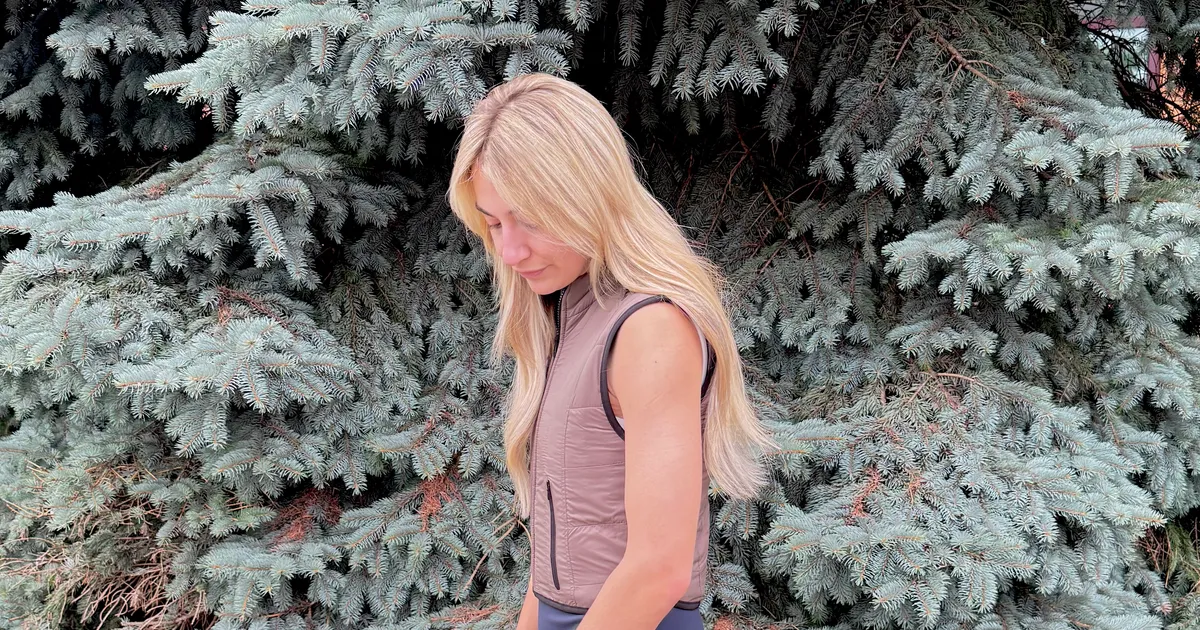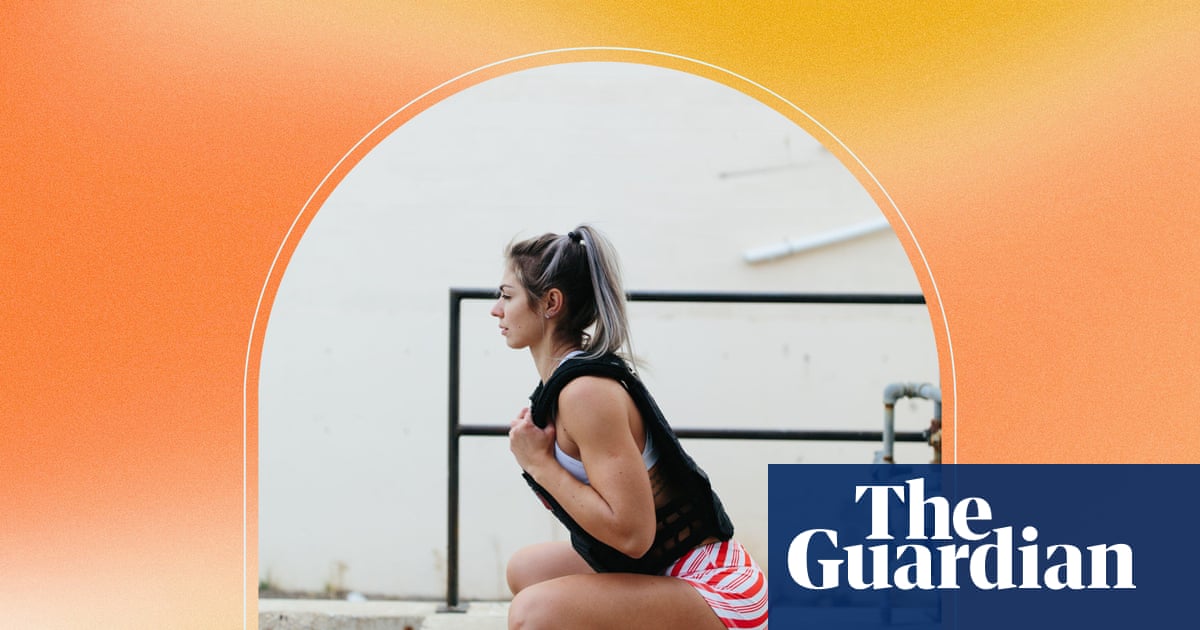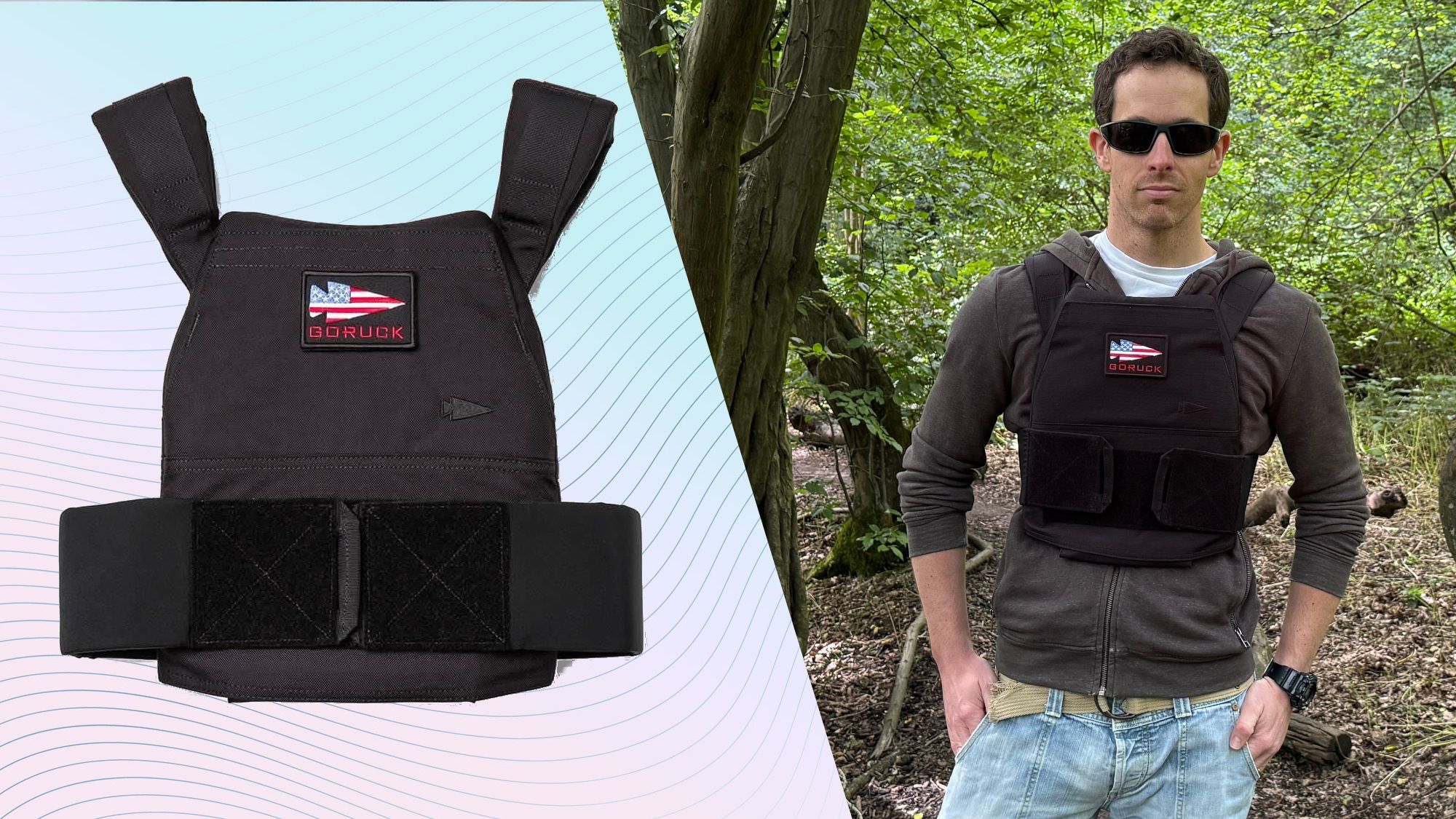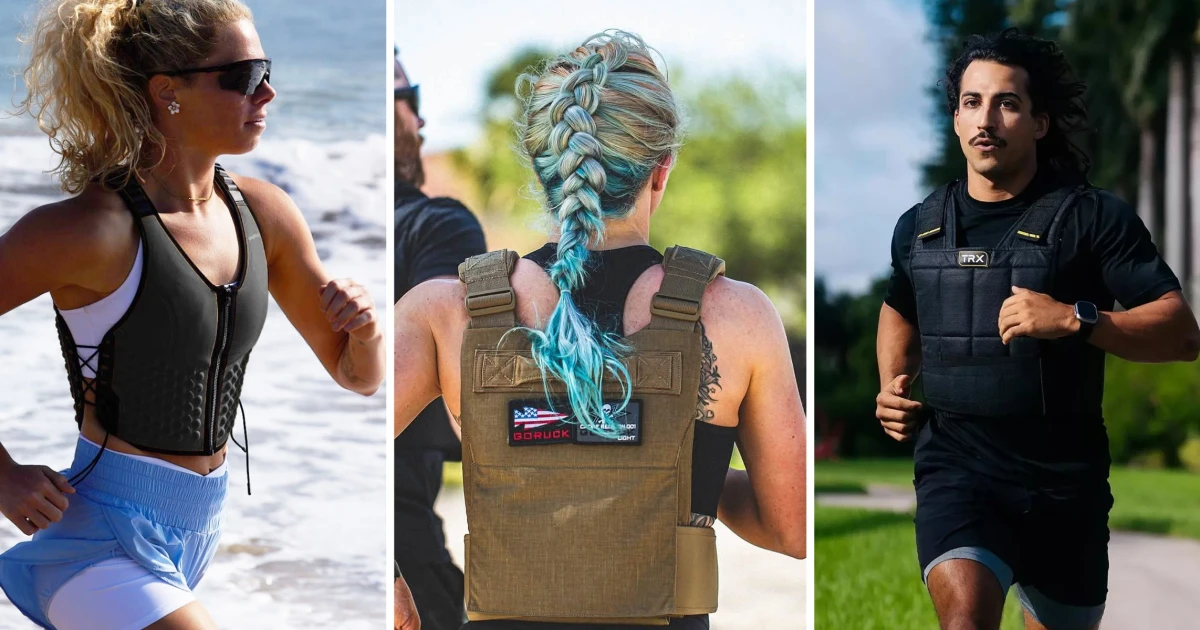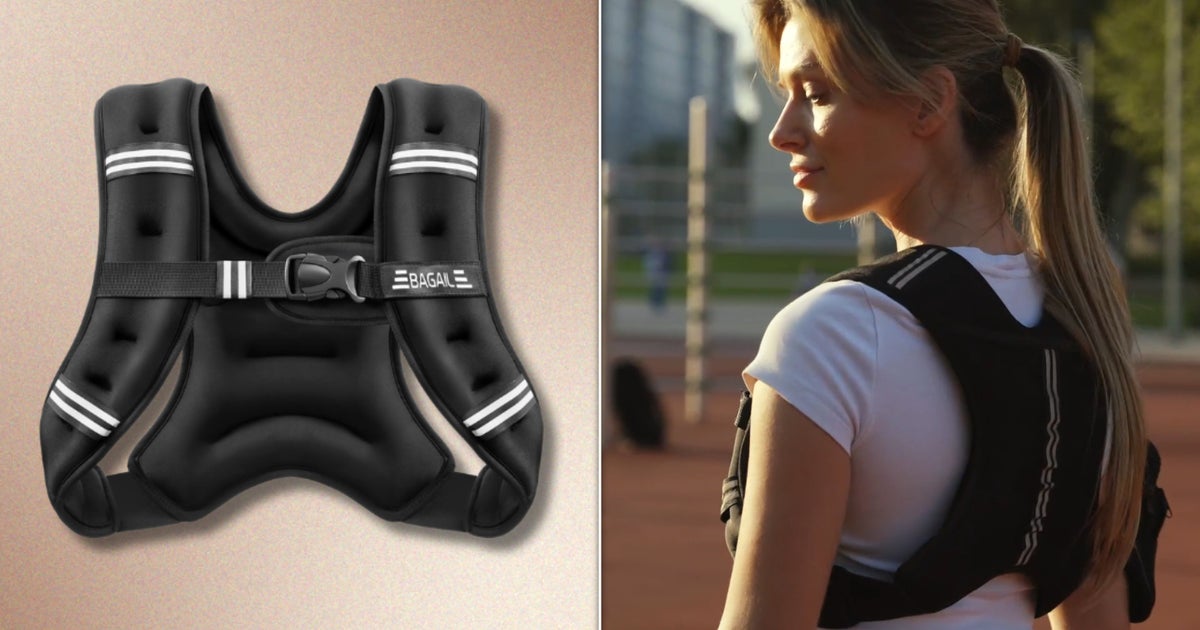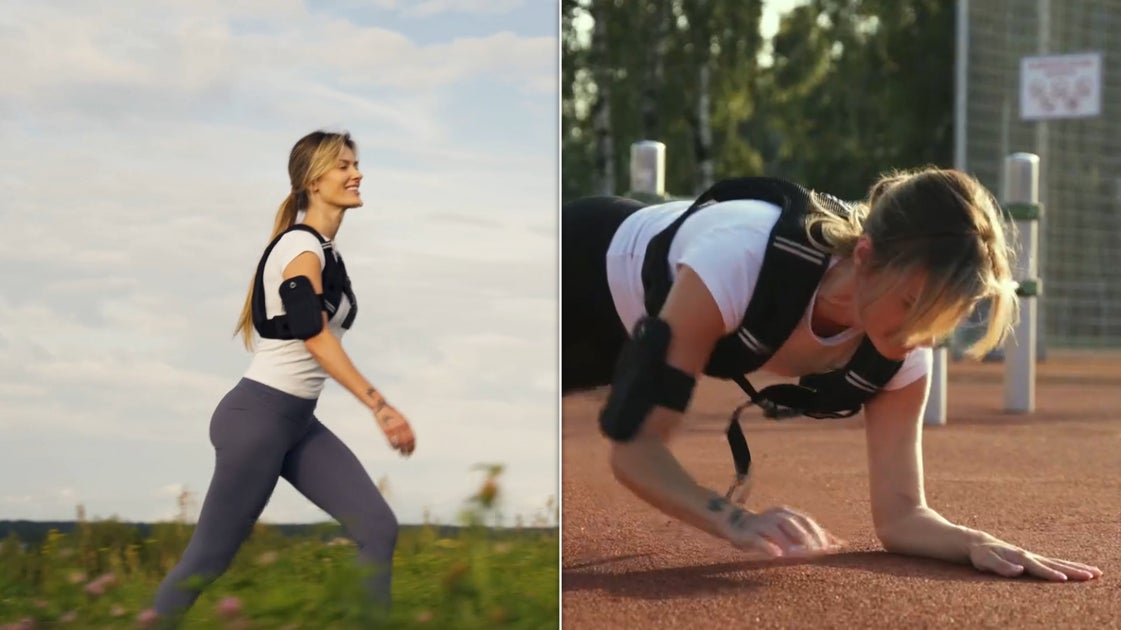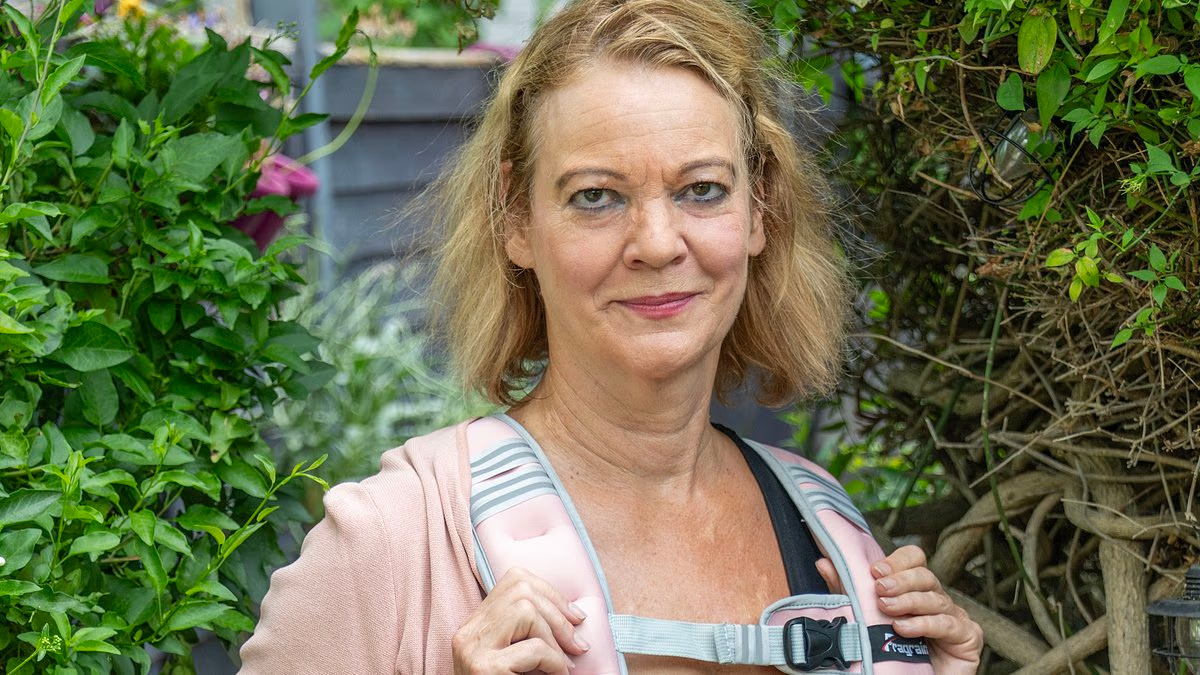
Wearing a weighted vest for a month isn’t for the faint-hearted. Everyone from the postman to my hairdresser did a double take at first. Fitted around the chest with criss-cross straps, it resembles a bulletproof vest – or, more worryingly, an explosive device.But they’re the latest fitness craze.Oprah Winfrey, Davina McCall and Hugh Jackman are among the celebrity fans, while social media is awash with videos of people wearing them while walking, running and even doing household chores.The principle is simple: the extra weight across your shoulders and torso means your body has to work harder every time you move. That increases the energy you expend and places greater demands on your heart and muscles, while the additional resistance helps build muscular strength and endurance. Over time, this can improve cardiovascular fitness.There’s also evidence weighted vests may benefit bone health and slow the age-related decline in bone density. And, at 63, I’m at an age when that is increasingly important.‘Weighted vests are particularly interesting for women approaching perimenopause and menopause because they increase the load on bones, which may help maintain bone density when the risk of osteoporosis begins to rise,’ says Professor Adam Taylor, an anatomist at Lancaster University who wears a weighted vest himself.‘A big advantage is that you can increase the intensity of everyday movement without having to find extra time for exercise. For most people, they’re a safe, low-risk way to make movement more demanding.‘However, anyone with back, hip or knee problems should start with a light weight and build up gradually, as the extra load changes how forces are distributed through the body.’As I accept the challenge of wearing a weighted vest every day for four weeks, I’m certainly hoping it’ll do more than burn calories.Before I start I use a monitor which measures weight, body fat, muscle mass and other key health markers. The results are dispiriting. Liz Hoggard in her weighted vest... they are the latest fitness craze, with Oprah Winfrey, Davina McCall and Hugh Jackman among the celebrity fans There’s evidence that weighted vests may benefit bone health and slow the age-related decline in bone densityI tip the scales at 12st 12lb (81.8kg), almost 2st heavier than my ideal weight. My BMI is 28.1, when it should be below 25. My body fat is 4st 13lb (31.2kg), where it should be under 4st 7lb (28.5kg).Like many people in midlife, my cholesterol has also become a concern. With my father and grandparents dying of heart attacks at a relatively young age, it’s something I take seriously.A few years ago, tests carried out by my GP revealed my cholesterol to be worryingly high. Through diet and exercise, I’ve managed to get it down.I’ve cut out most sugar, cook almost everything from scratch, swim regularly, lift weights, walk more than 12,000 steps a day and have optimal blood pressure.But it’s still above where I would like.My total cholesterol is 6.18mmol/l – ideally it should be below 5.0mmol/l. My LDL, or ‘bad’ cholesterol, is 3.76mmol/l, when the optimal levels would be about 2.0mmol/l.This reading, that stayed stubbornly elevated over the years, is the one I’m most keen to tackle. Could the weighted vest give me that bit extra I need? I hope so.Weighted vests cost from around £20, with premium versions setting you back several hundred pounds.The budget model I choose comes in 3kg, 5kg, 10kg, 20kg and 30kg versions. Not wanting to overdo it, I start with the 3kg, with the aim of graduating to heavier weights as the weeks pass.Experts generally recommend building up to carrying around 5 per cent of your body weight.Lifting it out of the box for the first time is a surprise. It feels remarkably heavy. But once I slip the harness over my shoulders and fasten the straps, the weight is spread evenly across my upper body, making it feel far less cumbersome than I’d expected.I start by wearing it while doing household chores, curious to see whether something so simple really can make a difference.Made of soft, breathable fabric, it has two straps at the front that you do up tightly so it fits close to the body. At the back there’s a pocket to hold keys/lip salve, so you’re hands-free during exercise. It is what they euphemistically call ‘female-specific’, so it distributes weight away from the bust.However, the first time I manage to wear it upside-down and spend hours cursing male designers who don’t understand female anatomy. My inner Germaine Greer is not happy. Where do our bosoms go? It’s only when I take it off and hang it over a chair that I spot I’ve been wearing it wrong. Weighted vests can cost anything from around £20, with premium versions setting you back several hundred poundsFor the first week I wear my vest to wash up, garden, run upstairs. Soon I’m keeping it on for up to six hours a day, and can feel it raising my heart rate significantly.The weight is all in one place – the upper torso – so this challenges your balance. It also pulls you backwards slightly so you sit up taller. I feel like a Victorian heroine in her corset.Before I begin, I seek advice from osteopath and fitness trainer James Davies, who has worked with David Beckham and other elite athletes.‘I’ve seen weighted vests used time and time again as part of training and conditioning programmes,’ he tells me. ‘They’re not a gimmick or a shortcut – they’re another tool that can help people move better, get stronger and improve their overall fitness.’ Experts generally recommend building up to carrying around five per cent of your body weight for optimum benefitsIt’s an addition to good training, not a replacement for it, explains Davies. ‘The extra load means your muscles and bones have to cope with a little more stress every time you move. Whether you’re walking, climbing stairs, hiking or strength training, your body has to work harder.’Carrying additional weight isn’t new, of course. The practice used to be called ‘rucking’, as people would walk with heavy rucksacks.‘Today a lot of sports people exercise and jog with weights on their ankles and arms,’ says Professor Sanjay Sharma, a cardiology adviser for the Football Association. ‘This kind of strength training improves lean body mass, reduces visceral fat, and enhances bone mineral density. It helps prevent osteopenia and sarcopenia [muscle loss] in older adults and helps reduce all-cause mortality, cardiovascular mortality, and cancer mortality.’After a week I’m brave enough to wear the vest outdoors. I’ve been advised to start with a modest 15-minute walk, upping it by five minutes every other day – if I get too tired and take it off, I still have to carry it home. I learn to wear a cardigan underneath the vest because the straps can rub.When I’m not wearing ‘Germaine’, as I’ve called my vest in a nod to the feminist icon, she sits on a kitchen chair ready for action. ‘It’s like there’s another guest for supper,’ a friend laughs.As I increase my daily walks to 40 minutes, I feel the burn in my quads and calves. I have to engage my core more than normal to stay upright.Usually my Fitbit measures my walks as ‘moderate’ exercise. But when I walk in the vest I increasingly go into the ‘hard’ intensity category. The weight is all in one place – the upper torso – so you have to adjust your centre of mass and this challenges your balance
I wore a weighted vest for a month... here's what happened
Everyone from the postman to my hairdresser did a double take at first. Fitted around the chest with criss-cross straps, it resembles a bulletproof vest - or, more worryingly, an explosive device.
1,826 words~8 min read