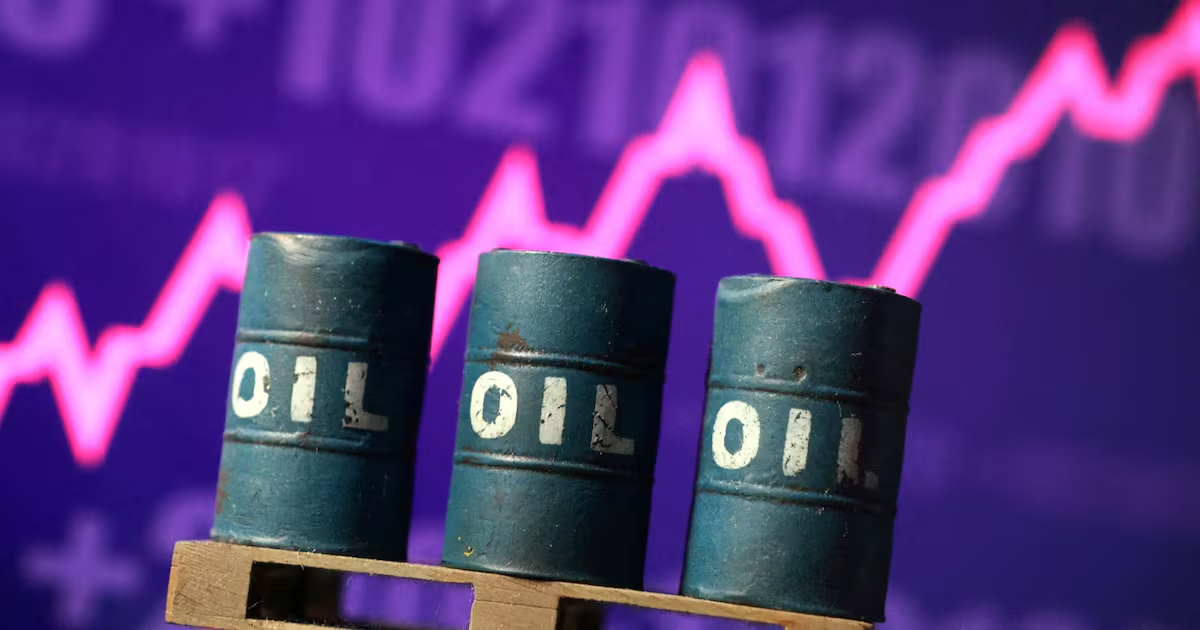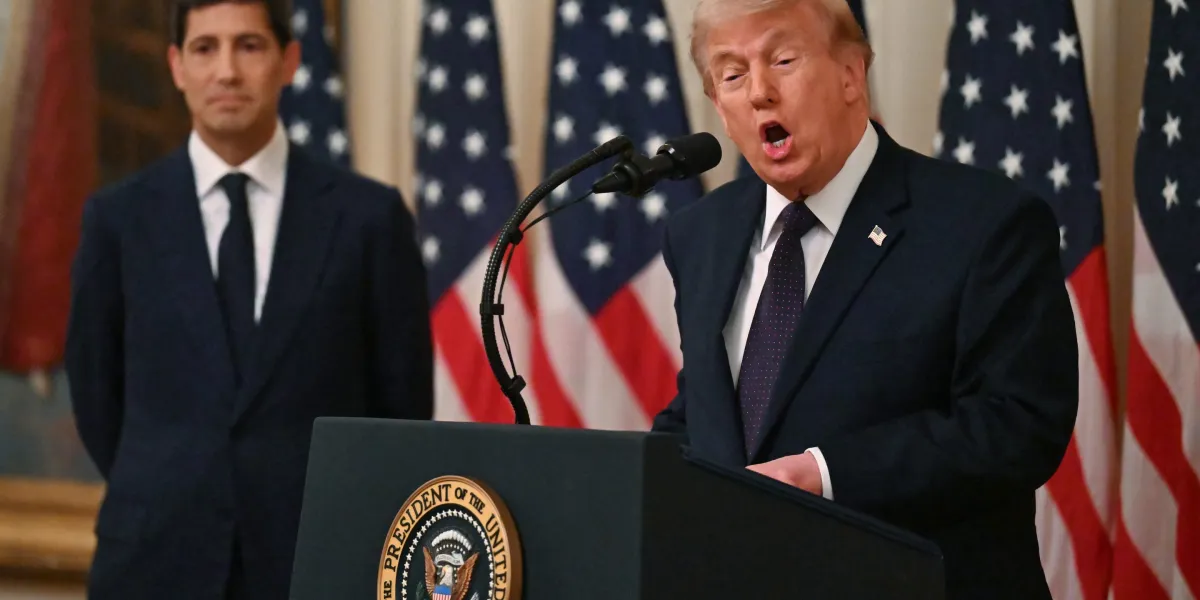
Wall Street is looking nervously at the Middle East this week, after the conflict between the U.S. and Iran escalated over the weekend. At the time of writing, Brent crude is back up to $78 a barrel, meaningfully above its pre-war level of a little under $70. This has a knock-on effect for inflation expectations and, as a result, the trajectory of the U.S. Federal Reserve’s base interest rate, Goldman Sachs wrote in a note published Sunday.Over the weekend, Tehran and Washington exchanged strikes in what Deutsche Bank’s Jim Reid described as a conflict that has “intensified sharply.” Despite the action, President Trump insisted that the Strait of Hormuz—a key shipping lane in the global oil trade—remains open.
The regime in Iran—which borders the Strait—insists the waterway is “closed,” meaning ships will be nervous to leave or enter the Persian Gulf and choking oil supply as a result.
The fallout is also spreading: The Islamic Revolutionary Guard Corps (IRGC) reportedly claimed it attacked U.S. bases in Bahrain, Kuwait and Jordan, while U.S. Central Command (CENTCOM) said it was prompted to act after Iran attacked another commercial ship in the Strait.
The back-and-forth doesn’t lend itself to the rhetoric of de-escalation that Wall Street had been hoping for. Oil futures indicate crude oil prices are expected to rise over the next few months and remain around $72 a barrel through the end of the year.