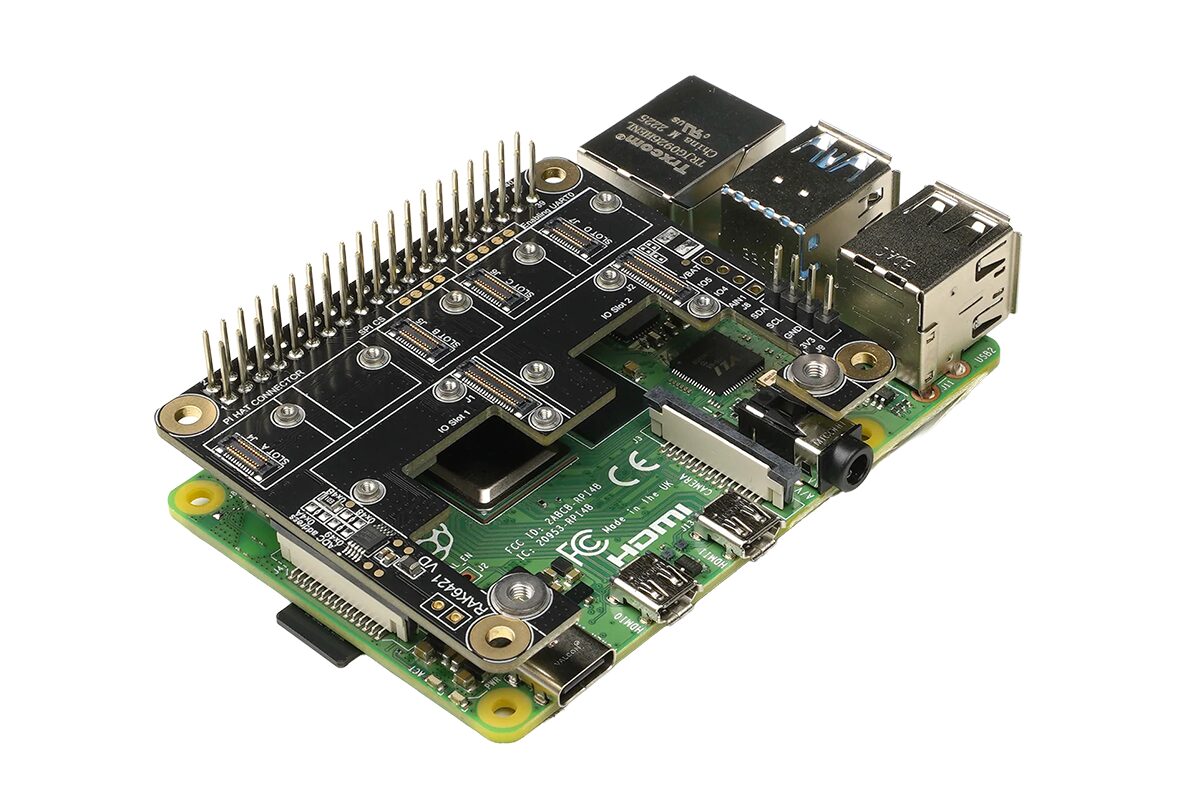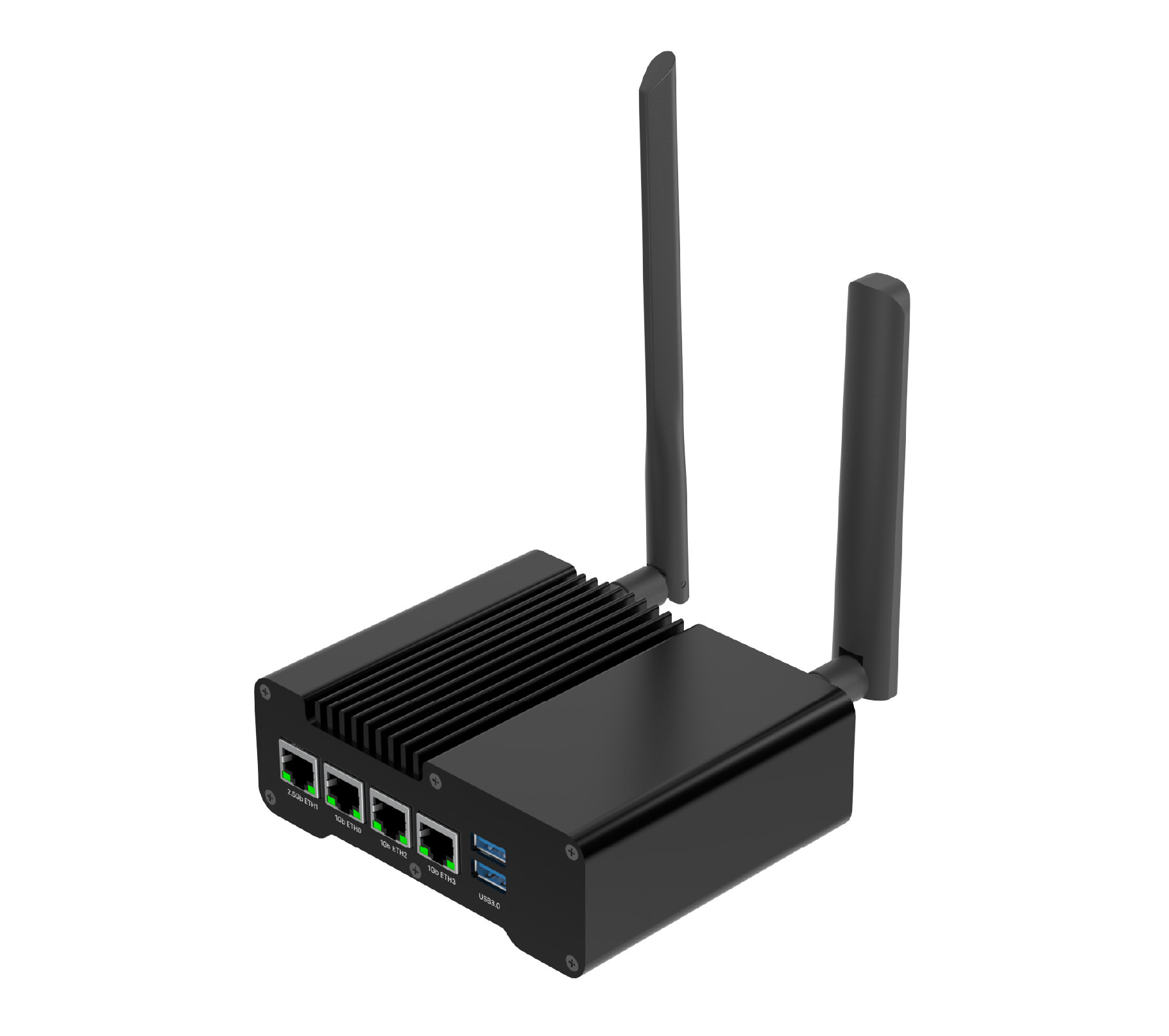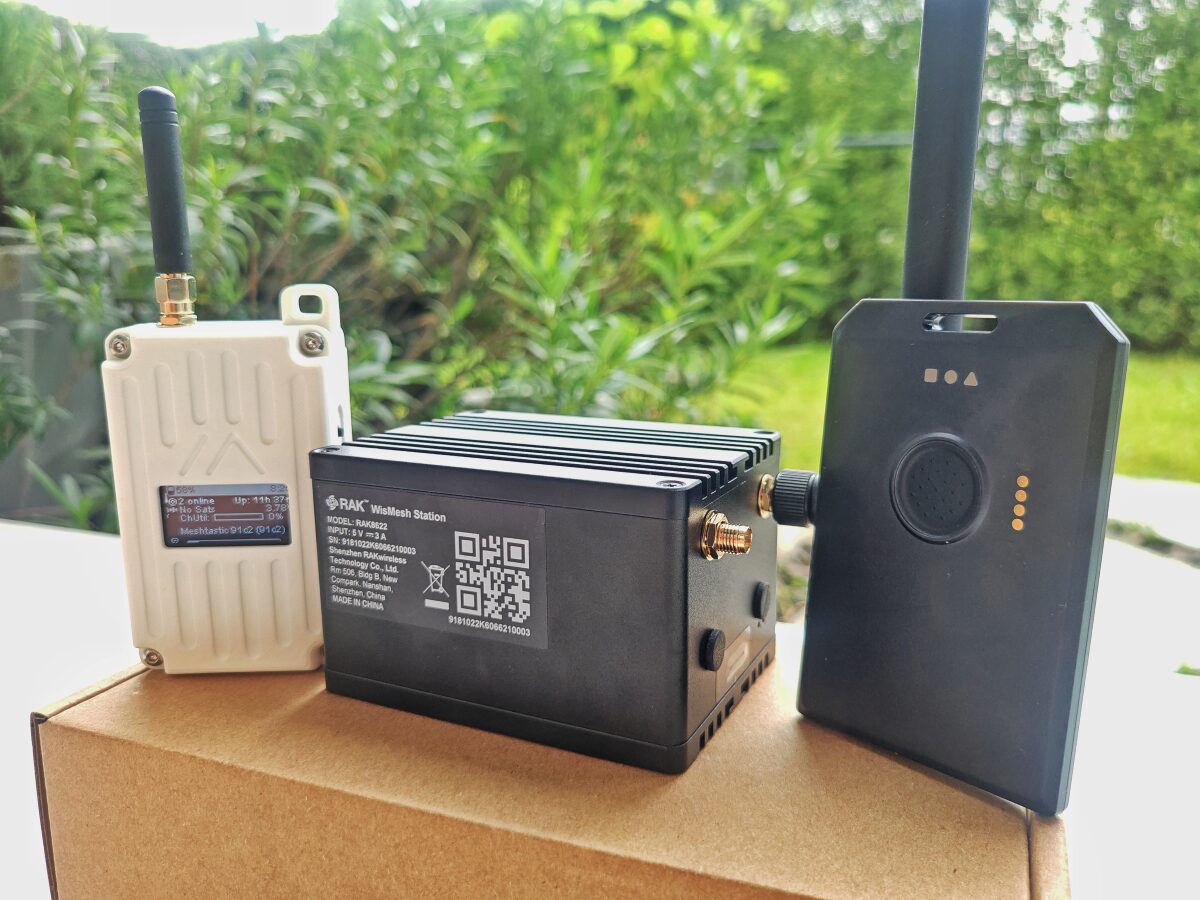
RAKwireless has sent us a sample of the WisMesh Station, a Meshtastic gateway and base station based on a Raspberry Pi 4 Model B, a WisMesh Pi HAT RAK6421 expansion board, a LoRa module, a GNSS module, all housed in a compact metal enclosure.It comes with meshtasticd preinstalled, making it ready to use right out of the box. Just unbox it, plug it in, and start using Meshtastic immediately. We’ll also use software packages for communication, data storage, and visualization, such as MQTT, Node-RED, InfluxDB, and Grafana, mostly following RAKwireless’s user guideWisMesh Station is available in 2 models according to transmit power: the standard RAK8622 model that uses the RAK13300 LoRa module (Semtech SX1262 with 22 dBm transmit power), suitable for urban networks where nodes are close to each other, and the high-power RAK8623 (HP) model that uses the RAK13302 module (SX1262 + SKY66122 amplifier circuit with 30 dBm or 1W transmit power) for long-distance relay work or installation on high points in rural areas. We received the standard RAK8622 variant for this review due to Thailand regulations.In this review, we will start with an unboxing of the WisMesh Station and accessories provided to us, have a look at the hardware, install the RAK1906 environmental sensor (Bosch BME680) into the remaining WisBlock slot, and test the actual operation of the mesh network together with 2 other Meshtastic devices: the WisMesh Pocket V2 and the WisMesh Tag.More specifically, we’ll cover the following:
WisMesh Station Review - Telemetry, MQTT, and Grafana tested on a Raspberry Pi 4-based Meshtastic gateway - CNX Software
RAKwireless has sent us a sample of the WisMesh Station, a Meshtastic gateway and base station based on a Raspberry Pi 4 Model B, a WisMesh Pi HAT RAK6421
3,150 words~14 min read