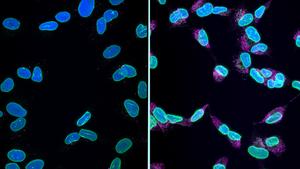
Scientists may have uncovered a crucial clue to how Alzheimer's disease destroys brain cells, offering fresh hope for future treatments. In a new breakthrough study, King's College London researchers identified a possible mechanism that triggers the death of neurons as the disease progresses. The findings suggest that harmful changes inside brain cells may play a key role in accelerating cognitive decline, memory loss, and other symptoms associated with Alzheimer's. Researchers have uncovered a previously overlooked process that appears to contribute significantly to brain cell death in both Alzheimer's disease and frontotemporal dementia. The discovery offers new insight into how these neurodegenerative conditions progress and could pave the way for treatments designed to slow the loss of neurons. By targeting and interrupting this newly identified mechanism before brain cells are irreversibly damaged, scientists hope to develop therapies that may help delay disease progression and preserve cognitive function.WHAT IS KARYOPTOSIS?According to Science Daily, a team of researchers from King's College London, in collaboration with the UK Dementia Research Institute and supported in part by Alzheimer's Research UK, has identified 'karyoptosis' as a possible key process behind the loss of brain cells in Alzheimer's disease and frontotemporal dementia (FTD). Karyoptosis is a newly recognized form of cell death that begins when harmful proteins build up inside a brain cell. This buildup triggers a chain of chemical events that causes the cell's nucleus to shrink and eventually break apart, leading to the cell's destruction.The study, published in Nature Communications, analyzed nearly 3,000 brain cells from 28 donors diagnosed with either end-stage Alzheimer's disease or FTD, reported Science Daily. Using advanced computational techniques, the researchers examined how different types of cell death occurred within the brain tissue. Their analysis revealed evidence of karyoptosis in 35% of cells from the frontal cortex of people with Alzheimer's disease, compared with 15% of cells from healthy older adults. The findings suggest that this process may play a significant role in the widespread brain cell loss seen in neurodegenerative diseases and could become a promising target for future treatments.According to Science Daily, the researchers also identified a crucial molecular pathway that appears to drive karyoptosis. Their findings showed that forcing proteins to clump together inside neurons - a defining feature of many neurodegenerative diseases - can set off this newly identified form of cell death. As toxic protein deposits accumulate, they weaken the protective membrane surrounding the cell's nucleus, causing it to shrink and eventually break apart."The death and loss of cells in the brain drives many symptoms experienced by people living with dementia. Our study uncovers a new series of chemical events which can coordinate cell death in brain cells. We have started to lay out the road map of how karyoptosis works, and I'm excited to see future breakthroughs this may drive in the dementia research community and beyond," said Dr. Rebecca Casterton, as quoted by Science Daily, Senior Researcher at the UK Dementia Research Institute at King's and first author on the paper.The team also focused on enzymes called kinases, which function as molecular switches that regulate this process. In laboratory experiments involving rat neurons, blocking specific kinases significantly reduced the biological signs of karyoptosis. Based on these results, the researchers believe targeting this pathway could open the door to new treatments aimed at slowing brain cell loss and delaying the progression of dementia-related diseases.
What is 'karyoptosis'? New study suggests scientists may have discovered how Alzhkeimer's kills brain cells
Researchers have identified a new cell death process called 'karyoptosis'. This process involves harmful proteins building up inside brain cells. karyoptosis leads to the nucleus shrinking and breaking apart, causing cell destruction. Targeting this mechanism could offer new hope for dementia treatments. Scientists aim to slow neuron loss and preserve cognitive function.
559 words~3 min read