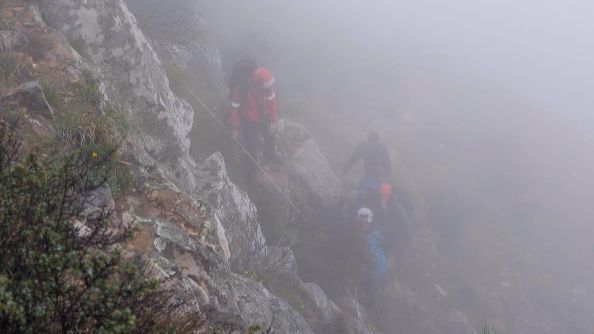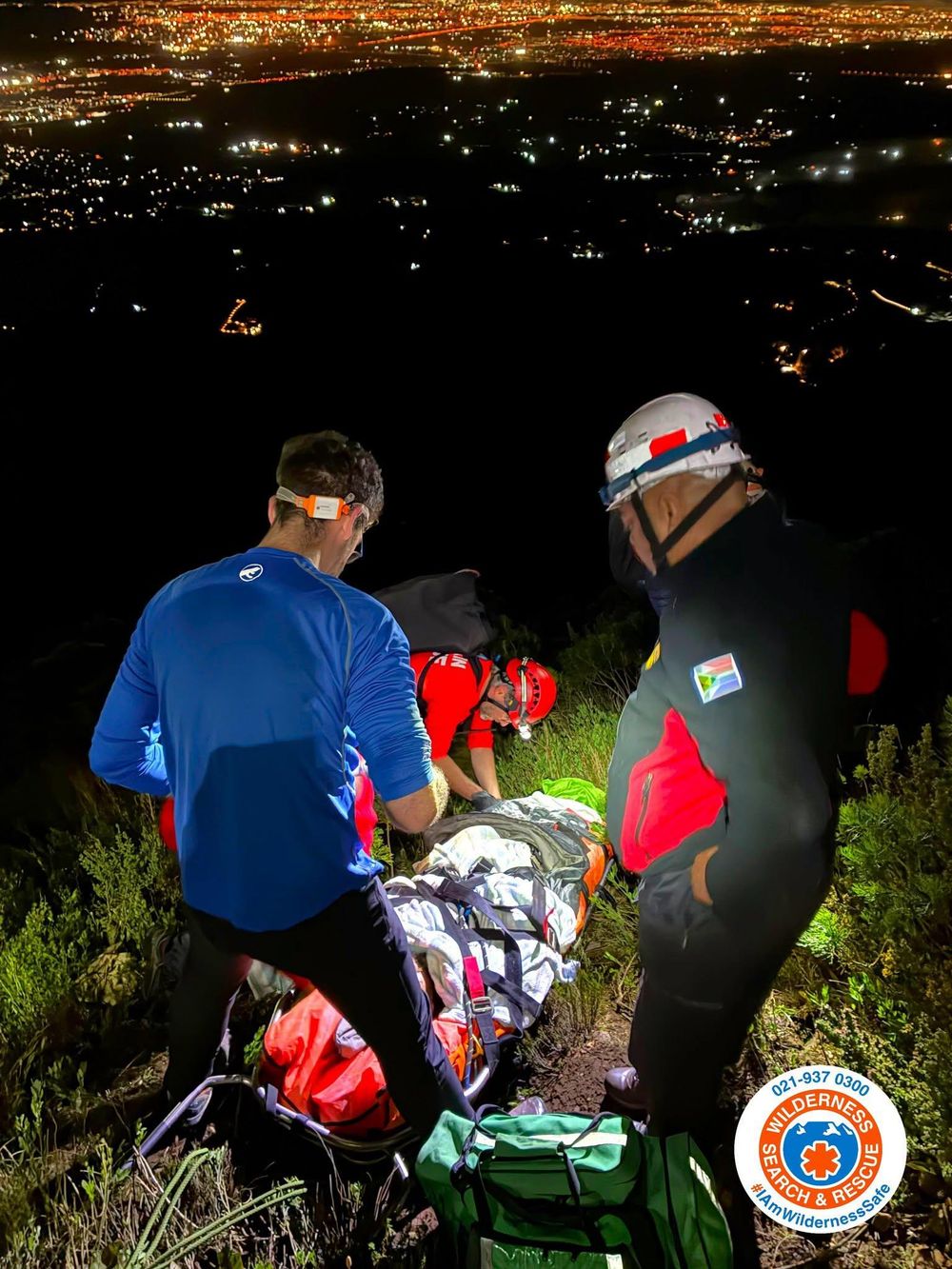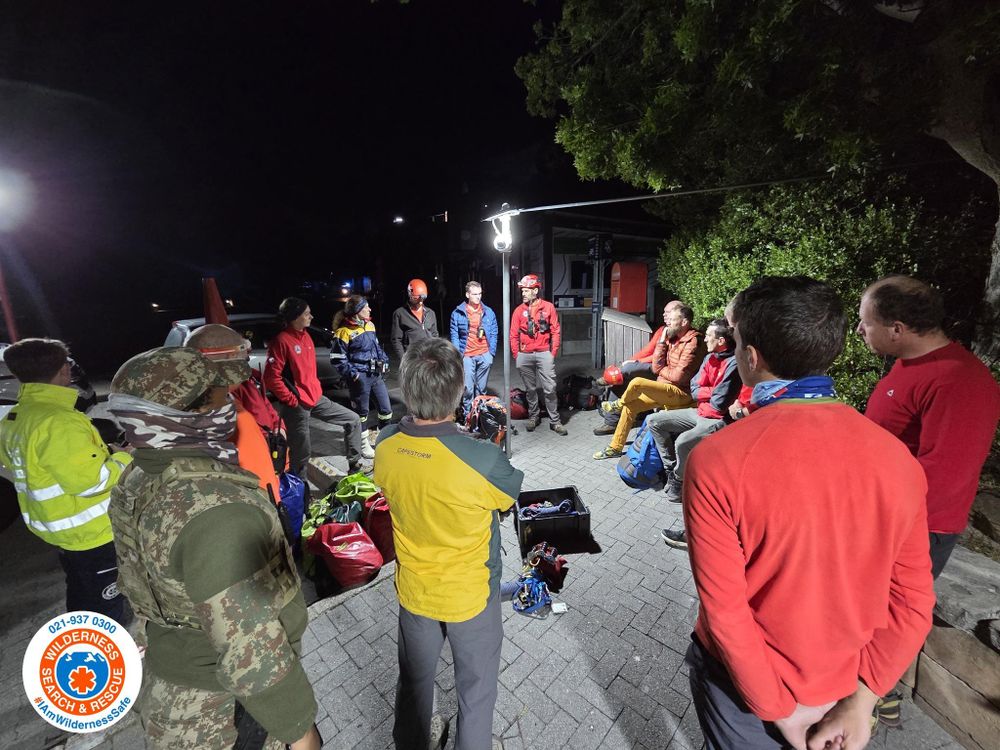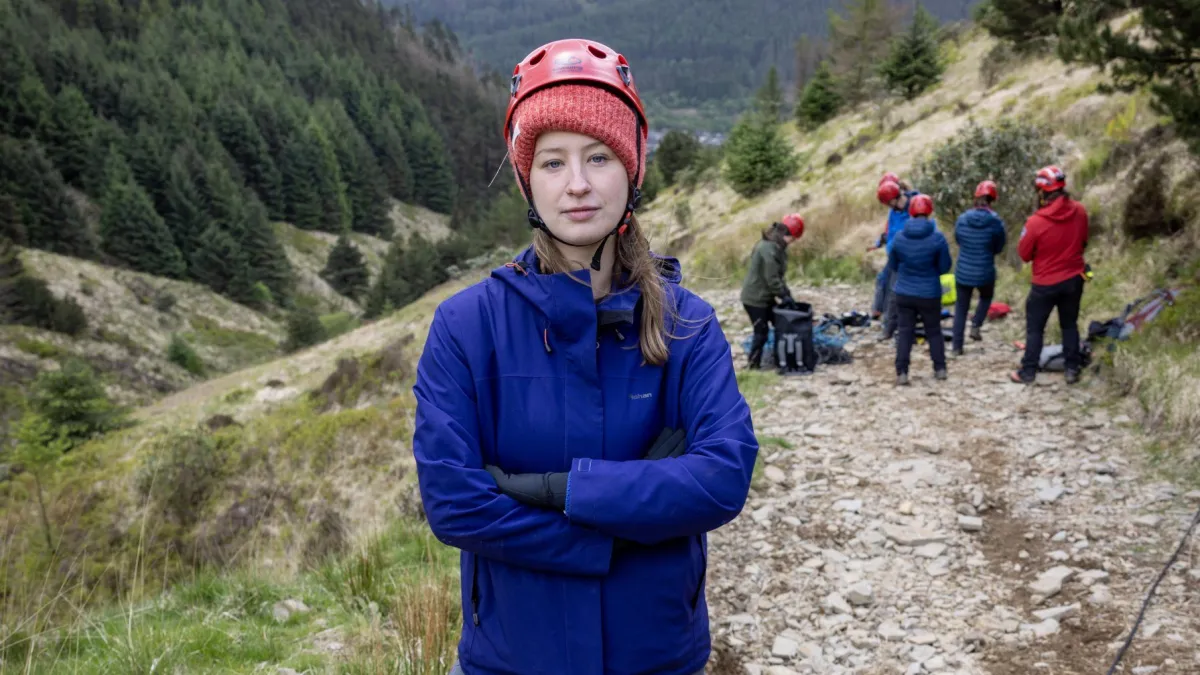
For the second time that day, I watched the team beeline for the Mountain Rescue van, armed with helmets and red jackets. These men and women ran breathlessly up the hill and into the impossibly tall conifer trees. There had been an accident. Waterfall. Female. That’s all we knew.
Just a few hours before, this collection of volunteers received another urgent text alert on their phone: “Bike accident.” They had rushed up that same hill to respond to an incident on one of the Brecon Beacons off-road trails, a 30-minute drive away. A cyclist had flown over the handlebars. “It was a broken arm,” they were relieved to report on their return. He’d be okay.
I met the team on a bright Sunday in May, one of the busiest times of the year for the Brecon Beacons Mountain Rescue. I had joined for a quiet training day, but I soon learned those types of days no longer exist in this patch of South West Wales. There are some places ambulances and helicopters simply can’t go – the terrain is too steep, too jagged, too dangerous – and that’s where this team of volunteers – teachers, engineers, retirees – find themselves.
Shorts
The number of incidents they handle is rising astronomically. Last year, Mountain Rescue England and Wales responded to a record 3,842 call-outs, marking a 24 per cent increase since 2019. For the first time, the 18-24 age group became the most rescued, with incidents in this category nearly doubling from 166 to 314. The Brecon Beacons team received a record-breaking 180 call-outs last year: that’s one every day for six months. This year, already, they have received more call-outs than at the same point in 2025. I’m here to find out why.