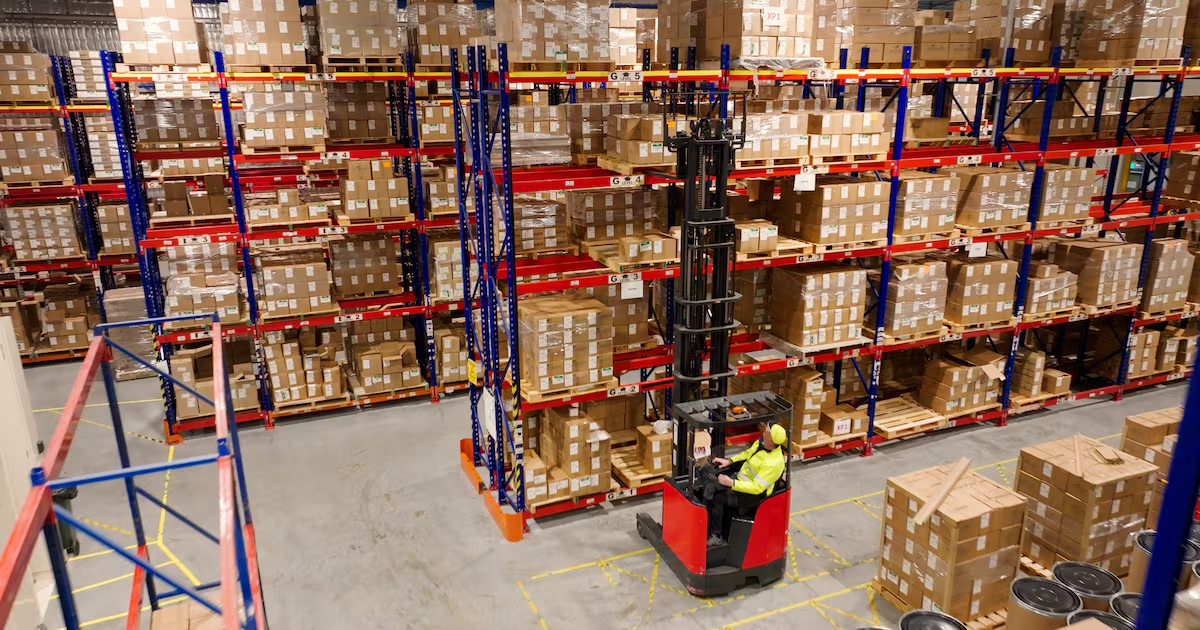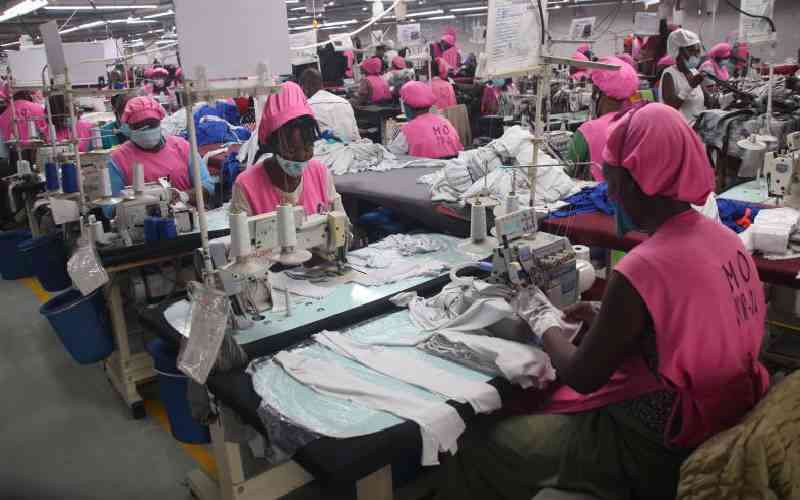
South Africa’s industrial strategy is running out of time because it is out of sync with the market. The country’s new Reimagined Industrial Strategy’s five- to 10-year frame cannot function when the African Growth and Opportunity Act (Agoa) window is fixed at six months. Sector evidence confirms it.The shift from the Industrial Policy Action Plan (Ipap) to master plans changed policy mechanics. Ipap was an annual rolling list with domestic emphasis and no external eligibility dependency. The post-2018 model moved to compacts and localisation commitments across automotive; clothing, textile, leather and footwear (CTFL); poultry; and other sectors. That design assumes a stable export channel, yet the state cannot create one by declaration alone. The distinction between the policy clock and the business clock captures this dependence. One operates on multi-year planning. The other is constrained by contract cycles, investor confidence and tariff certainty.The Agoa timeline is decisive. The extension to December 31 provides a defined horizon. The US trade representative’s characterisation of South Africa as a unique problem and bills before Congress that would affect eligibility indicate political risk not priced into master plan assumptions. Eligibility is reviewed against rules of law, intellectual property, market access and worker rights. Master plans assume access, while Agoa determines whether it exists.The effects will spread across multiple sectors of the economy, and those effects will be significant. In automotive, tier-one suppliers operate on 18- to 24-month tooling lead times. A committed investment of as much as R60bn over five years requires US-bound lines to remain competitive from January 2027. Without duty-free access, Mexico and other preferential suppliers capture volume. Investment is frozen now, before localisation targets are met, and jobs hang in the balance.In citrus and agro-processing, 12- to 24-month forward sales create the same constraint. Packhouses in Citrusdal, Stellenbosch and Sundays River cannot commit to 2027 US contracts without tariff certainty. Reversion to most favoured nation duties would price South African citrus out of the premium market. Labour exposure precedes formal policy lapse through shift reductions and cancelled contracts.The effects will spread across multiple sectors of the economy, and those effects will be significant. CTFL shows the fastest diversion because buyer cycles are shortest. Six- to 12-month US retail orders require duty-free pricing. Procurement teams shift volume to Lesotho, Eswatini and Kenya, where Agoa certainty is higher. The R6.7bn in committed CTFL investment cannot be realised if volume leaves before retooling.Three mechanics explain the blockage. Eligibility matters first. Master plans require scale. Agoa eligibility is conditional, and ownership and market access issues reduce the probability of meeting that condition. Timing matters second. Policy is calibrated to five years. Capital is calibrated to 18-24 months. Agoa is fixed at six months. Decisions are made before policy failure is visible. Fallback matters third. If Agoa ends, most favoured nation rates apply. Labour-intensive exports lose viability first.Desynchronisation is already priced in. Capex committees decline US-bound tooling. Exporters sign with EU and Middle East buyers. Orders exit before factories adjust. That is the transmission from policy design to commercial outcome.US President Donald Trump’s tariff wars have made access conditional and subject to rapid change. A 10-year compact cannot absorb that volatility. Annual or biennial iterations aligned to contract cycles would allow the department of trade, industry & competition (DTIC) and sectors to adjust as access shifts. The present environment requires agility and credible signals to markets to unlock capital.No easy market replacement exists. The US is a premium destination for automotive components, citrus and apparel, where duty-free status underwrites margins. The EU and Middle East cannot absorb diverted volume at equivalent price points. Trade diversification is necessary but cannot substitute for Agoa access in the near term.The corrective levers are specific. Addressing market access and intellectual property enforcement reduces grounds for review. Mobilising US importers and retailers who depend on South African inputs makes the commercial case. Publishing a sector-by-sector most favoured nation exposure map before December provides transparency for 2027 decisions.Master plans are social compacts. Six DTIC master plans cover automotive, CTFL, poultry, sugar, steel and furniture. Compacts require a market. The Reimagined Industrial Strategy sets direction. Agoa sets a timeframe. Until that timeframe exceeds the investment cycle, execution will hit a closed door. That is the cost when the policy clock runs faster than the business clock.• Maseko is a political economy analyst.
PHILIP MASEKO | SA’s industrial strategy is out of sync with the Agoa clock
African Growth and Opportunity Act uncertainty exposes investment, exports and jobs because master plans assume market access, while Agoa determines whether it exists
719 words~3 min read