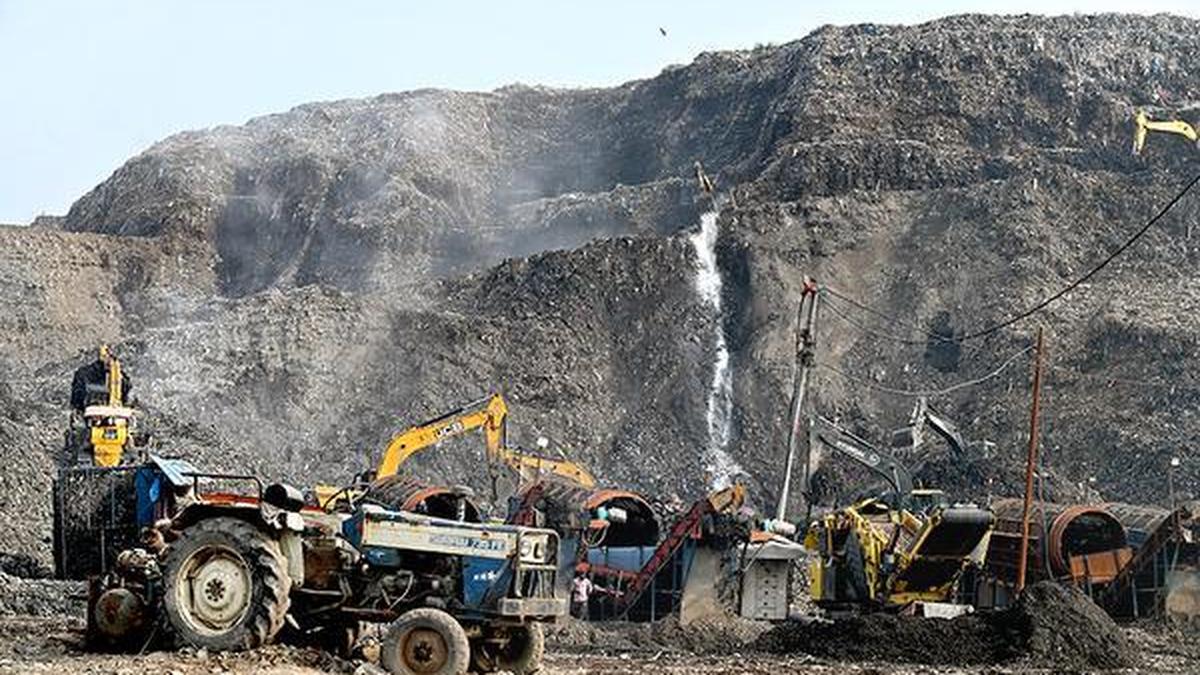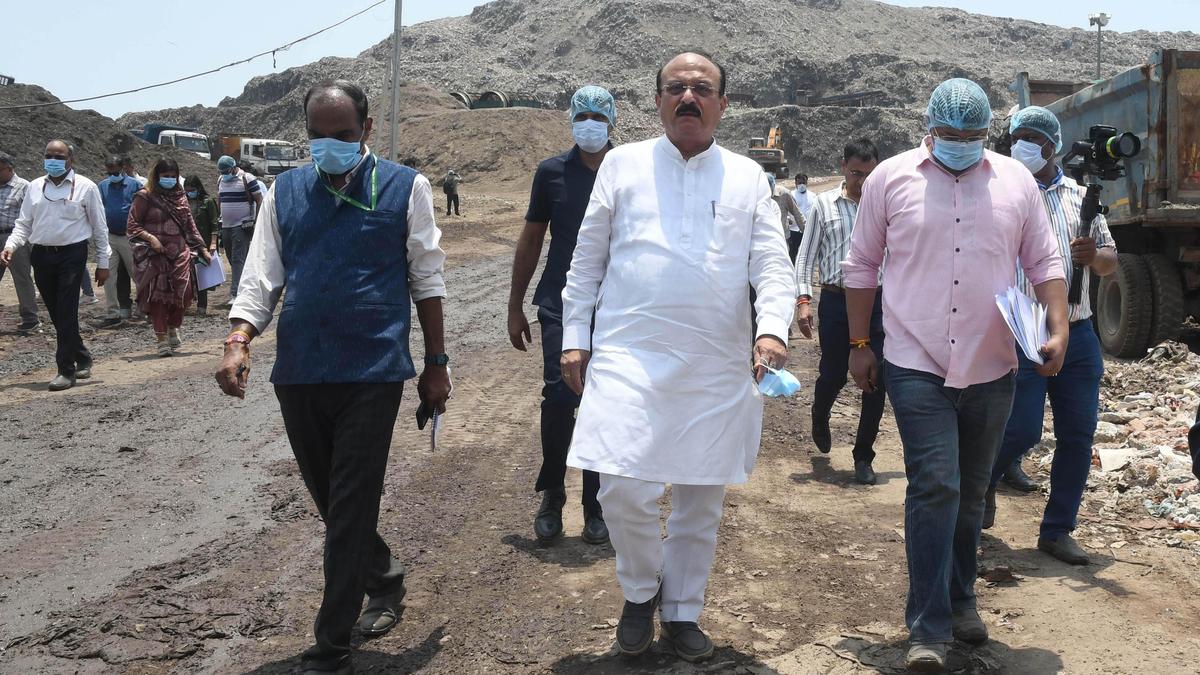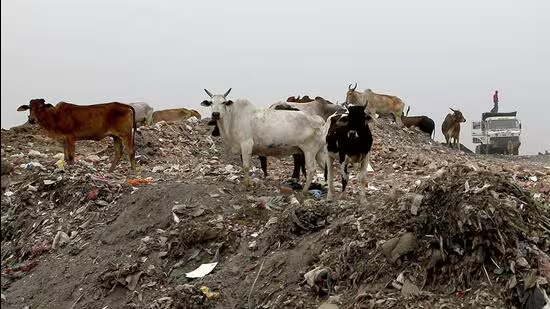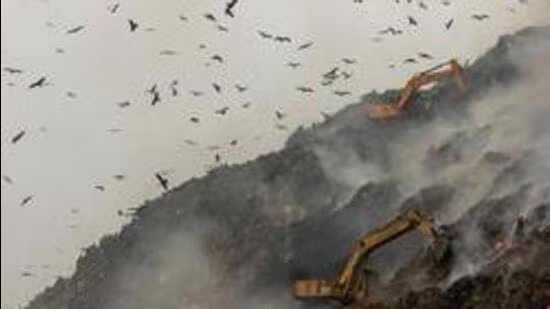
New DelhiFlames continue to smoulder from time to time at the Ghazipur landfill site. (Archive)Poor disposal of fly ash, subpar performance of a waste-to-energy (WtE) plant and gaps in leachate disposal continue to hinder clearance of legacy waste at the Ghazipur landfill site in Delhi, according to violations flagged by a commissioner appointed by the National Green Tribunal (NGT) in a suo motu case based on a report published in these columns.In response to the deficiencies highlighted by the commissioner following an inspection in April, the civic body has submitted an action-planoutlining its strategy to deal with fresh waste, capacity expansion of the WtE plant and three smaller plants to cater to waste being sent to the landfill, among other measures.To be sure, the deficiencies and MCD’s plans to address the gaps were made public in a combined report dated July 6 and a copy of the same was accessed by HT.The landfill at Ghazipur was set up by the Municipal Corporation of Delhi (MCD) in 1984, much before the conception of Municipal Solid Waste Rules, and it holds more legacy waste than the Bhalswa and Okhla landfills combined.Since a biomining project started in 2019, around 6.76 million tonnes of garbage have been removed, but 6.9 million tonnes of garbage continues to remain at the site in east Delhi and it fares the worst in all parameters, as per the report.Around 2,200-2,400 tonnes of waste is currently being received at Ghazipur everyday, half of which is being dumped at the landfill while rest goes to waste to energy plant.The WtE plant at the site processes 1,300 tonnes per day (TPD) of waste and generates 12MW of electricity, but it is prone to breakdowns and maintenance repairs, the inspection found.The case in question is based on a Hindustan Times report titled “Major fire erupts at Delhi’s Ghazipur landfill site, smoke engulfs region”, published in these columns in the edition dated April 21, 2024. Based on the subsequent developments, the court commissioner flagged nine major issues at the landfill.The shortcomingsThe report flagged that fly ash, containing heavy metals and other hazardous items, from the WtE plant was spread across the municipal waste and the approach road. The report stated that WtE plant was being utilised below capacity and with deficiencies, which “demolishes the contention that the WTE facility meaningfully mitigates waste accumulation at the landfill.”Terming the leachate management to be “inadequate”, it states that although the problem of leachate flow through “katchaa drains” has been identified, it has yet to be resolved over the past fiveyears. The court commissioner also sought an action plan for capturing methane through an engineered gas collection system.The court commissioner stated that there was a “chronic delay” in biomining, which was also leading to accumulation of fresh waste at the landfill, with the report highlighting that the WtE plant has remained “nonoperational for unreasonable amount of time.”Biomining is a process of separating various components of legacy waste, such as plastic, paper, cloth, sand, and bricks, by passing them through trommel machines, which act as cylindrical rotating sieves.MCD’s new plants, expansion plansIn an affidavit dated July 6, the MCD said it has called a tender for biomining, given that the current contract is to end in September. The civic body highlighted plans to dispose of waste by bioremediation and biomining at the dumpsite via a tender dated June 16. Bids will open on July 24, it said.The civic body, in the affidavit, a copy of which was accessed by HT, said it would add one more processing line to enhance waste processing capacity of the WtE plant to around 1,700 TPD. It said a new 2,000TPD WtE plant with 25MW capacity is being planned and construction is likely to start in five to six months. The proposal has been sent to electricity regulator for fixing power rates, it said.To tackle the issue of fresh waste slowing down the progress of clearing legacy waste, an 800TPD plant is being set up at Pocket C, the integrated freight complex Ghazipur site. “The agreement with the agency has already been done on July 1, 2026. A time period of 120 days has been granted to the agency for commencement of its operations,” the affidavit read.MCD will also set up two additional plants, a 300TPD compressed biogas (CBG) plant and another 300TPD biogas facility for treating cattle dung from the Ghazipur dairy. For the first project, a 10 acre land parcel was handed over to IGL in January 2026, while bids for the latter would open on July 24, it said.The corporation, however, currently does not have a specific plan for remediation of soil and groundwater. “For soil and ground water remediation, further necessary action would be taken in consultation with the expert agencies in the field, once the entire land is reclaimed,” it adds.Fly ash also remains a key concern. “Presently the flyash being generated at WtE Plant is used to cover the garbage and on the approach road. The agency maintaining Waste to Energy Plant is in final stage of signing agreement with one of the private player in the market for making fly ash bricks,” MCD claims.
Flaws in Delhi landfill ops take centre stage, MCD plans to ramp up facilities
New DelhiPoor disposal of fly ash, subpar performance of a waste-to-energy (WtE) plant and gaps in leachate disposal continue to hinder clearance of legacy waste at the Ghazipur landfill site in Delhi, according to violations flagged by a commissioner appointed by the National Green Tribunal (NGT) in a suo motu case based on a report published in these columns | Latest News Delhi
858 words~4 min read