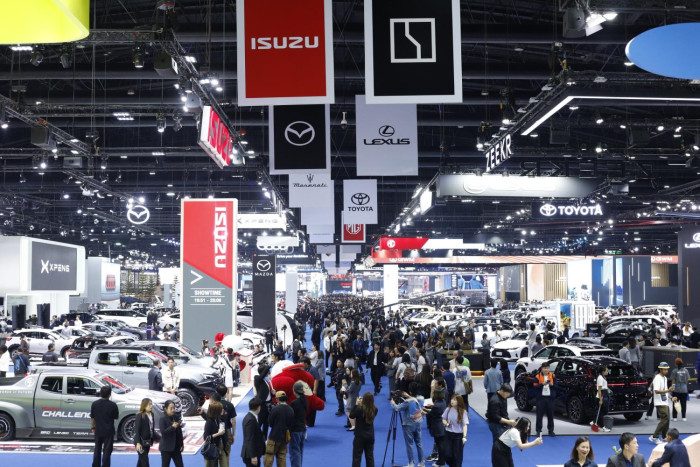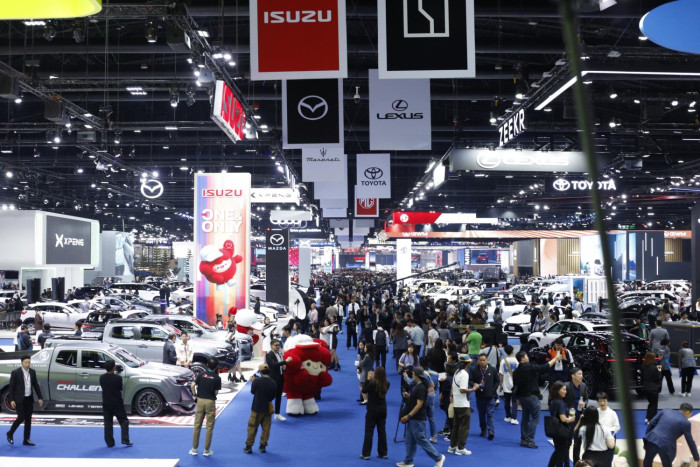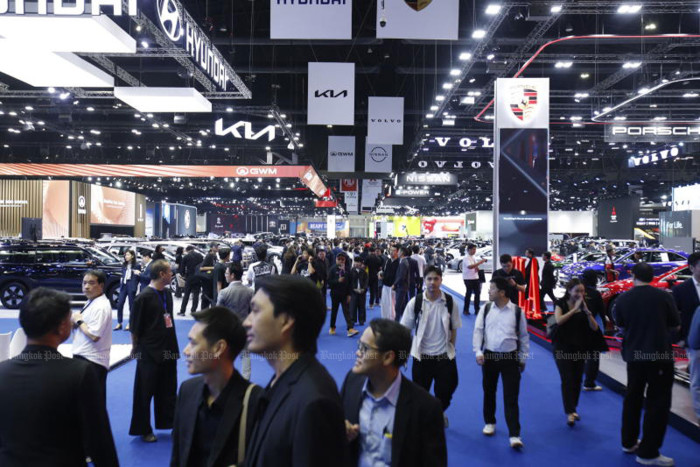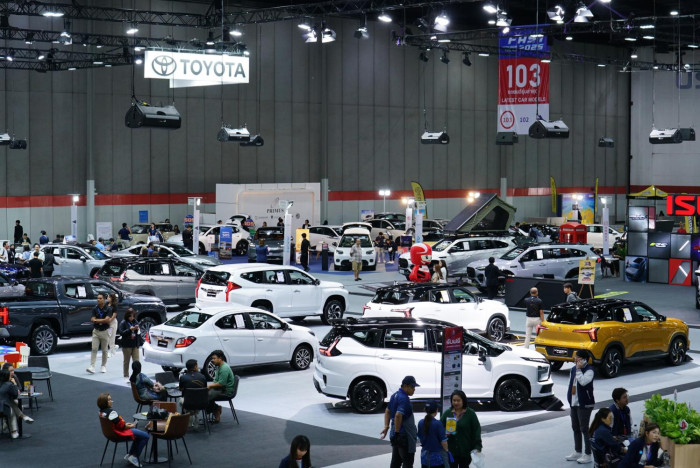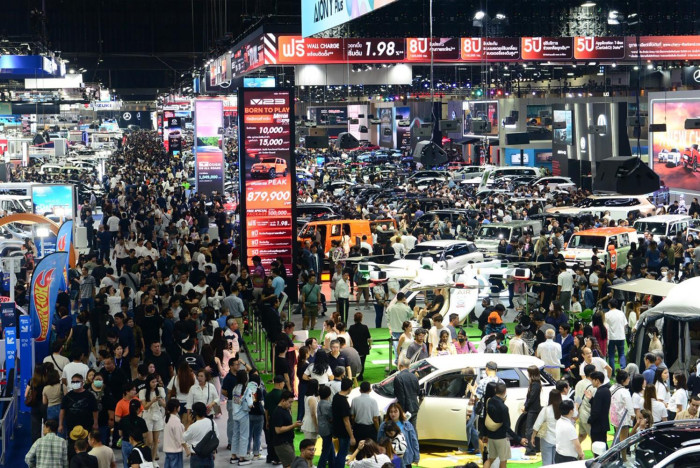
Crowds throng Impact Challenger Hall in Nonthaburi to explore the latest automotive models, including EVs, at last year's Motor Expo. As EVs gain traction, concerns are mounting over their impact on the local auto industry.
Thailand's automotive industry is sounding the alarm over the looming end of the government's EV incentive scheme, known as EV3.5, next year.Industry leaders fear that once the scheme expires, the country will face a flood of Chinese electric vehicle (EV) imports that could destabilise local car production and the auto parts supply chain.
The scheme provides tax cuts and subsidies to companies that invest in battery electric vehicle (BEV) assembly plants in Thailand.
While the programme has attracted investment and lifted domestic EV production, industry leaders caution that its expiration could leave Thailand vulnerable, as Chinese manufacturers may scale back production and turn to imports, taking advantage of zero tariffs granted under the Asean-China Free Trade Agreement.
Suwat Supakandechakul, chairman of the Automotive Industry Club under the Federation of Thai Industries (FTI), said an influx of imported EVs could undercut Thailand's car production, forcing local manufacturers into a crisis.