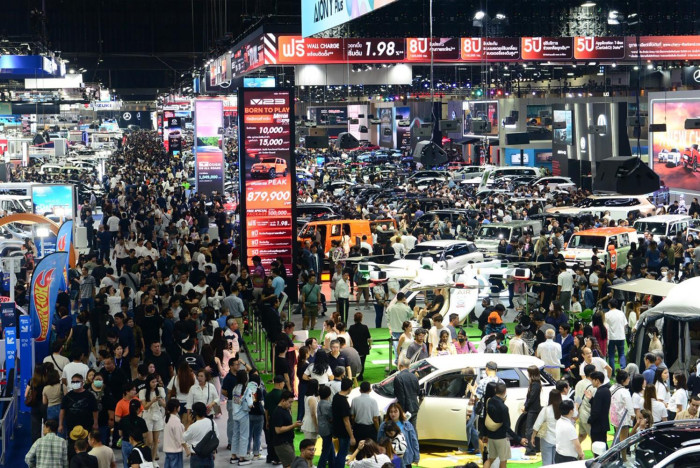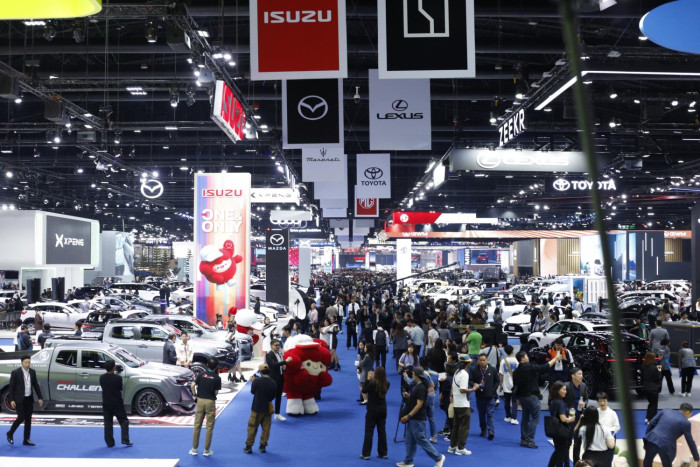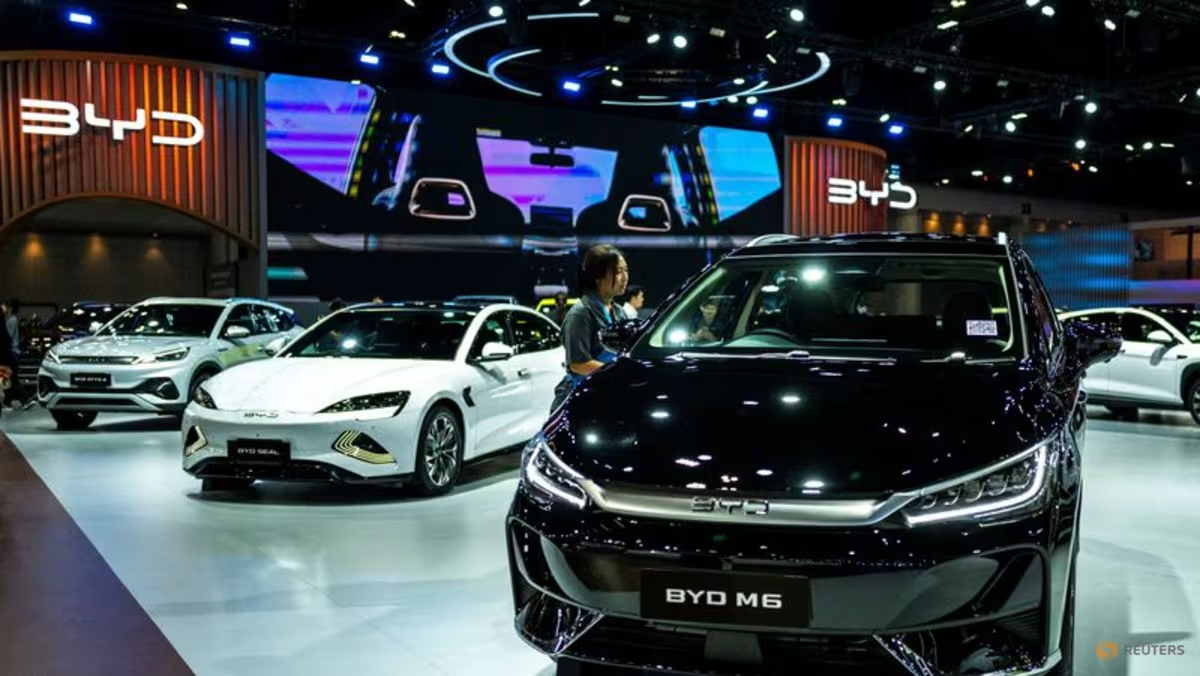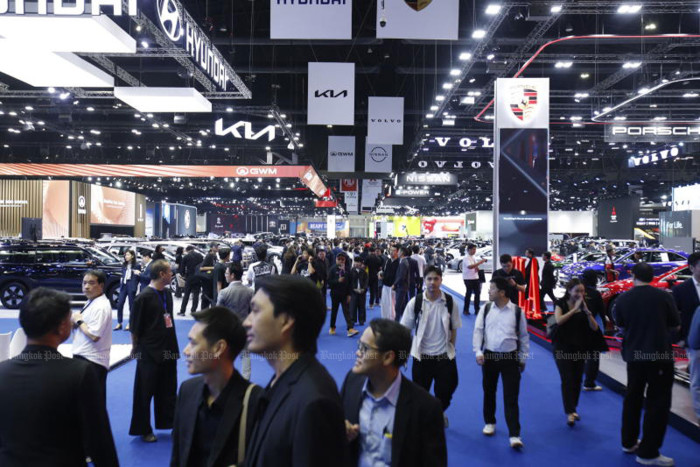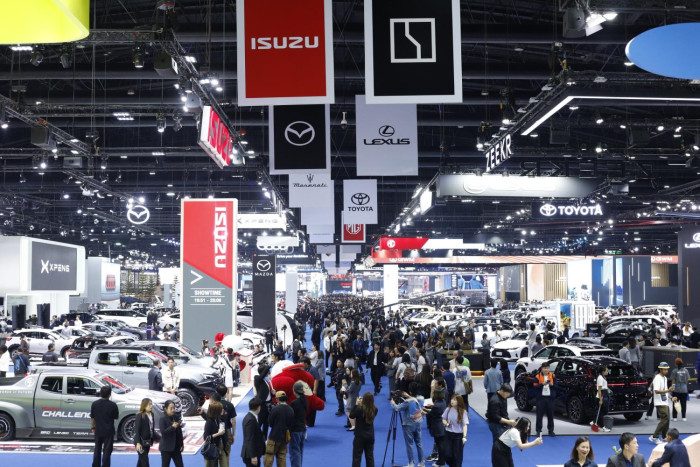
New vehicles, including pickups, attract visitors to the Bangkok International Motor Show earlier this year. Pattarapong Chatpattarasill
The Federation of Thai Industries (FTI) is concerned that the expiration of the government's electric vehicle (EV) incentive programme in 2027 could leave Thailand vulnerable to a surge of Chinese EV imports and weaken local automotive supply chains.The scheme, known as EV3.5, runs from 2024 to 2027 and provides tax cuts and subsidies to automakers in exchange for investment in battery electric vehicle (BEV) assembly plants in Thailand.
Suwat Supakandechakul, newly appointed chairman of the FTI's Automotive Industry Club, said the government must prepare additional measures to sustain the sector once the programme ends.
Without incentives, automakers may choose to import BEVs rather than produce them locally.
"Chinese carmakers have already been importing vehicles from China and are expected to increase volume after 2027, as operating costs in Thailand may be higher than imports that benefit from the Asean-China Free Trade Agreement, which allows a 0% import duty," Mr Suwat said.