Korea Herald
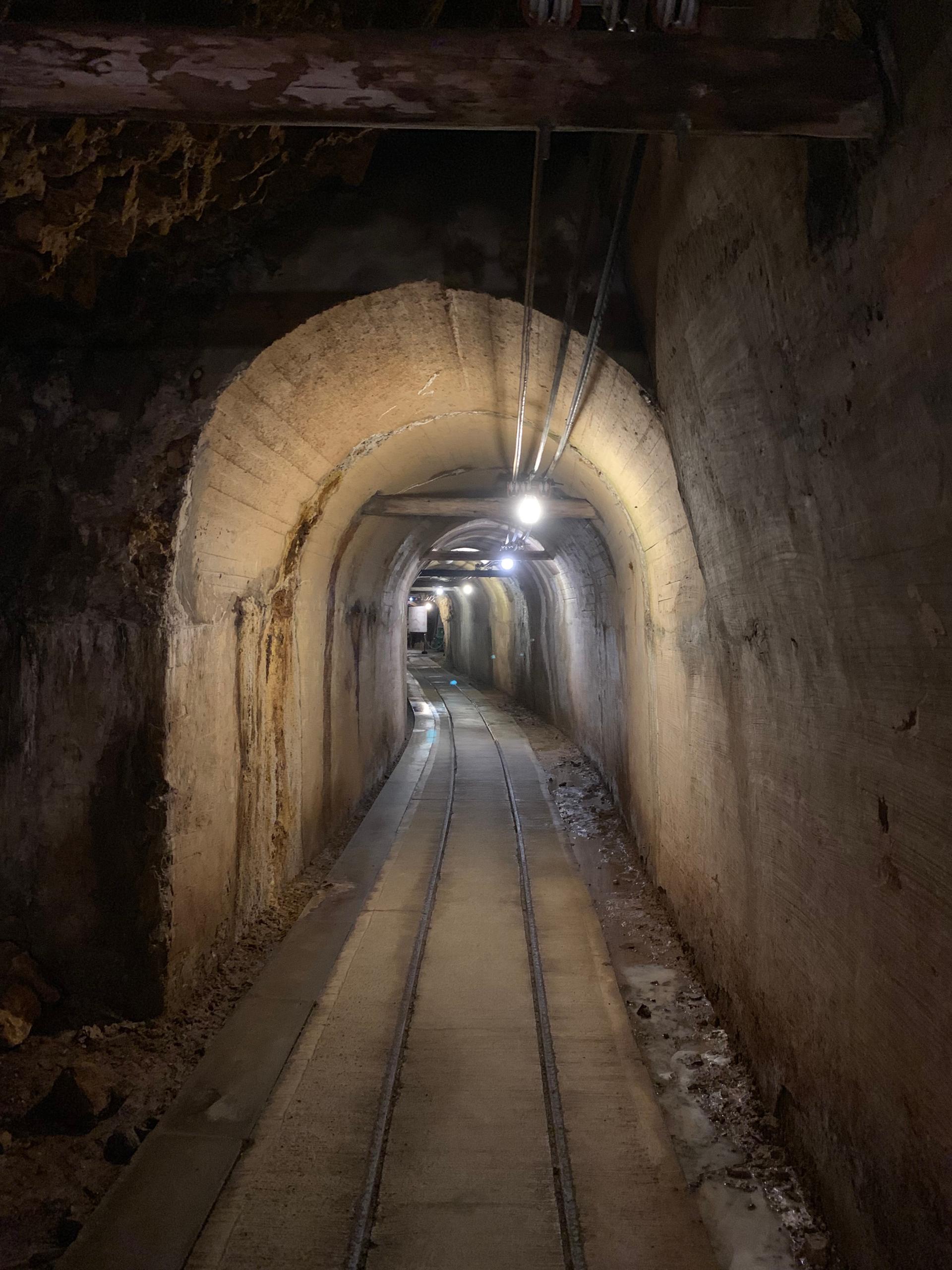
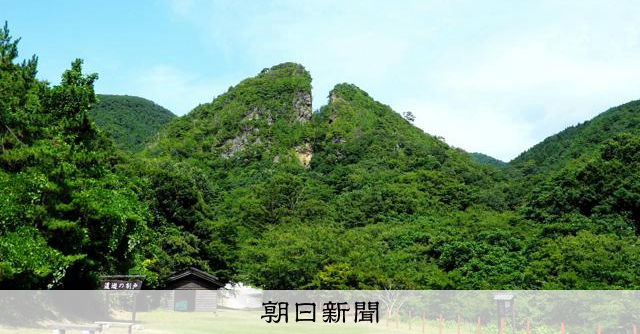
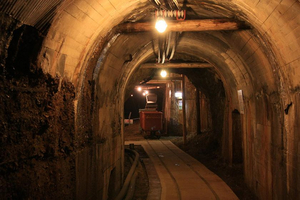
One of Sado Island's gold mines (Niigata Prefecture Tourism Association) In July 2024, the Sado Island Gold Mines in Japan were inscribed on the UNESCO World Heritage List amid significant controversy. Having been placed on the tentative list in 2010, the site underwent 14 years of change — not only in name, but also in its component parts, boundaries and stated values — before finally becoming a World Heritage Site.During the evaluation process, the review of the site was criticized as being narrow in scope and highly selective, generating considerable pushback. The site's historical scope was initially restricted to the Edo period, and its story was presented largely as a triumphant narrative of gold production. At the time, the International Council on Monuments and Sites said that the evaluation of the Sado Island Gold Mines should cover the site's full history, including the period after the Edo era.The World Heritage Committee adopted this position in Decision 46 COM 8B.18, which set out the following recommendations: first, to enhance the nominated property's physical conservation framework; second, to develop an interpretation and presentation strategy and facilities that comprehensively address the whole history of the property; and third, to develop a carrying-capacity study and visitor management strategy.With the site's inscription on the list, a new commitment was made to implement the World Heritage Committee's recommendations in good faith.In December 2025, Japan's Agency for Cultural Affairs submitted its State of Conservation Report in response to the Committee's recommendations. In the report, Japan reaffirmed, in principle, its commitment to implementing the recommendations.At the same time, it argued that, given the nature of the property and its buffer zone, existing archaeological survey findings could be relied upon to a large extent, and that the current framework for protecting the site was already sufficiently established, leaving little need for additional measures.As for the recommendation to present the "whole history of the property," the report noted that a range of interpretation and exhibition facilities had been set up in different locations, with interpretation and displays tailored to the characteristics of each site. It also noted that the lives of local people, including workers, were being presented through various means.However, how does this compare with the reality on the ground?I visited and examined the Sado Island Gold Mines before its inscription, immediately after inscription, and again following the submission of the SOC. Over the years, the condition, including restoration, of the main components and the overall visitor environment changed very little. The only notable additions were a handful of facilities such as Kirarium Sado and the Aikawa History Museum, which, according to the Japanese authorities, could "effectively explain the whole history of the property."Yet even in Kirarium Sado, the official exhibition and information center for the Sado Island Gold Mines, there is no interpretation that addresses Korean workers who were forced to mobilize or a history in which human rights were sidelined.A small corner of the Aikawa History Museum, which lies outside the World Heritage property, does contain materials referring to workers from the Korean peninsula and hinting, in a metaphorical way, that they were subjected to surveillance and control.The shining history of Sado's gold production is placed squarely at the front, while its darker history remains tucked away in the background. In this light, one must ask: Are the recommendations of the World Heritage Committee, and the promises made in accepting them, truly being kept?Korean attention to Japan's commitment surrounding the Sado Island Gold Mines is rooted in a sense of deja vu shaped by the Sites of Japan's Meiji Industrial Revolution: Iron and Steel, Shipbuilding and Coal Mining, another World Heritage Site hereafter referred to as the Meiji Industrial Heritage.Inscribed amid fierce controversy, the Meiji Industrial Heritage brought the issue of contested heritage to UNESCO and left a lasting wound in Korean society. More broadly, it marked a turning point that weakened public confidence in World Heritage, as many were disappointed by the reality that a heritage meant to belong to all was instead framed through the interpretation of a single state. Against this backdrop, the Sado Island Gold Mines has become not merely a subject of commitments, but a measure of whether those commitments are being fulfilled — and for that reason, it continues to draw Korea's close attention. The Sado Island complex of gold mines (Niigata Prefecture Tourism Association) Once a cultural or natural property comes under the World Heritage Convention, what was once the heritage of a local community or a single nation is fundamentally transformed in both its status and its meaning. The World Heritage framework, established under the 1972 World Heritage Convention, was built on this premise. Over the decades, it has grown into something far greater than a set of obligations binding states parties — it has become a matter of global common sense: The collective commitment to protect heritage and preserve its value for generations to come.Yet, more than half a century after its establishment, the World Heritage framework now faces new challenges. Does "heritage" carry only affirmative value? Are the outstanding universal values defined at the time of inscription fixed and immutable? And can the protection measures for World Heritage sites truly be upheld after inscription as committed? These are questions that demand the best possible answers on multiple levels. Ultimately, this is not simply a matter of promises among stakeholders, but a responsibility we owe to the future we have pledged to protect.The World Heritage Committee, which continues to broaden the scope of what it recognizes while reaffirming its commitments, has now reached its 48th session. This session, which both welcomes the registration of new heritage and reviews the state of conservation of inscribed sites, calls for a more mature level of discussion.Perhaps what matters more than making a commitment is ensuring that it is actually fulfilled. A commitment grounded in trust is like a sandcastle: Once it is broken, it collapses quickly. I hope the 48th session of the World Heritage Committee will serve as an opportunity to reflect on commitment and trust. Hwang Sun-ik (Courtesy of the writer) Hwang Sun-ik is a professor of Korean history at Kookmin University and an expert member of the World Heritage Subcommittee of the Republic of Korea's National Heritage Committee. The views expressed in this article are his own. — Ed.