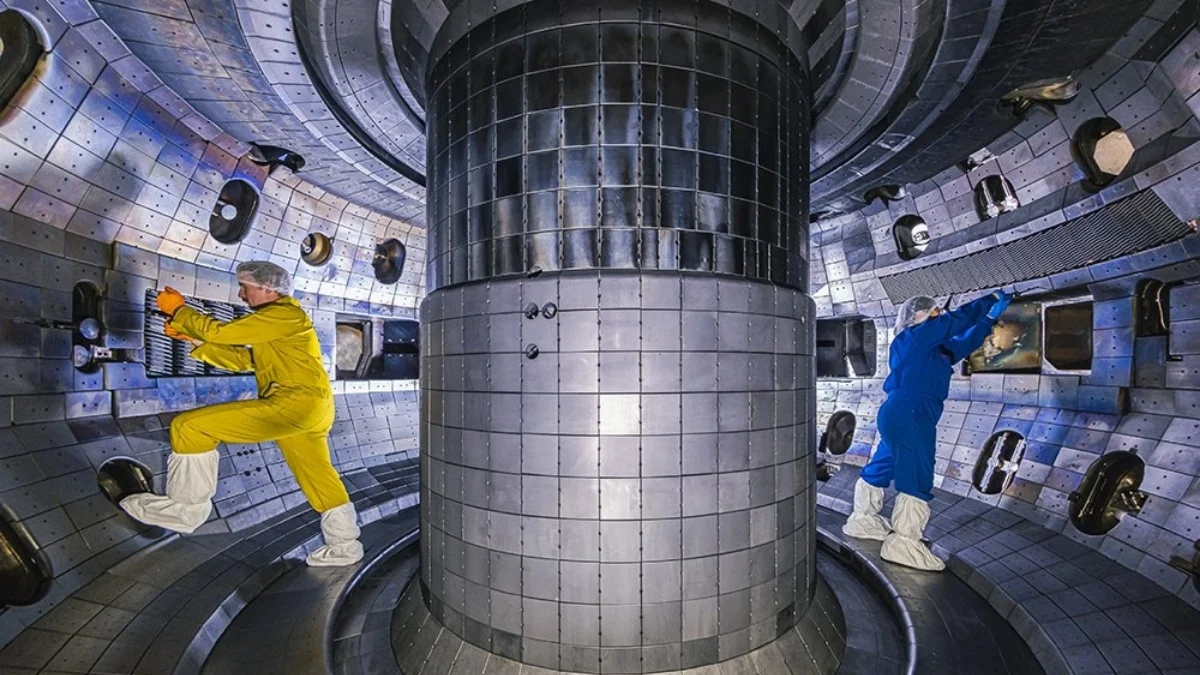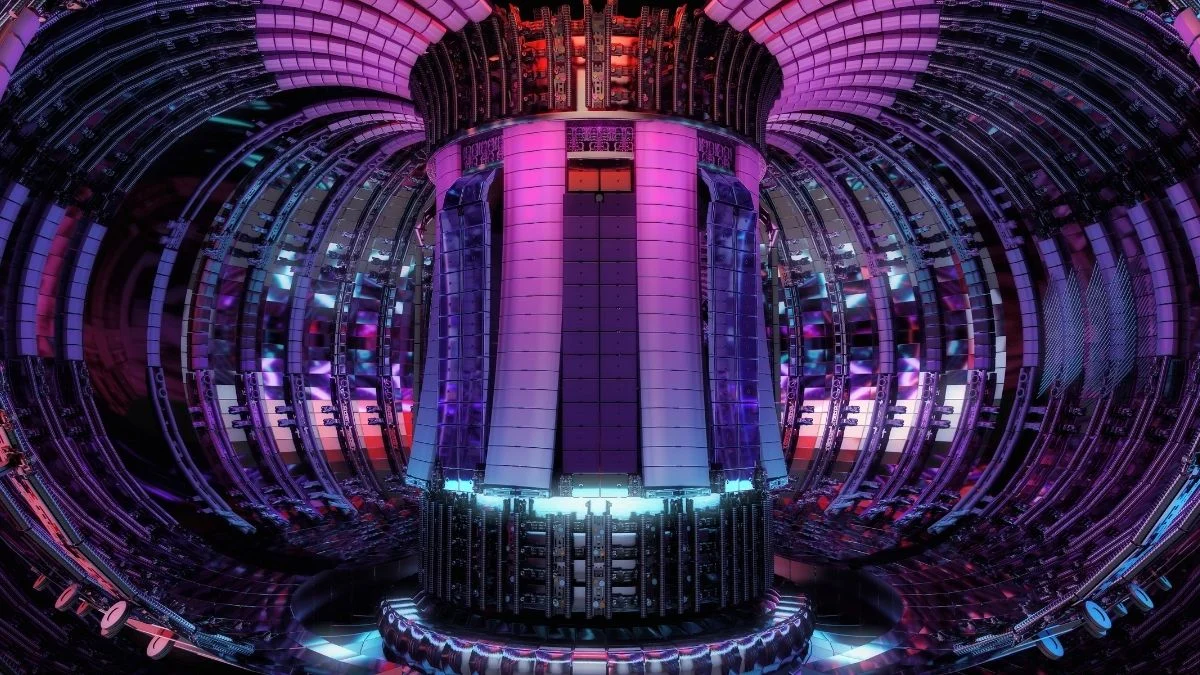
Illustration of a tokamak nuclear fusion reactor chamber. (Ruslanas Baranauskas/Science Photo Library/Getty Images)
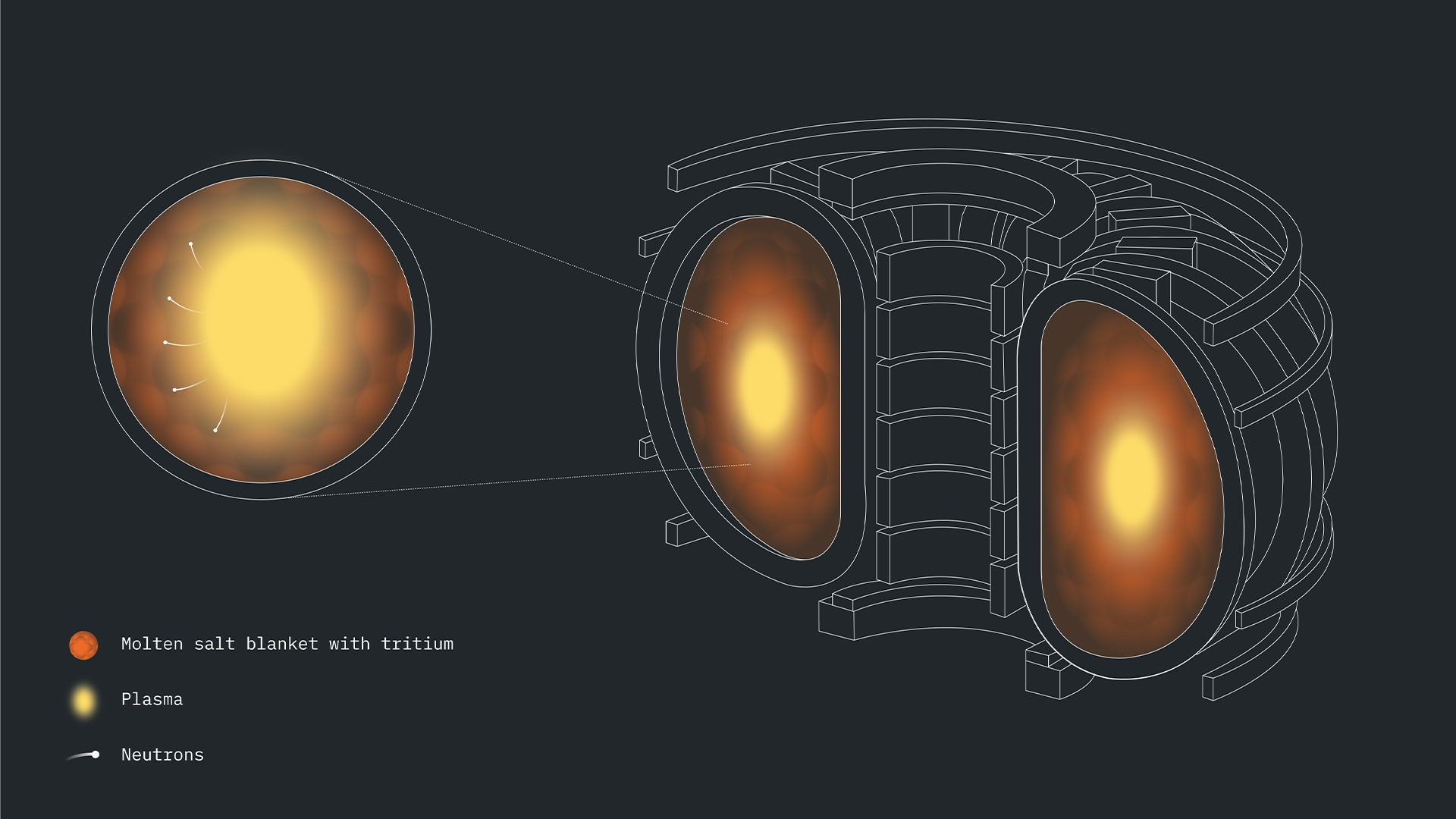
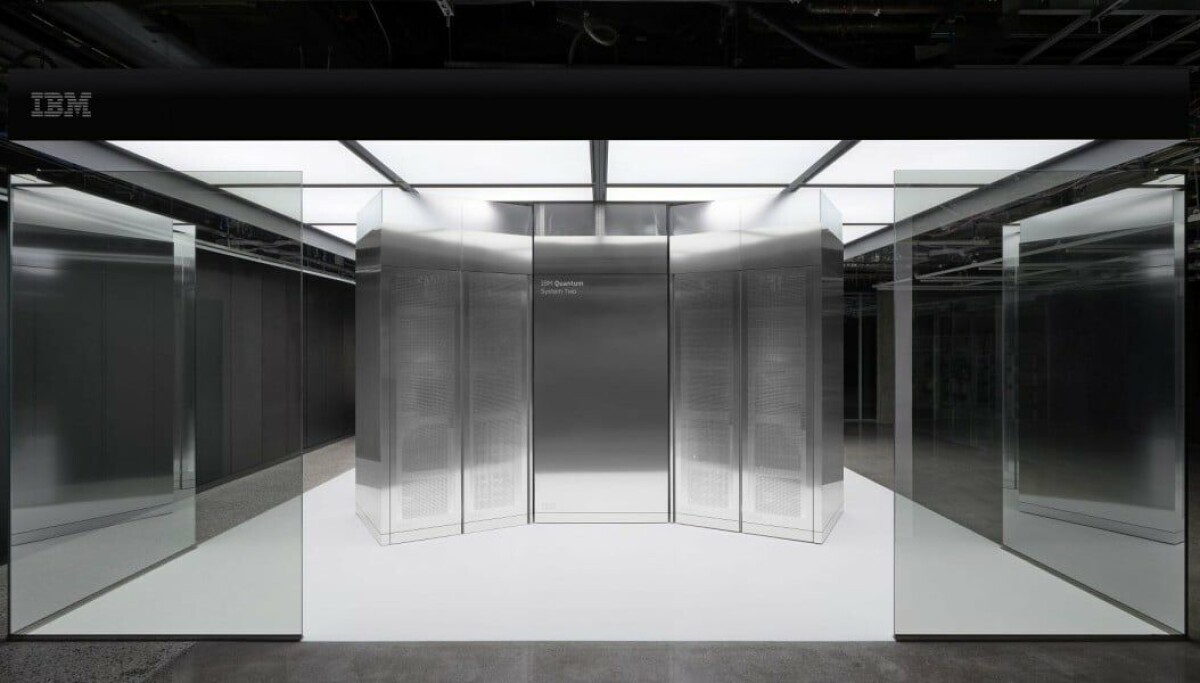
A major barrier to harnessing energy via nuclear fusion is the fuel source.Most proposed fusion reactors (the donut-shaped tokamak reactors) are powered by the fusion of tritium and deuterium.Both are isotopes of hydrogen, but tritium is radioactive, and deuterium is stable.The fusion reaction between these two isotopes produces one helium nucleus, a loose neutron, and 17.6 megaelectronvolts. As far as fusion goes, this particular combination has a very high reaction rate, and a very high energy yield.Unfortunately, tritium is next to non-existent on Earth.The only place it's known to naturally occur is in the atmosphere, where it is produced by interaction with cosmic rays. Even then, it only occurs in trace amounts.However, if scientists can find an efficient way to 'breed' tritium, it could become a more viable source of power.Now, for the first time, quantum-centric supercomputers have just been used to identify nine configurations of the material used to breed tritium – the latest evidence that these high-tech simulations could help physicists knock down one of the greatest barriers to fusion.Neutrons from fusion plasma strike a molten salt blanket inside a tokamak reactor to produce tritium. This material is now being modeled with quantum computers. (IBM)Advocates of fusion energy say it is a 'clean' energy source, since it does not release greenhouse gas emissions like fossil fuels do, and it produces far less radioactive waste than its more controversial counterpart, nuclear fission.But so far, fusion has been floundering to take off, with technological barriers so far constraining it to laboratory settings.