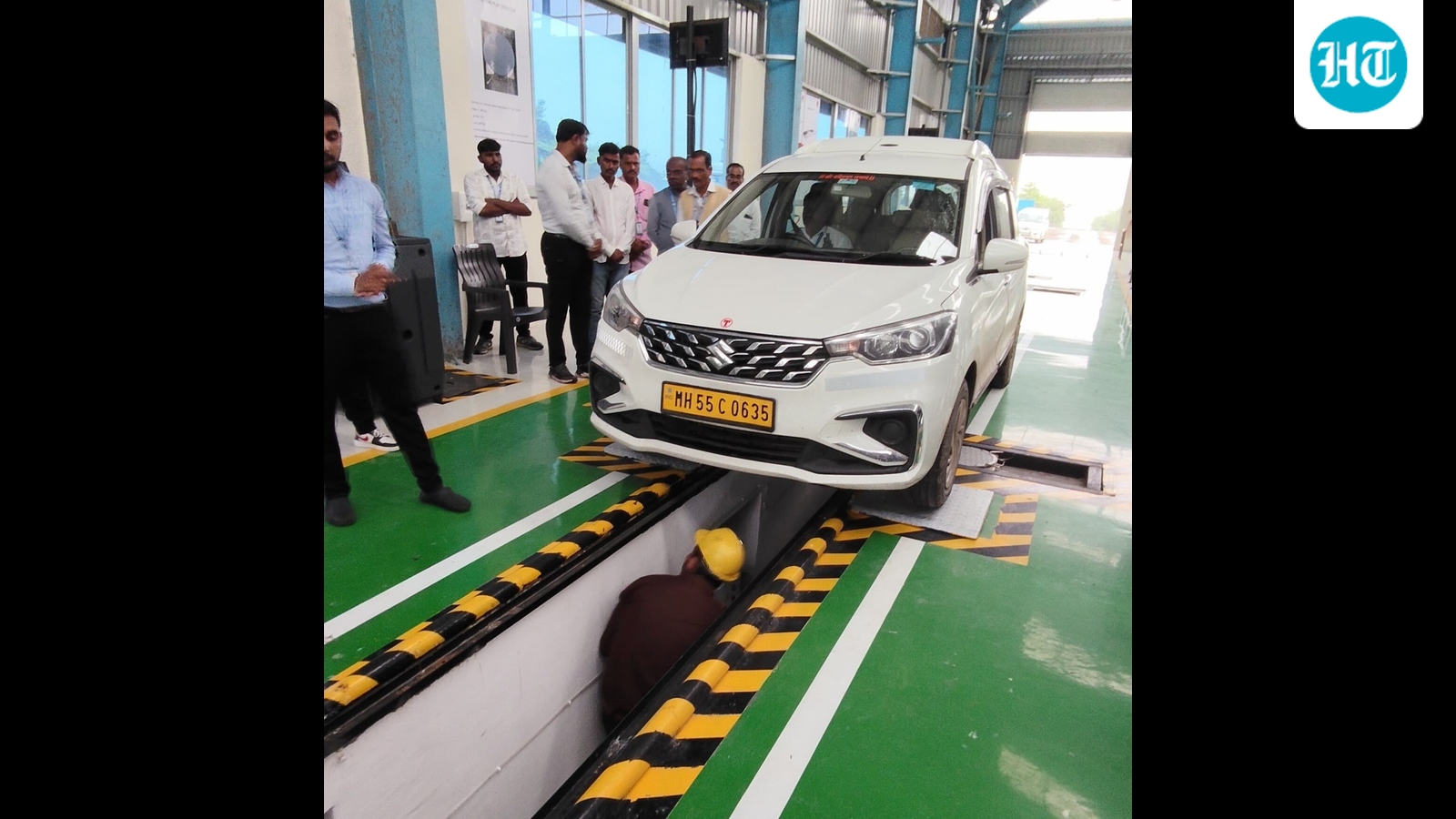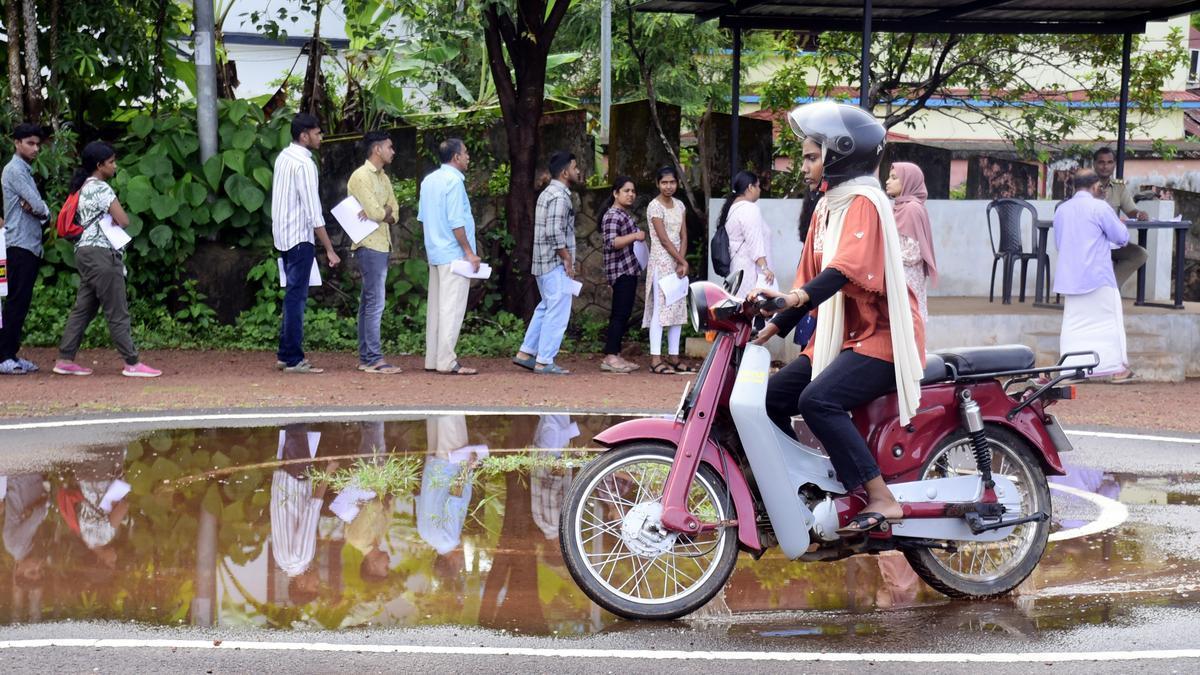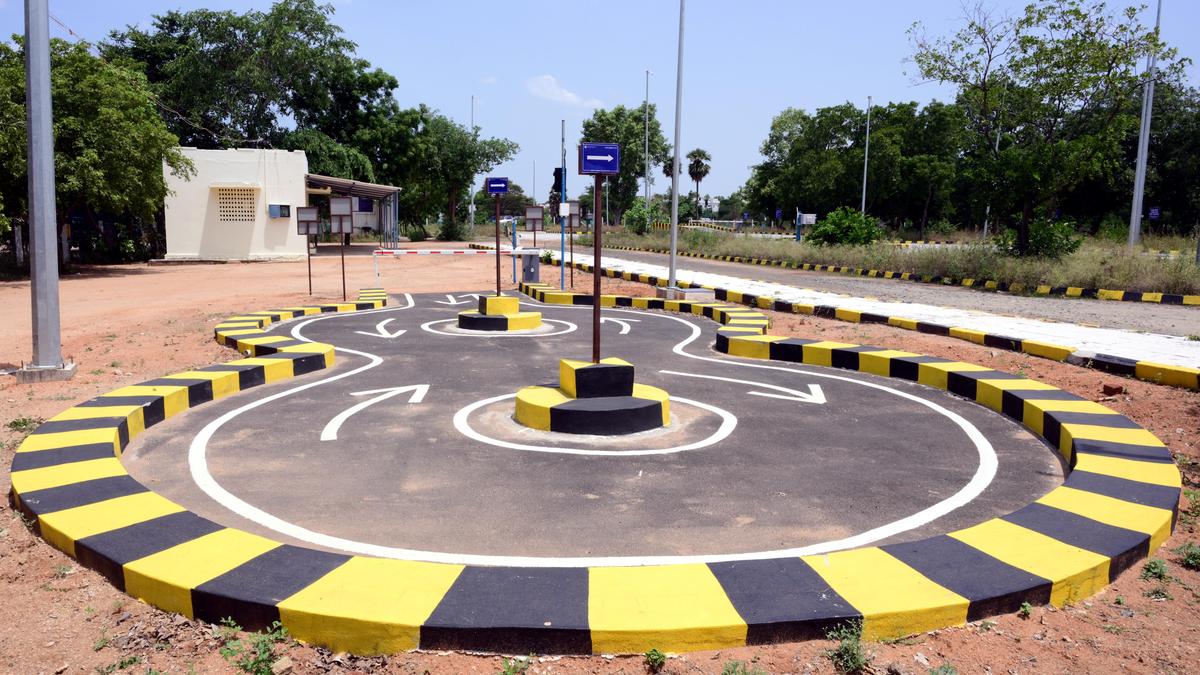
The automated testing track at the RTO North office in Madurai.
| Photo Credit:
G. MOORTHY
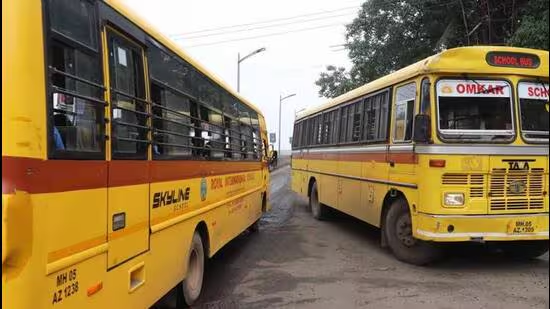
Kesavan, a share autorickshaw driver in Dindigul, is a worried man. The Fitness Certificate (FC) for his vehicle is about to expire, and he is hoping that within one working day he will get it done.“All my friends make numerous trips to get FC, but I do not have the luxury as I am taking school trips. I can take leave for a day only,” he rues.This delay in getting FC is not just limited to Dindigul but it is rampant in numerous RTOs and the reason being cited is the non-filling of Motor Vehicle Inspectors (MVI) vacancies.In Dindigul, the Regional Transport Office (RTO) has an officer but the posts of Grade 1 and 2 Motor Vehicle Inspectors (MVI) are lying vacant. An MVI from Batlagundu comes on Mondays and Wednesdays to test vehicles and issue fitness certificates.The RTO in Dindigul on an average, sees about 70 vehicles coming in daily for either registration or getting a fitness certificate. Masoor, a cab driver, says that lack of officials at the RTO has hit FC work, though registration of new vehicles has not been affected, as buyers in the State can now complete registrations at the dealership itself through the Vahan Portal.“On the two days that the MVI is present in the office, there is a heavy rush and chances are that nuanced jobs like checking of breaks etc., that should be done in a vigilant manner may be compromised,” fears social activist Kannan.MVIs handle a wide range of duties that are crucial to public safety: verifying emissions, braking efficiency, lights, tires etc. They conduct on-road or track driving tests before issuing a license, and they are also crucial for compiling detailed investigation reports pertaining to accidents.“These lacunae in administration due to vacancies especially pertaining to road safety may have a dangerous impact,” Mr. Kannan adds.Sources in Madurai RTO also point to the vacancies in the department.Eight years ago, in Madurai there were no vacancies in the wing. But slowly, with retirement and cases regarding issues of seniority etc, being filed in courts, the vacancies became glaring and started affecting the services being provided.Madurai North RTO should have five MVIs but all the posts are lying vacant. Similarly, Central and South also have no motor vehicle inspectors. An enforcement inspector comes thrice a week to look after the work in North and Central zones. In the South RTO an enforcement inspector from Vedasandur comes thrice a week.Similarly, unit offices that are under the control of inspectors are also reporting numerous vacancies. Usilampatti officer looks after Thirumangalam and the Melur officer is in-charge of Vadipatti.Not just at this level, but there are vacancies at the level of Deputy Transport Commissioner and Joint Transport Commissioner, says the source.The workload of the officers has increased manifold and also for the staff within the offices. With officials travelling between various RTOs the regular paperwork gets piled up.For ordinary people, the delay is felt in the issuance of FCs, and they can also sense the lapse on the enforcement side.Citing the example of the Madurai - Natham elevated corridor, the source said that officials are unable to check the rampant bike race or road rule violations like driving on the wrong side etc. due to the lower number of staff.Similarly, traffic violations, especially indulged by share autos, goes unchecked. “During the annual inspection of buses of educational institutions, this shortage of staff is intensely felt,” the source said.Due to non-filling of posts, there is also a huge revenue loss for the government. On average, Madurai division is staring at a daily revenue loss of ₹10 lakh. This is by way of revenue generated during FC work and enforcing of various rules etc.Automated testing trackAnother issue that is being highlighted by various stakeholders is the automated testing track. The automated testing track at Dindigul, which became operational in February, has come in for criticism. Mathan, a driving school inspector, says that with many people preferring to go in for vehicles with more than 3.25 metres of wheelbase, they find it difficult to manoeuvre the vehicle during the test drive as the lane is narrow, and the sensors are hyper-sensitive.“Due to this, many people are unable to get their licence as the sensors treat even minor positioning errors as fault,” he points out.Driving school inspectors are of the opinion that these sensor-based tracks leave no room for malpractice, but not much thought had been given by the department while laying the track. Senthil, a driving school instructor, points out that the test track laid in RTO North in Madurai was done in a hasty manner with the work being completed in just 40 days.“If 10 students take the exam, only four get through. The width of the track is so narrow that only someone driving a Maruti 800 can pass through without touching the demarcated sensor boundaries,” says Senthil.Recently, the Madurai Bench of the Madras High Court issued an interim stay on automated H-track driving tests across 10 Tamil Nadu RTOs (including Madurai North). The court said that the narrow, sensor-driven H-tracks leave little room for manoeuvering larger vehicles.This follows numerous driving school owners filing a petition at the Madurai Bench of the Madras High Court challenging the stringent rules of the sensor-based driving track due to its high failure rate. Now, they hope that the testing will be shifted to the 8-track driving test and the RTO office will become fully operational with the required staff strength.