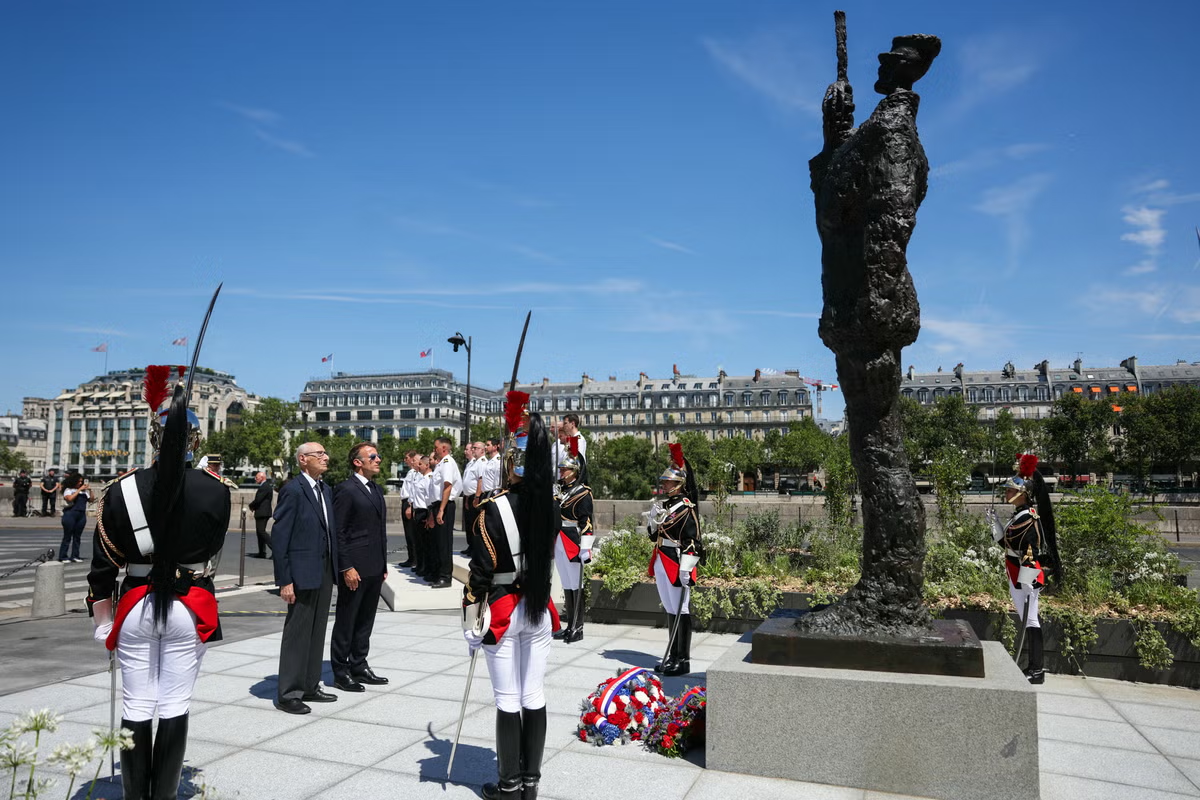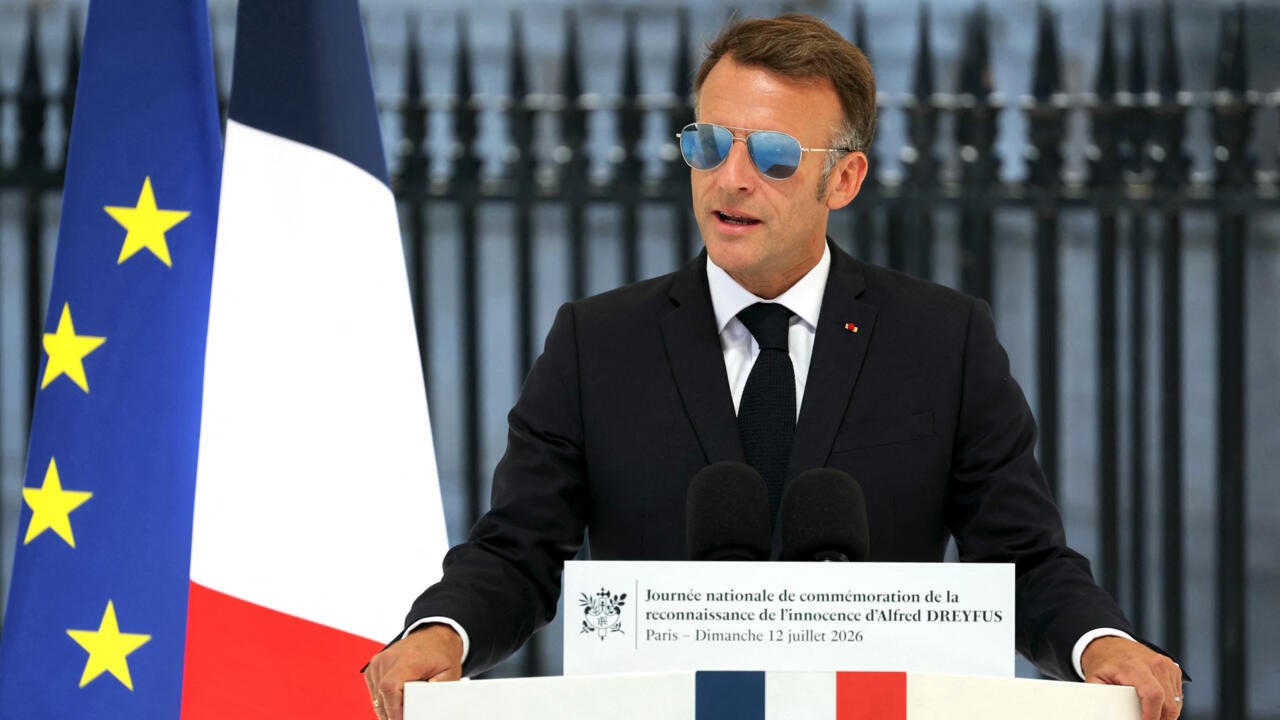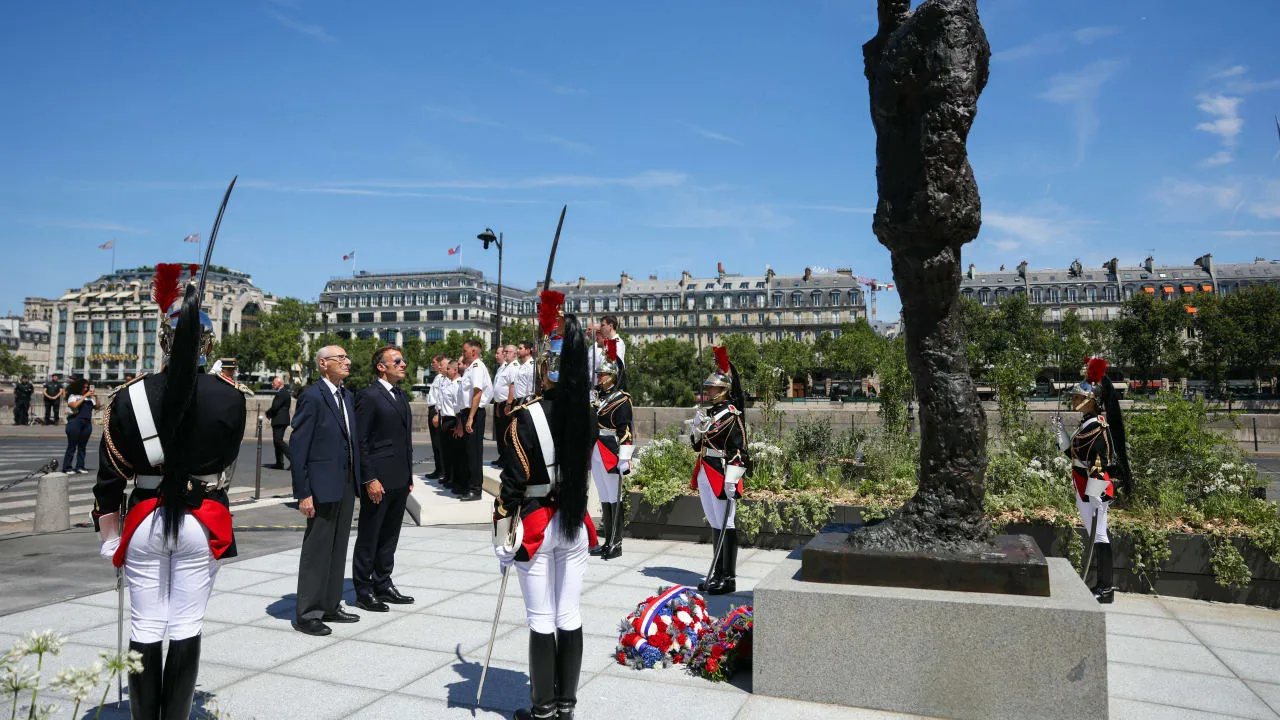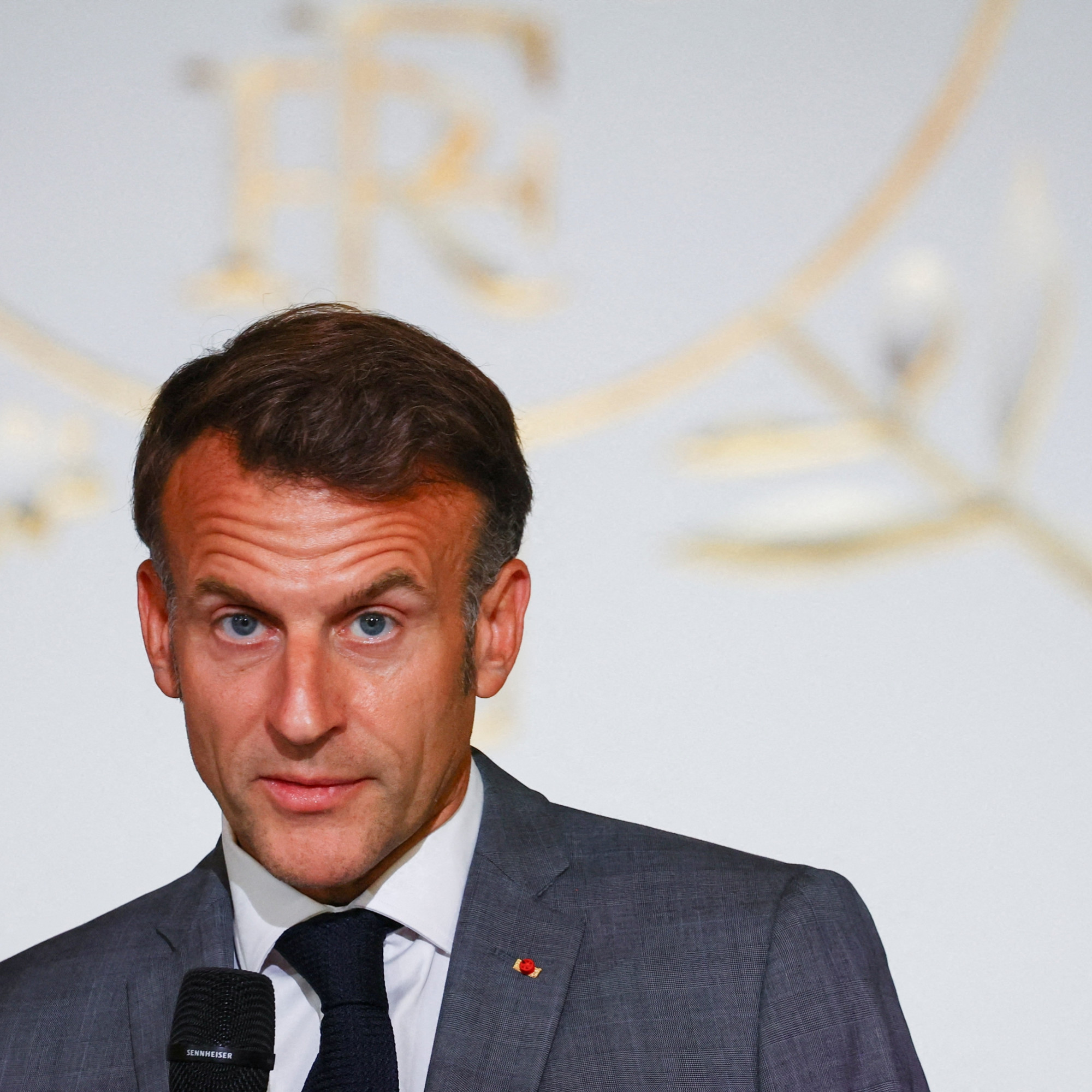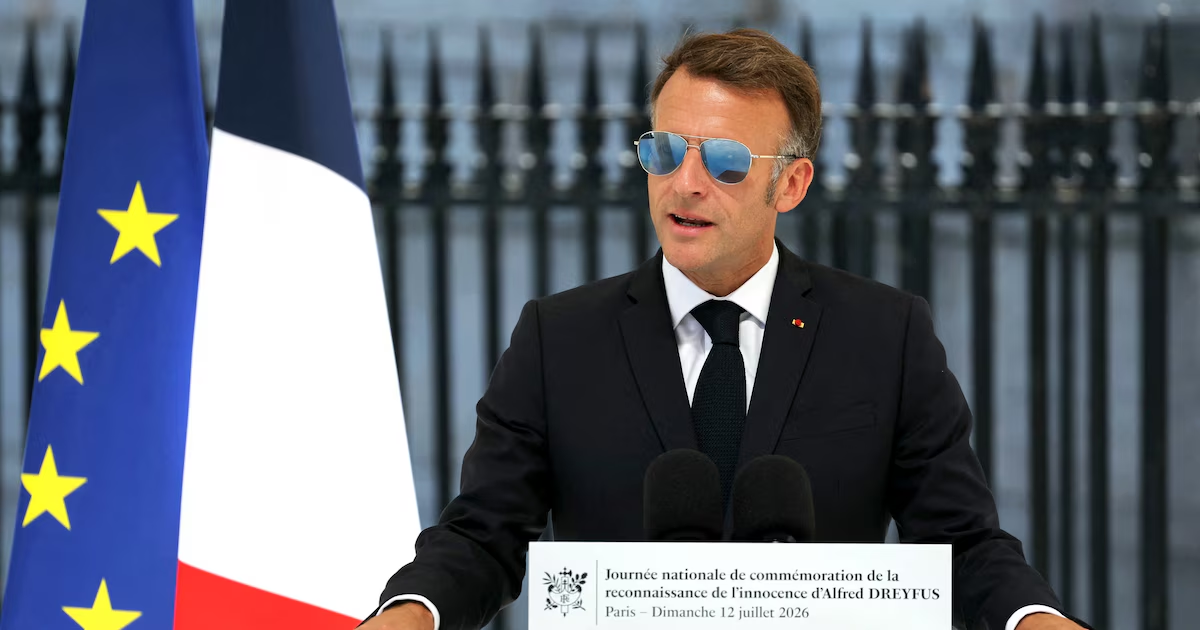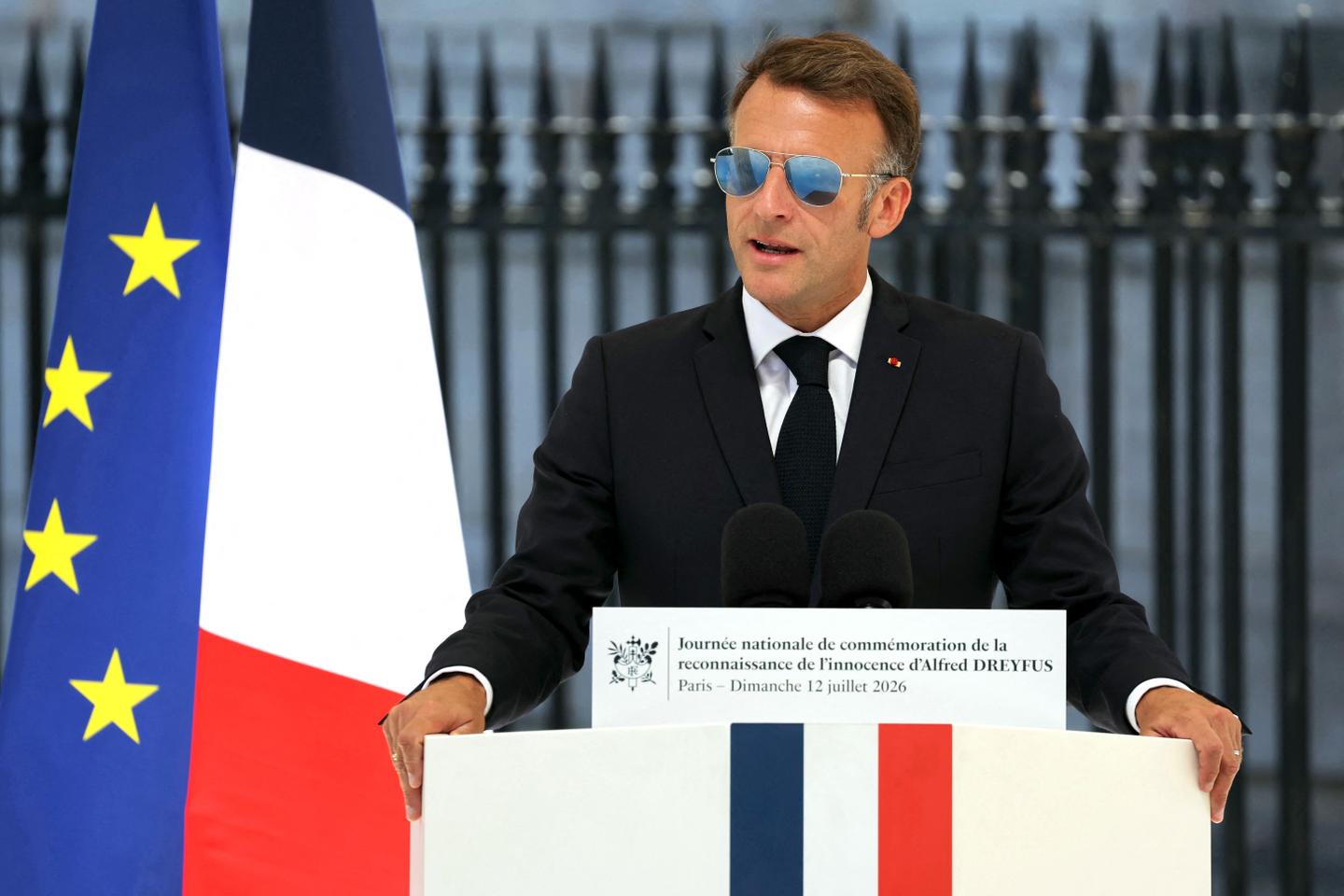
Sunday saw France observe its first annual day of commemoration for Alfred Dreyfus, a Jewish army officer wrongly convicted of treason in one of the country's most notorious cases of antisemitism. With reports of hate speech on the rise, President Emmanuel Macron said France had yet to shed its "old demons" of prejudice.
Issued on: 12/07/2026 - 14:44
3 min Reading time
It fell on the 120th anniversary of France's highest appeals court recognising Dreyfus's innocence on 12 July 1906. Macron declared the date a national day of commemoration last year in honour of "the victory of justice and the truth against hatred and antisemitism". He led a ceremony near the courthouse in Paris on Sunday that was also attended by Dreyfus's grandson Charles, aged 99 and one of the few people still living who knew the officer personally. Macron said the commemorations would also honour those who came to Dreyfus's defence. Their quest for the truth "reminds us that antisemitism, whatever its roots or supposed explanations, is the enemy of the Republic", he said in his speech. "Yet we know that the old demons of antisemitism have never completely disappeared from our country. We know this because antisemitic acts, far from dying out, continue to target people simply because of who they are." France – home to the largest Jewish population in the EU – has seen reports of antisemitism soar following the Hamas attacks of 7 October 2023 and the subsequent war in Gaza. According to figures from the French Interior Ministry, more than half of anti-religious acts reported in 2025 targeted Jews. France's antisemitism bill: a weapon against hate or threat to free speech? National scandal In 1894 Dreyfus, a Jewish army captain from Alsace, was accused of passing military secrets to Germany. Vilified by France's antisemitic press, he was convicted on flimsy evidence and sentenced to life on a penal colony off the coast of French Guiana. As his family protested his innocence and more evidence came to light implicating another officer, a growing number of public figures came to his defence – notably writer Émile Zola, who in 1898 penned an open letter accusing the French military and government of a deliberate miscarriage of justice.