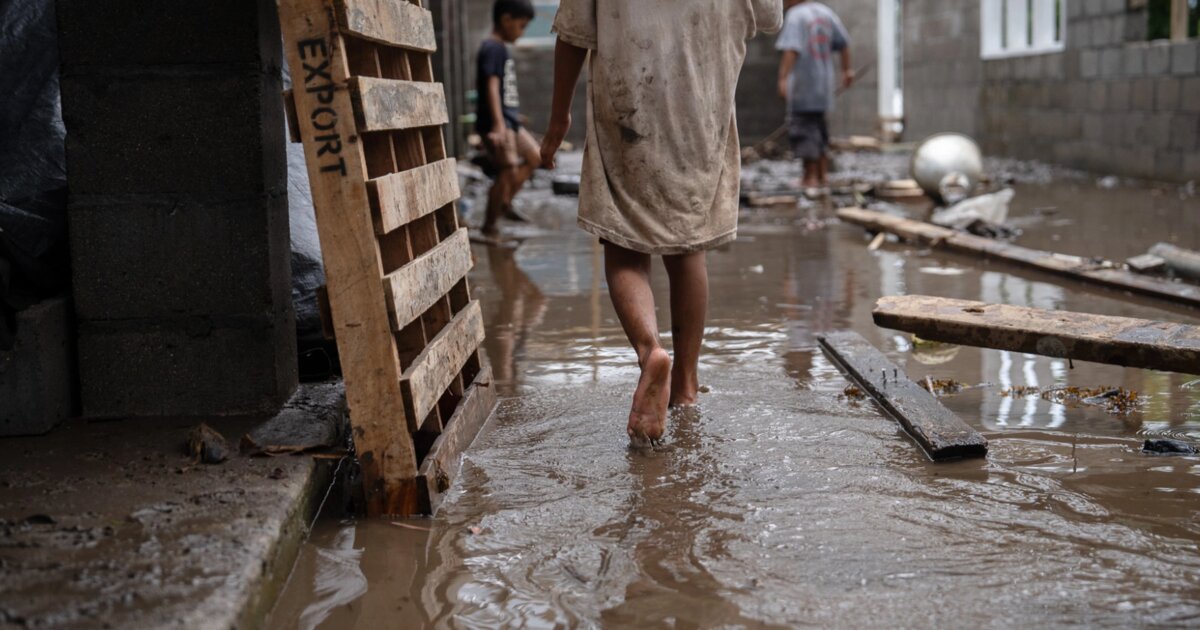
While ancestral Polynesians were highly adaptable and accustomed to seasonal droughts, prolonged and severe droughts during times of high population density might mean an island could no longer support its human population. Ultimately, island survival hinges on a single critical resource: rainfall.
Unlocking the climate record
Until recently, scientists lacked evidence from the Tonga and Samoa region of what the climate was like in this critical migration era. But we were able to reconstruct these past changes by analyzing hydrogen isotopes—slightly different forms of the same element—preserved in ancient mud from swamps and lakes.
In the tropics, the isotopic composition of rainwater reflects the amount of rainfall. As algae and plants grow and absorb this water, they lock this chemical signature into molecules that can survive in sediment for thousands of years, providing a natural archive of past rainfall.
Using this technique, we found evidence of a sustained, severe dry period in the southwest tropical Pacific between 850 and 1200 AD. Our results, recently published in the Journal of Pacific Archaeology, indicate this was the driest period the region had experienced in the past 2,000 years. Crucially, this drought coincided with a time when island populations were larger.