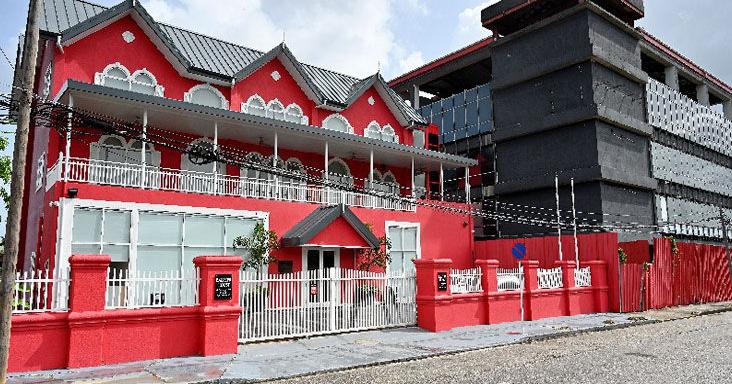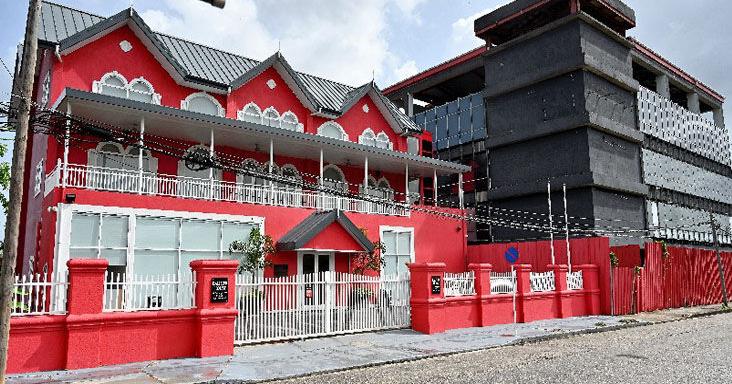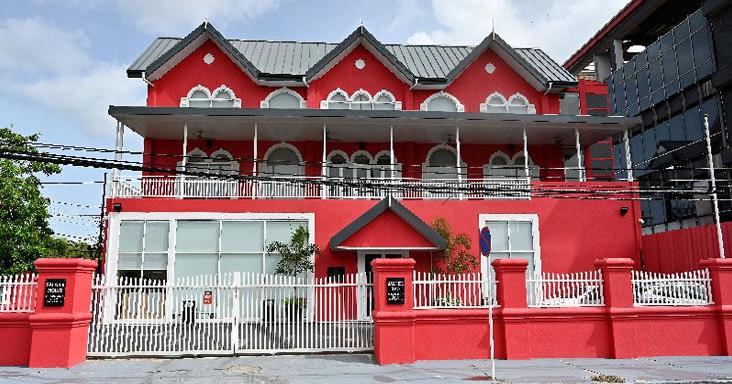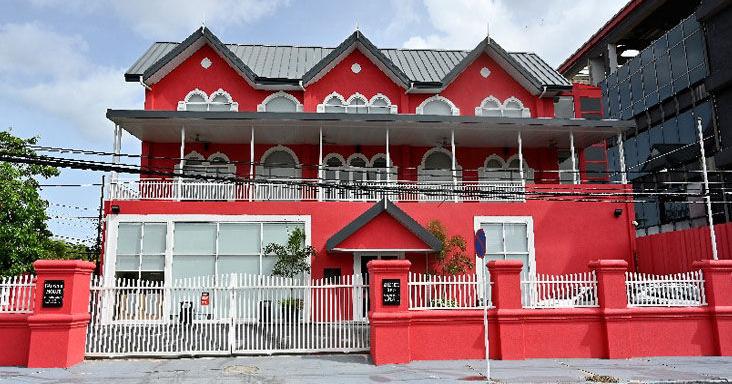
The Balisier House matter could become a landmark test of Trinidad and Tobago’s unexplained wealth laws, as it appears to be the first reported use of the legislation in proceedings involving a political party.The statement was made by attorney Saira Lakhan in a WhatsApp response to questions posed by the Sunday Express following High Court judge Margaret Mohammed’s decision to grant an order compelling the People’s National Movement (PNM) to explain the funding behind the multimillion-dollar construction of its headquarters, Balisier House, at Tranquillity Street, Port of Spain.
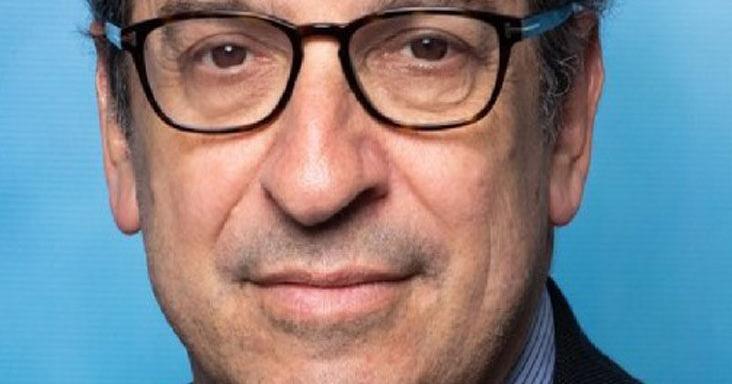
‘TEST CASE’: Saira Lakhan
Lakhan said the matter could provide the courts with an opportunity to further define the scope and operation of legislation that remains relatively new within Trinidad and Tobago’s legal landscape.“What distinguishes the Balisier House matter is that, to my knowledge, this is the first reported use of Trinidad and Tobago’s unexplained wealth legislation in proceedings concerning a political party,” she said.
CASE AGAINST HADEEDS: Junior counsel Thomas Cleaver.
She said the case could provide further judicial guidance on how the legislation applies to property associated with a political party, including issues surrounding ownership, effective control, the identification of appropriate respondents and the extent of financial information that may be required.However, Lakhan cautioned that the granting of a preliminary order should not be interpreted as a finding of wrongdoing or proof that assets were acquired illegally.“The granting of a Preliminary Unexplained Wealth Order should not be equated with a finding of criminal wrongdoing or a final determination that property was acquired from unlawful sources,” she said.Lakhan noted that the Balisier House matter is not the first time unexplained wealth legislation has been considered by the courts.Earlier proceedings involving David and Kendra Neeranjan and Natalie, Catherine and the estate of Sheldon Spring resulted in significant consideration of the legislation by the Court of Appeal in 2023.Those proceedings later reached the Judicial Committee of the Privy Council, which delivered judgment in Richard Taylor, Assistant Superintendent of Police v Natalie Natasha Spring and another on April 29, 2026.The Privy Council considered several issues, including the level of evidence required to establish reasonable suspicion, whether investigations conducted before the legislation came into force could be relied upon, and whether a Preliminary Unexplained Wealth Order could be made against the estate of a deceased person.The Privy Council dismissed the appeal and upheld the Court of Appeal’s decision. Lakhan said the ruling confirmed that the reasonable suspicion required under the legislation may be based on investigations that predate the act, provided the relevant suspicion exists at the time the application is made. She said the experiences of countries such as the United Kingdom also offered important lessons for Trinidad and Tobago as the authorities seek to make greater use of unexplained wealth mechanisms.‘Legislation alone not sufficient’“One of the principal lessons is that legislation alone is not sufficient. Its effectiveness depends upon the quality of investigations, the expertise of the professionals involved and the fairness and independence of the process,” Lakhan said.She noted that unexplained wealth investigations can involve complex financial transactions, corporate structures, beneficial ownership issues and assets held through companies, trusts, nominees or third parties.Such investigations may therefore require the expertise of investigators, forensic accountants, attorneys and other specialised professionals.“Applications must be properly investigated and supported by sufficient evidence if the legislation is to operate effectively and maintain public confidence,” she said.Lakhan said transparency could become increasingly important as the legislation is used more frequently. She suggested that consideration could be given to publishing statistics on the number of applications filed, preliminary and final orders granted, the value of assets recovered and the eventual outcomes of proceedings.She also stressed that confidence in the unexplained wealth regime would depend heavily on how the legislation is applied, particularly in politically sensitive cases.“Public confidence will also depend upon the perception and reality that the legislation is being applied consistently and independently, without regard to the political affiliation, social status or influence of the persons or entities involved,” Lakhan said.She added that unexplained wealth legislation should be viewed as one tool within a broader framework aimed at combating money laundering, organised crime and the unlawful accumulation of wealth. It should not replace thorough investigations, due process or criminal prosecution where the evidence supports charges.Asked whether the hiring of UK King’s Counsel reflects the complexity of unexplained wealth cases, Lakhan said the relatively new legal framework in Trinidad and Tobago may require specialised expertise as it continues to develop. She said the use of external counsel should be viewed within the context of the legal issues involved and is not unusual, as the State, private clients and other entities may engage overseas lawyers depending on the circumstances of a matter.“The engagement of King’s Counsel or other external counsel is not, in itself, unusual,” Lakhan said.She explained that the choice of counsel can be influenced by several factors, including the nature of the proceedings, experience and expertise, the novelty or complexity of legal issues, availability, the composition of the legal team and cost. Lakhan noted that unexplained wealth legislation remains a developing area of law in Trinidad and Tobago, with the Civil Asset Recovery and Management and Unexplained Wealth Act No. 8 of 2019 having already been considered by both the Court of Appeal and the Judicial Committee of the Privy Council. She said the fact that the act has required consideration by the country’s appellate courts demonstrates the evolving nature of unexplained wealth proceedings.