Introduction
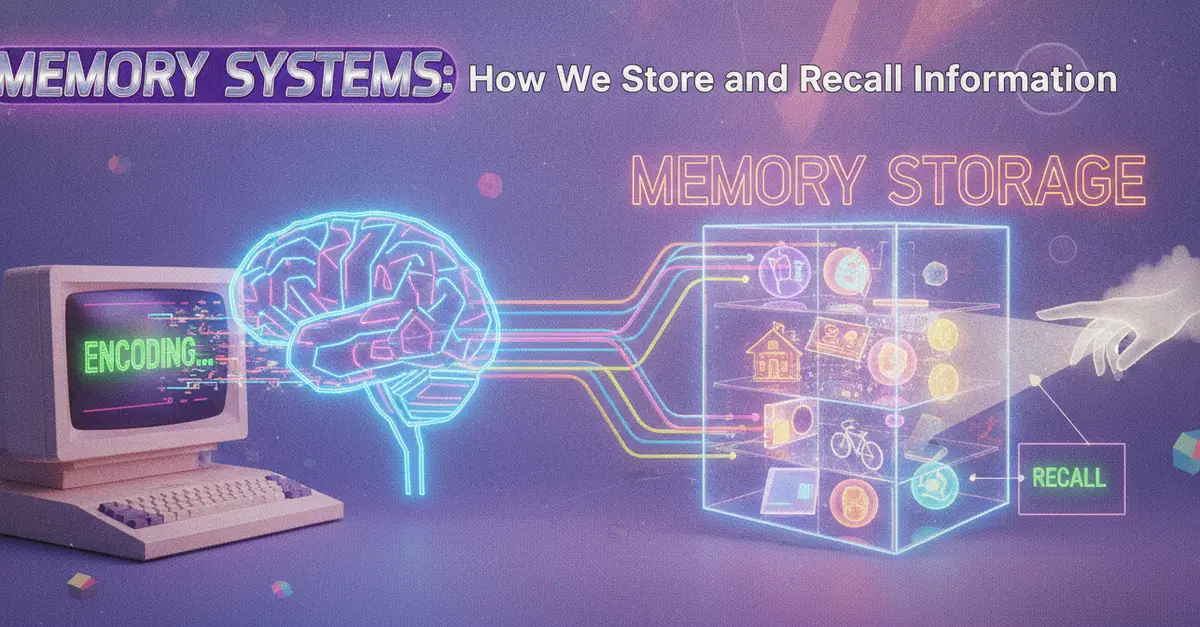
You remember your first day of school but forget where you put your keys this morning. You can ride a bike without thinking but struggle to recall the name of someone you met last week. These differences reveal that memory isn't a single system—it's multiple systems working in parallel, each optimized for different types of information and timescales.
Key Concepts
Sensory Memory: Ultra-brief storage of sensory information (milliseconds to seconds). Most is immediately lost; only attended information enters working memory
Short-Term/Working Memory: Active, limited-capacity storage (about 7±2 items) lasting seconds to minutes. Rehearsal can extend duration