Most agent memory systems are digital attics.
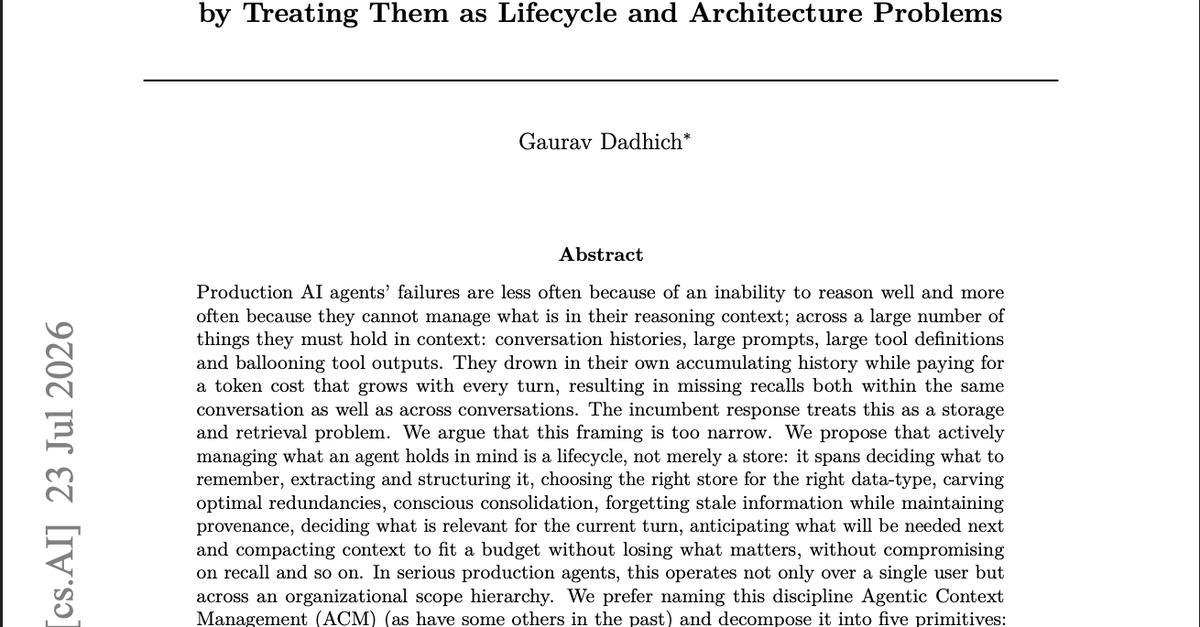
You put things in. You hope to find them later. You mostly don't. The retrieval is fuzzy, the context is lost, and the agent that needs to remember why a deployment failed three weeks ago gets back something that looks related but carries none of the causal weight.
This is the wrong mental model for memory. Not because the retrieval is bad — though it often is but because storage is the wrong frame entirely.
If memory is storage, you're building a place things go to accumulate. If memory is infrastructure, you're building something load-bearing. Agents depending on memory for causal context — why this failed, what fixed it, how that decision connected to this outcome — need load-bearing infrastructure. Not a warehouse. A power grid.
The difference is consequential. Storage fails silently. You put something in and nothing comes out, or something wrong comes out, and the agent keeps going with degraded information it can't see is degraded. Infrastructure fails loudly, because the system depending on it stops working. Load-bearing memory makes failures visible. That's not a downside. That's the point.