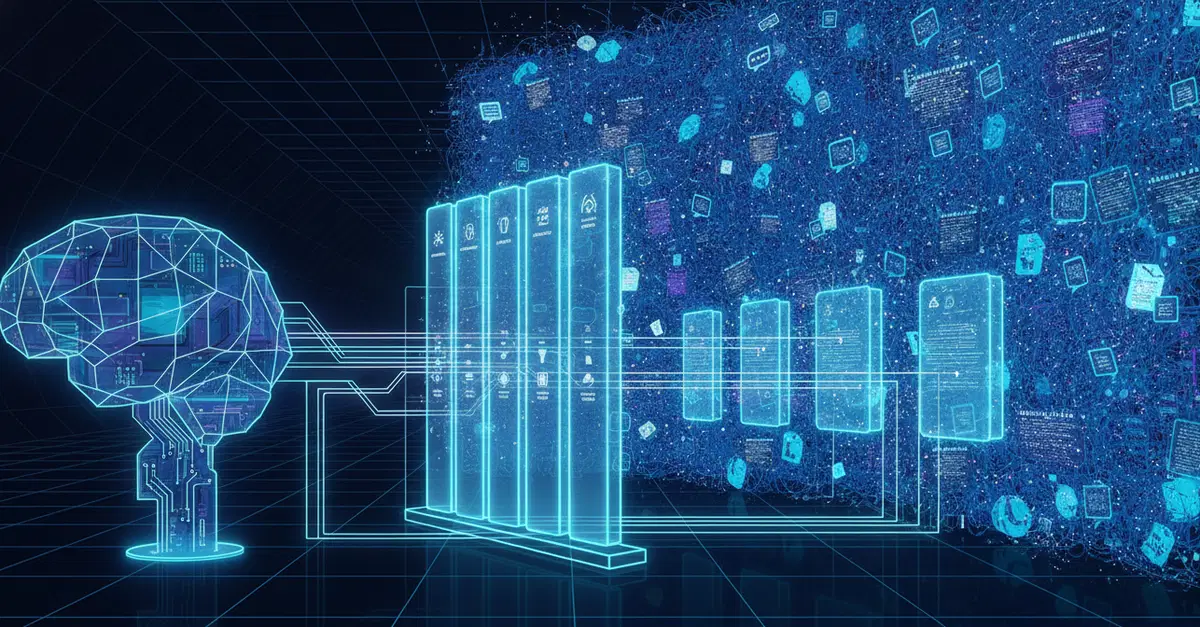
Agents are becoming increasingly crucial in tackling complex real-world tasks, ranging from general web navigation to assisting with extensive software engineering codebases. However, as these agents transition into persistent, long-running roles in the real world, they face a critical limitation: they struggle to analyze and learn from successful and failed experiences after deployment.Agents approaching each new task without a memory mechanism will repeatedly make the same strategic errors and discard valuable insights. To address this, various forms of agent memory have been introduced to store information about past interactions for reuse. However, existing methods generally focus on saving exhaustive records of every action taken — such as the trajectory memory used in Synapse — or only documenting workflows summarized from successful attempts, as seen in Agent Workflow Memory). These approaches have two fundamental drawbacks: first, by recording detailed actions instead of tactical foresight, they fail to distill higher-level, transferable reasoning patterns; second, by over-emphasizing successful experiences, they miss out on a primary source of learning — their own failures.To bridge this gap, in our ICLR paper, "ReasoningBank: Scaling Agent Self-Evolving with Reasoning Memory", we introduce a novel agent memory framework (github) that distills useful insights from both successful and failed experiences for test-time self-evolution. When evaluated on web browsing and software engineering benchmarks, ReasoningBank enhances both agent effectiveness (higher success rates) and efficiency (fewer task steps) compared to baseline approaches.
ReasoningBank: Enabling agents to learn from experience
Agents are becoming increasingly crucial in tackling complex real-world tasks, ranging from general web navigation to assisting with extensive software engineering codebases. However, as these agents transition into persistent, long-running roles in the real world, they face a critical limitation: they struggle to analyze and learn from successful and failed experiences after deployment.Agents approaching each new task without a memory mechanism will repeatedly make the same strategic errors and discard valuable insights. To address this, various forms of agent memory have been introduced to store information about past interactions for reuse. However, existing methods generally focus on saving exhaustive records of every action taken — such as the trajectory memory used in Synapse — or only documenting workflows summarized from successful attempts, as seen in Agent Workflow Memory). These approaches have two fundamental drawbacks: first, by recording detailed actions instead of tactical foresight, they fail to distill higher-level, transferable reasoning patterns; second, by over-emphasizing successful experiences, they miss out on a primary source of learning — their own failures.To bridge this gap, in our ICLR paper, "ReasoningBank: Scaling Agent Self-Evolving with Reasoning Memory", we introduce a novel agent memory framework (github) that distills useful insights from both successful and failed experiences for test-time self-evolution. When evaluated on web browsing and software engineering benchmarks, ReasoningBank enhances both agent effectiveness (higher success rates) and efficiency (fewer task steps) compared to baseline approaches.