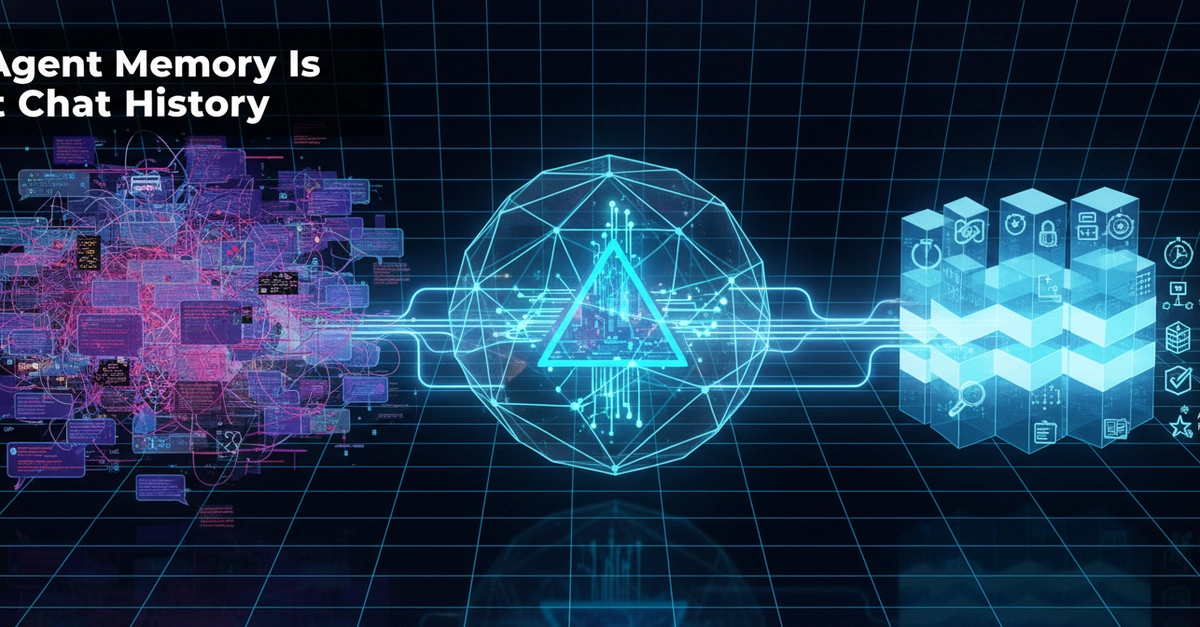
"Agent memory" usually means a vector database: embed everything the user said, query by similarity, paste the top matches into the prompt. It's a useful trick, but it isn't memory. It's a lookup table that never learns, never forgets correctly, and can't tell you what was true last month versus today. An agent built on it doesn't get smarter the longer you run it — it just accumulates more haystack to search.
The name Eidentic is deliberate: an agent without memory has no identity. We think real memory needs four things working together.
1. Facts with a lifetime
Plain vector recall has no concept of time. If a user was on the starter plan in March and the team plan in June, both sentences sit in the index with equal weight, and the model picks whichever embeds closer. That's how agents confidently tell you yesterday's truth.
Eidentic stores facts in a temporal knowledge graph where each fact carries a validity interval. New information supersedes the old without deleting it: the agent can answer "what plan are they on now" and "what plan were they on in April" from the same store, and contradictions resolve instead of piling up. Memory that can't reason about time isn't memory — it's a cache.