Show Caption
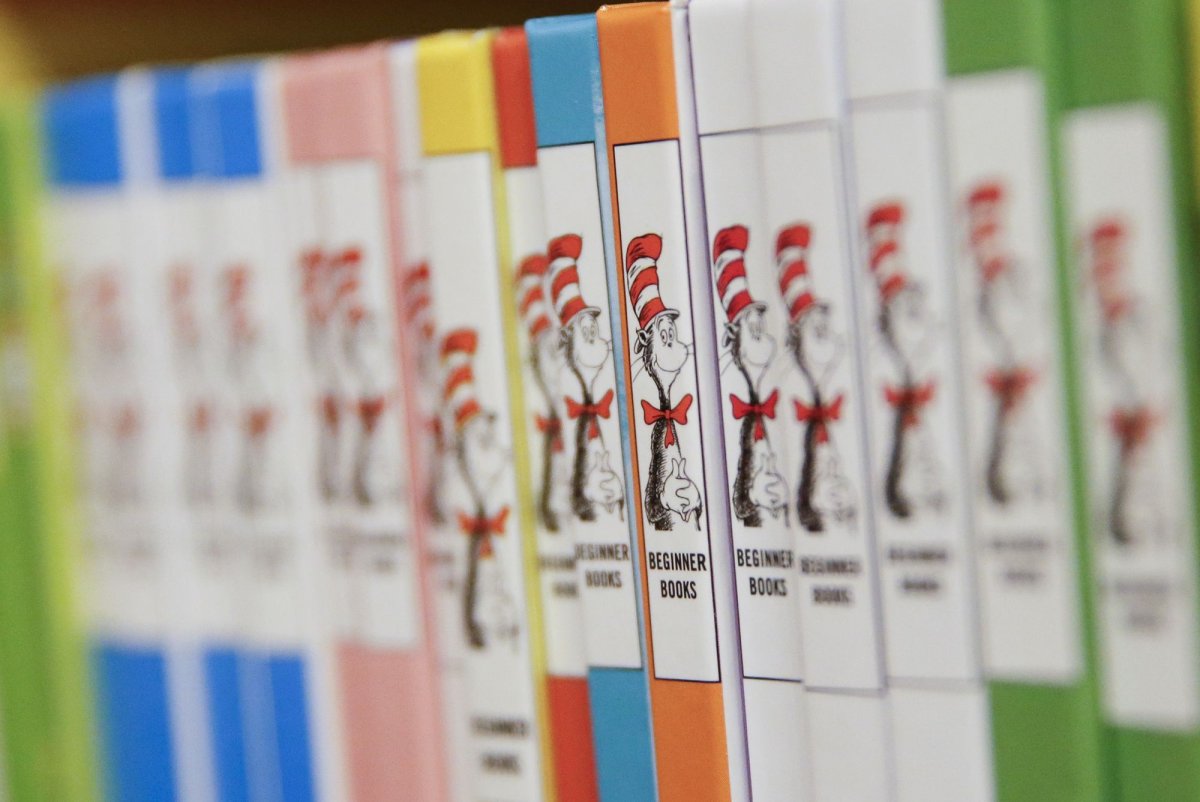
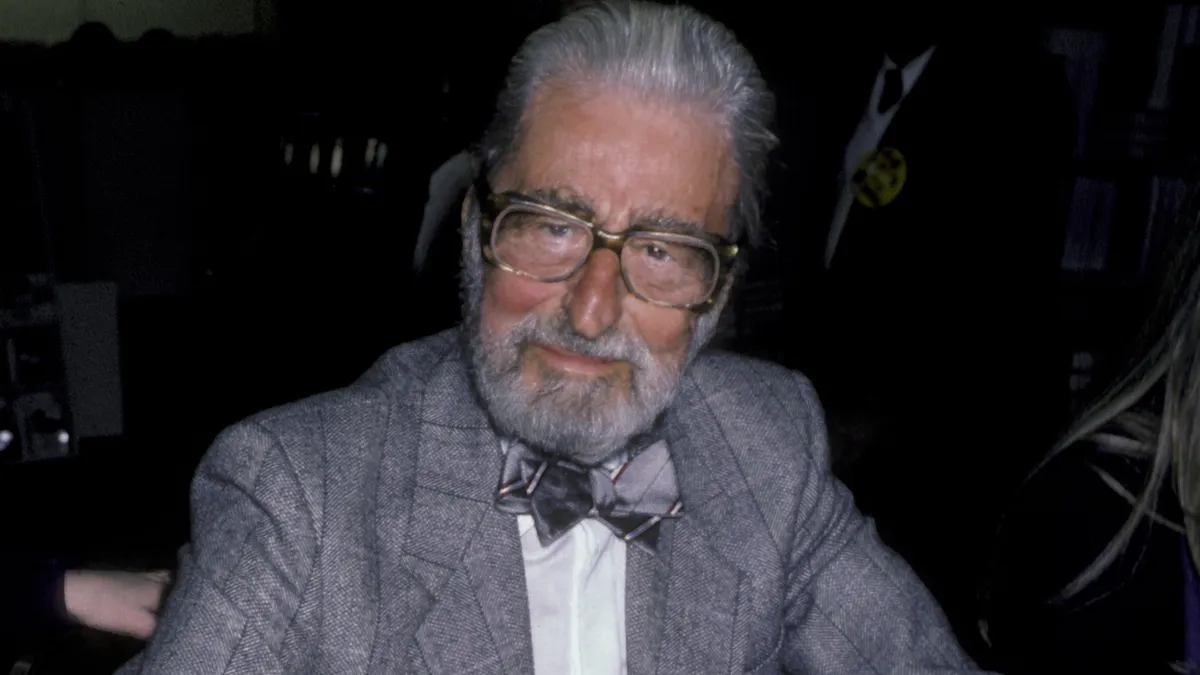
SAN DIEGO – In the fall of 1989, Cathy Goldsmith flew from New York City to San Diego and slept in Theodor Geisel's guest room. Geisel was frail, sporting a beard to cover the effects of oral cancer surgery. His wife, Audrey, feared he wouldn’t live to finish his current project. As his longtime art director, Goldsmith came to get “Oh, The Places You’ll Go!” across the finish line.Day after day, she helped Geisel cut up squares from a giant color palette and lay them on his storyboard. He rested in between. The notorious perfectionist was picky about color. If he marked “105” on his sketches, it meant he wanted 10% yellow, no magenta, 50% cyan.Chatting with USA TODAY from Penguin Random House’s Seuss-themed conference room in New York, Goldsmith remembers carrying the artwork back on the plane. She got into a scuffle with a steward, who tried to take it from her. “I will buy this art a seat if I need to,” she thought.A year and a half after “Oh, the Places You’ll Go!” was published, Geisel died at age 87. Now, almost 35 years later, his books continue to mark American childhoods, but not without controversy.Some readers are moving away from Seuss because of racist and insensitive illustrations in Geisel’s books and cartoons. In 2021, the Dr. Seuss Enterprises pulled six books from publication because of this. And sales soared, claiming six of the top 10 spots on USA TODAY’s Best-selling Booklist the following week. Now, a posthumously published book found in the Seuss archives, “Sing the 50 United States!” sold about 92,000 copies in its first four weeks on sale, according to Circana BookScan.As America celebrates its 250th anniversary, we’re looking back on the moments, figures and media that are distinctly American. Geisel is one such figure, a man with a meteoric rise who revolutionized children’s literature and danced across many sides of political controversy.When Theodor Geisel dared American children to readLong before he was Dr. Seuss, Geisel was a burgeoning cartoonist and advertising illustrator. But everything changed after a 1954 Life Magazine article, which argued that literacy rates were tanking because children were bored with Dick and Jane primers. Geisel had already published several books, including “Horton Hears a Who!” and “If I Ran the Zoo.” A Houghton Mifflin editor charged Geisel to write an engaging book using only words from a vocabulary list for young learners. Geisel turned in “The Cat in the Hat.”Geisel’s zany, colorful stories became the antidote to boring children’s books. Aside from a fun rhyming scheme and silly illustrations, Dr. Seuss books also prioritized life lessons on individuality, wonder, kindness and equality. He wanted reading to be easy and fun for kids.“He thought of himself first as an author and second as an illustrator,” Goldsmith says. But with his art, Geisel was picky. He wasn’t afraid to send finished printed copies back because they didn’t get the color right. Goldsmith remembers redesigning the cover of “The Butter Battle Book” only for Geisel to go back to his original.“He wasn’t confrontational, he wasn’t mean, he didn’t want to break your heart,” Goldsmith says. “But he liked his color.”Outside of his own books, Geisel was an editor at Beginner Books, a Random House imprint that he cofounded with publisher Phyllis Cerf. Every book published had his stamp of approval, like “Go, Dog. Go!” by P.D. Eastman, often misremembered as a Dr. Seuss book. Goldsmith recalls strict “rules” for what could be in the art and in the text. He was a tough editor, says Susan Brandt, CEO of Dr. Seuss Enterprises (DSE), who viewed his manuscript notes in archives.“He didn’t mince words,” Brandt says. “There was no ‘Let me sugarcoat it for you.’”Geisel leaves behind a complicated legacyMore than 800 million Dr. Seuss books have sold, according to Penguin Random House Children’s Books. The top-selling books include “Green Eggs and Ham” (over 24 million), “The Cat in the Hat” (over 20 million) and “Oh, the Places You’ll Go!”(over 20 million). The latter also sells more than one million copies annually, a perennial graduation gift.But not all are remembered fondly.In 2019, the NAACP called for the censorship of all Dr. Seuss books and works in public schools and libraries because of images that “dehumanized and degraded” people of color and other marginalized groups. On Geisel’s birthday in 2021, DSE announced it would cease publication and licensing of six books: “And to Think That I Saw It on Mulberry Street,” “If I Ran the Zoo,” “McElligot’s Pool,” “The Cat’s Quizzer,” “On Beyond Zebra!” and "Scrambled Eggs Super!" “These books portray people in ways that are hurtful and wrong,” DSE said in a press release.The decision was controversial. The National Coalition Against Censorship, in a 2021 statement, said it was “disturbed” by the action and argued for “criticizing texts” over “purging them.” Others questioned why the books weren’t revised, like other children’s books “quietly updated to remove racist content,” including the Hardy Boys series and “Charlie and the Chocolate Factory,” The Guardian reported in 2021. Even Seuss himself revised books in his lifetime, including “Mulberry Street.”Brandt says a panel of experts helped audit the books before pulling them.“I don't think there's a wrong decision. We just wanted to make a statement and we wanted to stand behind that and say, ‘This is who we are. We support our communities’ and we thought that the stronger statement was to say we no longer want to support these books,” Brandt says.Dr. Seuss was ‘both anti-racist and racist’Racism shows up in Geisel’s earliest work, too. His wartime propaganda cartoons, for example, included stereotypical and racist depictions of Japanese people.In 1976, Geisel acknowledged these cartoons were “hurriedly and embarrassingly badly drawn and they’re full of many snap judgements that every political cartoonist has to make.” But he stopped short of an apology.There are many times in his career when Geisel seemed to advocate against racism, violence and inequality. Many see “Horton Hears a Who” as an apology, given its allegory about the atomic bombing of Hiroshima and Nagasaki. He dedicated it to a Japanese friend. The Des Moines Register called "Horton" a “rhymed lesson in protection of minorities and their rights.” “The Lorax” continues to spur environmental activism. “The Sneetches” and "Yertle the Turtle" criticized antisemitism and Adolf Hitler. And “The Butter Battle Book” satirized the Cold War and nuclear arms race.Philip Nel, a children's literature scholar and the author of "Was the Cat in the Hat Black?", says it’s more complicated than saying Geisel was once racist and then “saw the error of his ways.” “What's interesting to me is that he is writing message books that make a positive, progressive, inclusive political statement at the same time he's writing books that recycle stereotypes. He doesn't see the disjunction. He's not aware of how his visual imagination is so steeped in racist caricature,” Nel says. “People often want to either defend Seuss or condemn Seuss, and I don't think either is right. I think you want to look at him critically, which is going to see him flaws and all and some of those flaws are going to really upset you.”Preserving the Dr. Seuss legacyAccording to Brandt, DSE is instead focusing on books that have “universal messages” for both parents and kids to enjoy.“We are all products of our time and he's locked in that time, but Dr. Seuss Enterprises isn't,” Brandt says.Geisel’s second wife started DSE to preserve and further his legacy. Brandt says Audrey, who died in 2018, saw DSE as “caretakers” who prioritized quality and attention to detail. This also involves staunch defense of intellectual property and copyright infringement.Now, one of the biggest challenges is to grab kids’ attention wherever they can get it, whether that’s on YouTube with readalongs, travel experiences, screen adaptations and new books. Seuss Studios, for example, is a new imprint that allows diverse authors to pull unused Geisel illustrations and use them in new children’s books. Lala Watkins is one such author, and she used a sketch of a worm as her protagonist in “Hello, Sun!” She says she feels a kinship with the “silliness” of Seuss.“The books are the foundation,” Brandt says. “Everything we do is do no harm.”Sometimes “do no harm” means protecting the legacy from further scandal. At the Dr. Seuss archives at UC San Diego, Brandt and archivist Lynda Corey Claassen ponder the whereabouts of a 1940s Narragansett beer tray featuring the "Chief Gansett" character Geisel illustrated.“In all honesty, if I put that on exhibit today, I would get so many letters because of how a Native American is depicted,” Claassen says.Back in New York, Goldsmith tells me there are works in the archives that may never see the light of day. One, she worked on until it was close to finished but decided to pull the plug. “We felt that it wasn't right for the market today. It might have been right for the market when he was alive, but that it probably wasn't doing him a service to publish it,” she says. Why not?“I’m not comfortable going there,” she says.Two of the most iconic Seuss books, "The Cat in the Hat" and "How the Grinch Stole Christmas!", turn 70 next year. While maintaining Geisel's legacy involves taking his characters "off to Great Places," there are certainly ones Seuss' stewards won't take them.Clare Mulroy is USA TODAY’s Books Reporter, where she covers buzzy releases, chats with authors and dives into the culture of reading. Find her on Instagram, subscribe to our weekly Books newsletter or tell her what you’re reading at cmulroy@usatoday.com.