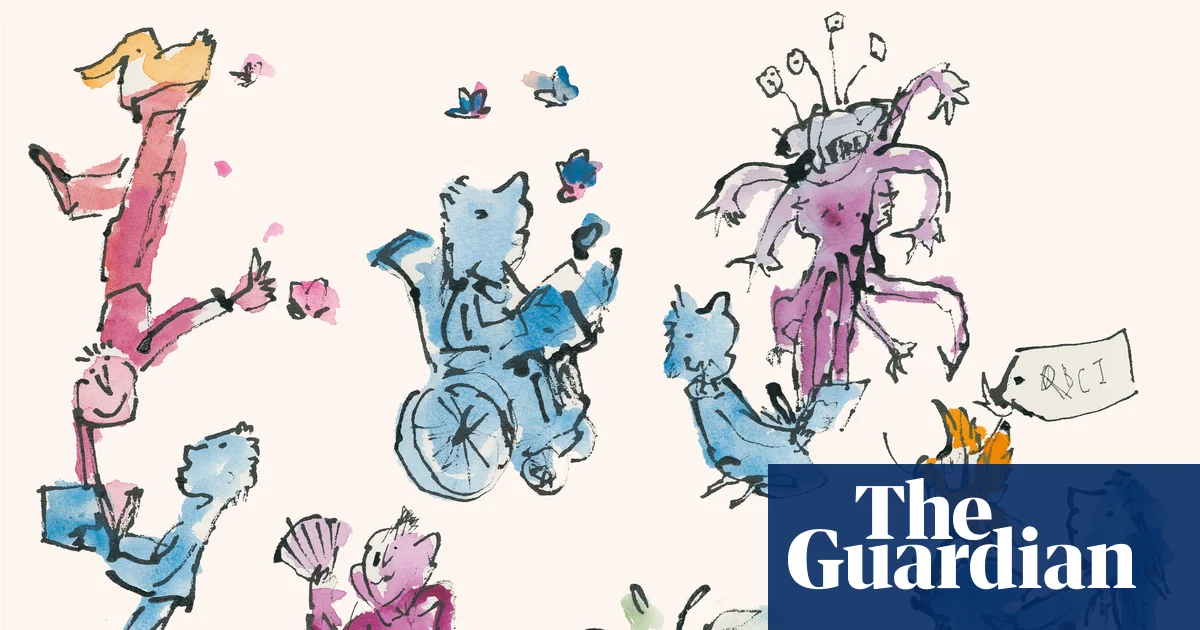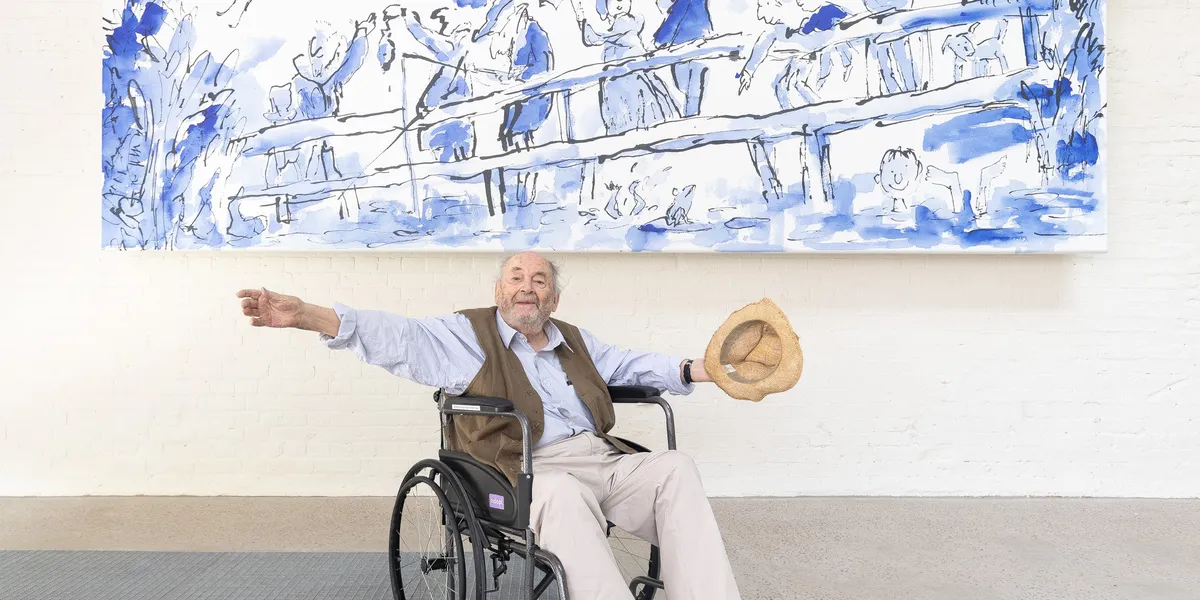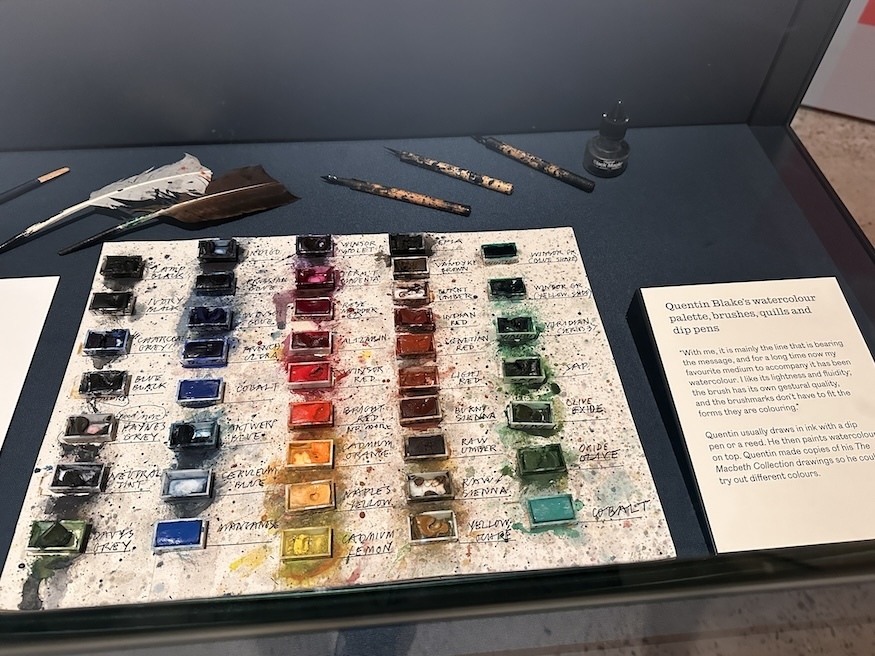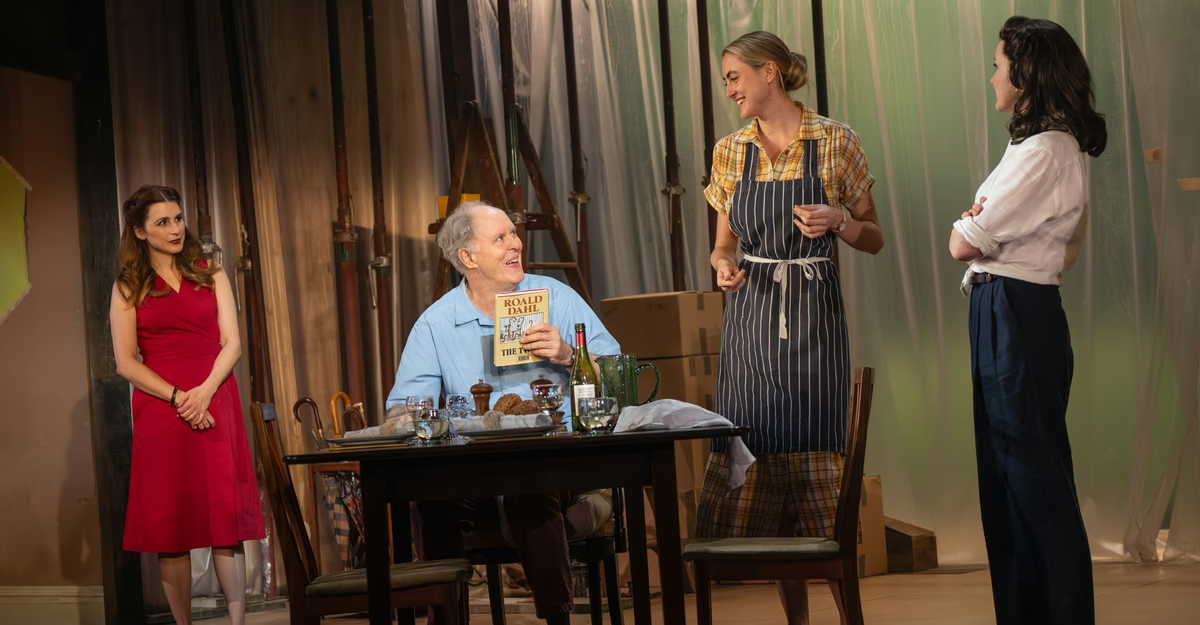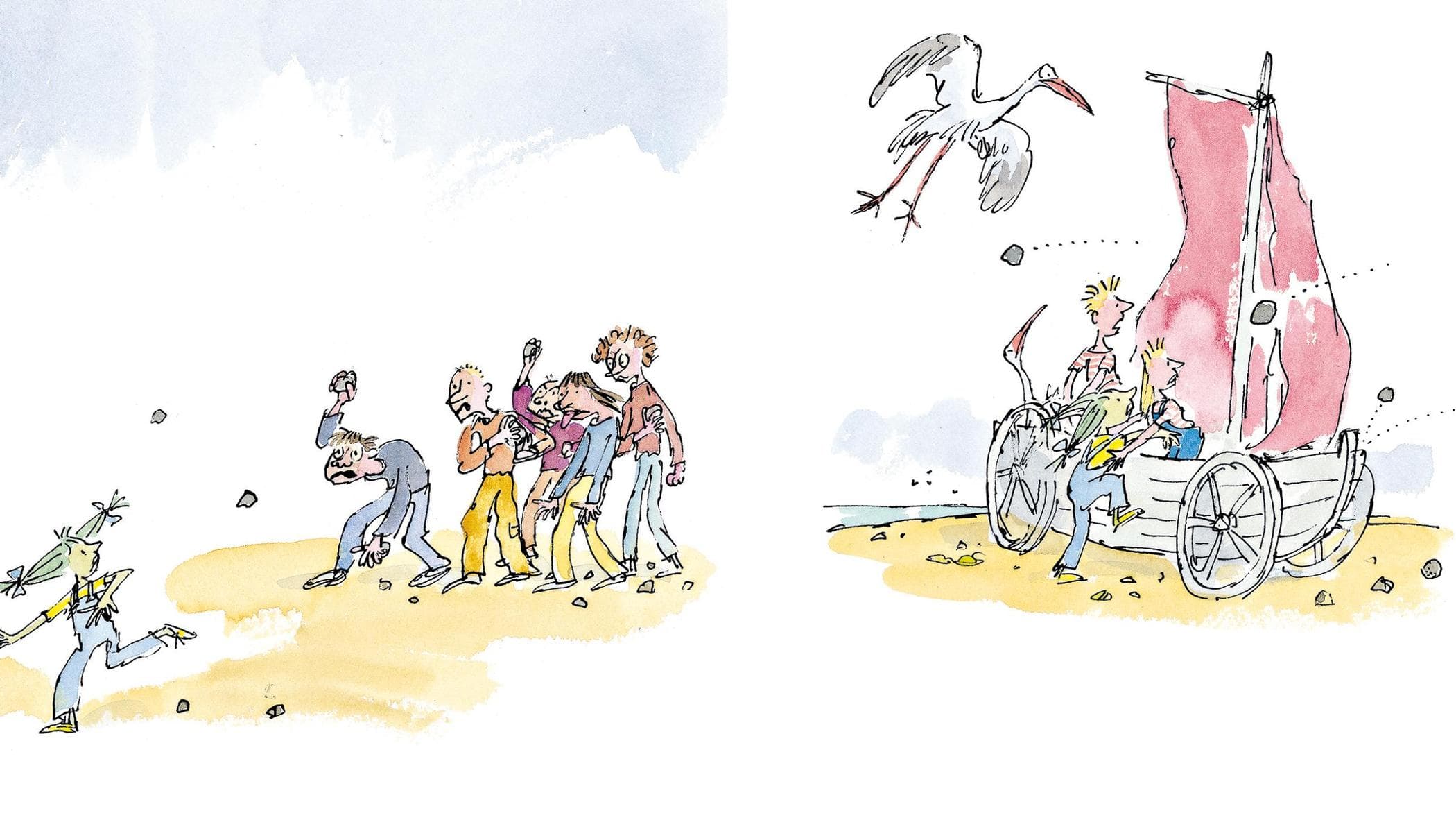
In 1982, Roald Dahl sent Quentin Blake a parcel. Wrapped in brown paper and tied with string, it contained a single sandal – one of the author’s own, and unlike anything Blake had ever encountered. This, Dahl explained, was what the BFG should be wearing. The 24ft-tall, dream-blowing hero of Dahl’s much-loved children’s novel had previously been drawn in clumsy knee-length boots. The sandal changed all that. Blake drew it; Dahl rewrote the text accordingly. As such, whenever you think of the BFG, as Dahl would later admit, it’s Blake’s illustration that springs to mind – that gentle, wild-haired giant, all enormous ears and soft, searching eyes, toe poking through his battered shoes.It's not just the BFG. Picture Matilda: you see that uncannily wise face on a five-year-old’s body, intelligent and watchful. Or the Twits: two magnificently repellent creatures rendered in Blake’s scratchy, joyfully anarchic style. Across 18 books and a collaboration that lasted until Dahl’s death in 1990, Blake gave indelible visual life to some of the most cherished characters in children’s literature.But there is still so much more to the artist and his work. Britain’s first Children’s Laureate and a knight of the realm, Blake is also a Companion of Honour – one of only 65 living recipients, among them Elton John, Paul McCartney and Judi Dench, to be awarded it for a major contribution to the arts, science or politics. He has illustrated or written more than 500 books – with global sales topping 45 million – drawn murals for hospitals and artwork for prisons, and collaborated with everyone from Michael Rosen and Michael Morpurgo to Russell Hoban. At 93, he has not stopped drawing for a single day.This month sees the opening of the £12.5m Quentin Blake Centre for Illustration in Islington, north London. Housed in a former Victorian waterworks at the imposing New River Head, next to Sadler’s Wells, the centre will permanently dedicate one of its galleries to his archive. Its inaugural exhibition, Quentin Blake: Performance, brings together more than 100 works on paper – an exploration of theatre through illustration, including circus, acrobatics and the drama of Shakespeare. “For Quentin,” says Olivia Ahmad, the centre’s artistic director, “a blank sheet of paper is like an empty stage, just waiting for him to draw in the scenery and the characters who will tell his stories.”Cover art for Roald Dahl’s ‘Matilda’ by Quentin Blake (Puffin)As anyone who was once young will know, a Quentin Blake illustration is instantly recognisable – those windmilling hands, retroussé noses and dots for eyes, expressed in a quivering, interrupted line with watercolour washes that bleed beyond it. Movement plays its part: his characters dart, scramble, and spin, and are often suspended gleefully in mid-air. “His drawings are fizzing with kinetic energy and are unmistakable,” says Ahmad. “It’s a bit like when you see the handwriting of someone you know well.”Born in Sidcup, southeast London, in 1932, Blake – the son of a civil servant – grew up with neither books nor any particular tradition of art. At 16, he was submitting cartoons to Punch – the art editor told him his rough sketches were better than his finished ones, a lesson that shaped everything that followed. He didn’t go to art school; he read English under FR Leavis at Cambridge, spending his evenings in life-drawing classes learning skills that have served him ever since. He taught illustration at the Royal College of Art for more than 20 years. Ahmad points to the contradiction at the heart of his process – “He draws quickly, but his work on books is meticulous: Quentin carefully plans each scene, thinking about how a story unfolds, what will keep you turning the page.”Of all the partnerships that have shaped his career, none has proved more impactful – or more complicated – than the one with Dahl. His widow Felicity took to calling them "the odd couple", Blake’s natural warmth and ungovernable optimism playing against his collaborator's misanthropy. On Dahl’s now well-documented antisemitism, Blake recently told The Telegraph: “I probably disagreed with everything he thought.”Tellingly, of all their collaborations, only The Enormous Crocodile – Dahl’s 1978 story about a boastful, scheming reptile who hatches increasingly elaborate plans to catch and eat children, only to be thwarted each time by the other animals of the jungle – features in the new exhibition. When Blake first saw the manuscript, says Ahmad, he wasn’t sure he could go through with it. “It’s scary stuff,” she says. His solution was to make it work like a pantomime – broad colours, broad strokes, the crocodile all leering malevolence, the children he menaces wide-eyed and blissfully unaware. The illustrations bristle with threat and slapstick in equal measure. “There’s so much action,” says Ahmad. “That was what Quentin found interesting to draw.”‘The Enormous Crocodile’ (PA)It was during his time as Children’s Laureate that Blake first conceived the idea of a permanent national home for illustration. That vision took more than 20 years to realise, beginning as the House of Illustration, an exhibition space in King’s Cross that opened in 2014, before the charity secured a 250-year lease on this new Islington site.A thrilling way to launch it, Quentin Blake: Performance begins with an early caricature of Laurence Olivier. Drawn for Punch in 1957, when Blake was just 24, it shows the great actor as Archie Rice, the washed-up, self-pitying music-hall comedian at the heart of John Osborne’s The Entertainer – one of the defining performances of the British stage.From there, the exhibition ranges across nearly 80 years of work: sparse, poignant illustrations for Samuel Beckett’s Waiting for Godot; nearly 40 depictions of Macbeth characters as birds, drawn in 2023; and Clown, Blake’s own 1995 wordless picture book about a discarded toy who must find his way to a new home, in which the sky is every colour but blue, a detail that stays with you. Illustrations of Macbeth by Quentin Blake on display at the Quentin Blake Centre for Illustration in London (PA)But then again, much of Blake's work stays with you. “His books have been part of so many people’s childhoods, over multiple generations,” says Ahmad, “and children’s literature is where people’s relationship with illustration is forged.” Vital to his enduring appeal, she believes, is the fact that he “understands how serious, and essential, absurdity and playfulness is”. Blake has spent 70 years smuggling a pleasing darkness and strangeness into the imaginations of children. This new centre is the house a scratchy line built.The Quentin Blake Centre for Illustration opens on 5 June
The scratchy, inky anarchy of Quentin Blake’s unmistakable illustrations
This week sees the opening of the £12.5m Quentin Blake Centre of Illustration, a 20-year project that will house the artist’s archive and champion the art of drawing. From his ‘odd couple’ pairing with Roald Dahl to his own books, the 93-year-old has been a prolific, joyful presence in millions of childhoods. Patrick Smith unpacks his appeal
1,091 words~5 min read