Skip to content
Ceramic 3D printers, despite using the same fundamental mechanism as standard FDM printers, are much harder to find. Part of this comes down to the material properties of fired ceramics versus thermoplastics, but they’re also significantly harder to build; for example, in his ceramic printer build, [Joshua Bird] had to deal with severe material shrinkage, collapsing bridges, and the surprisingly abrasive effects of clay.
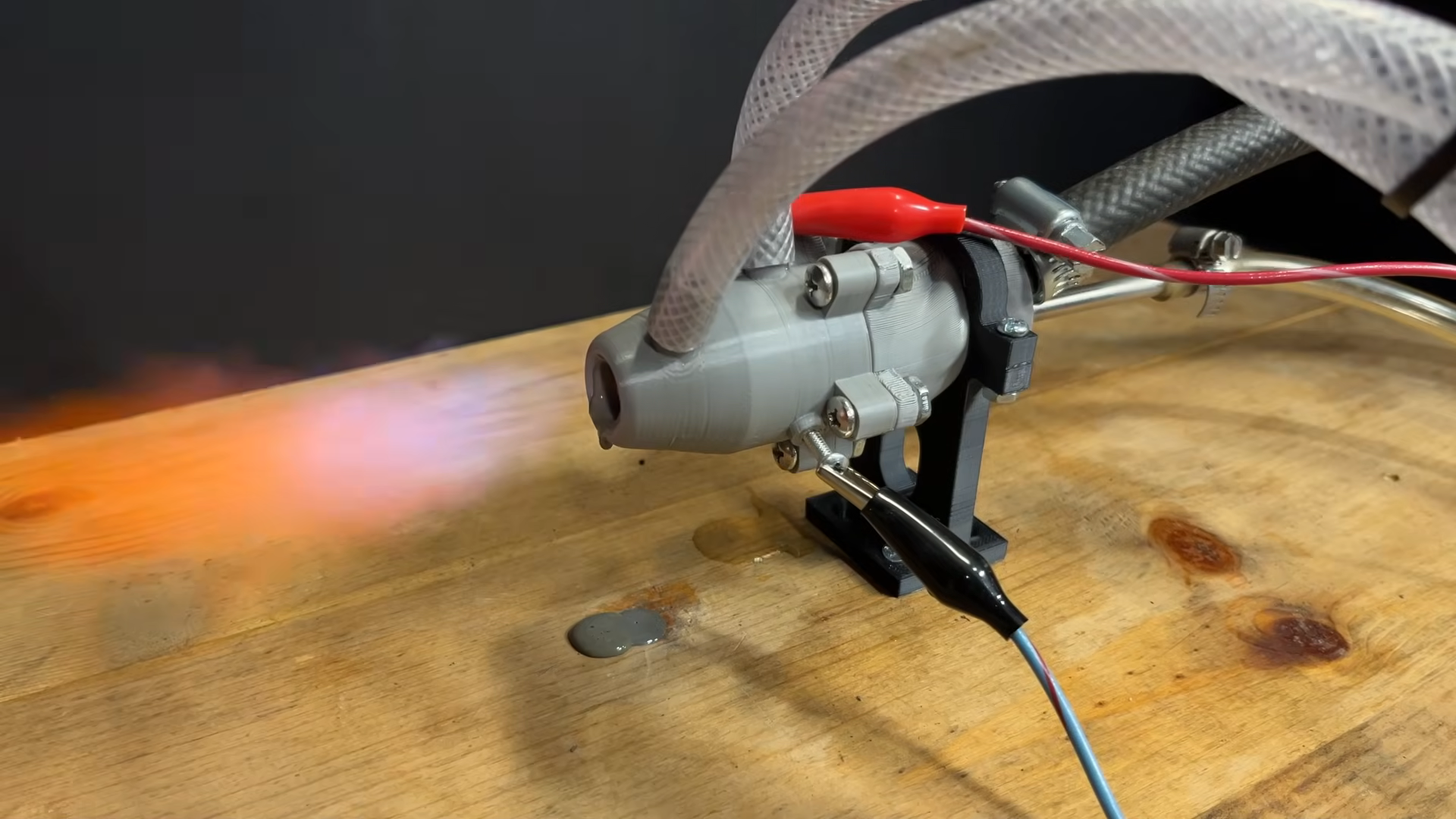
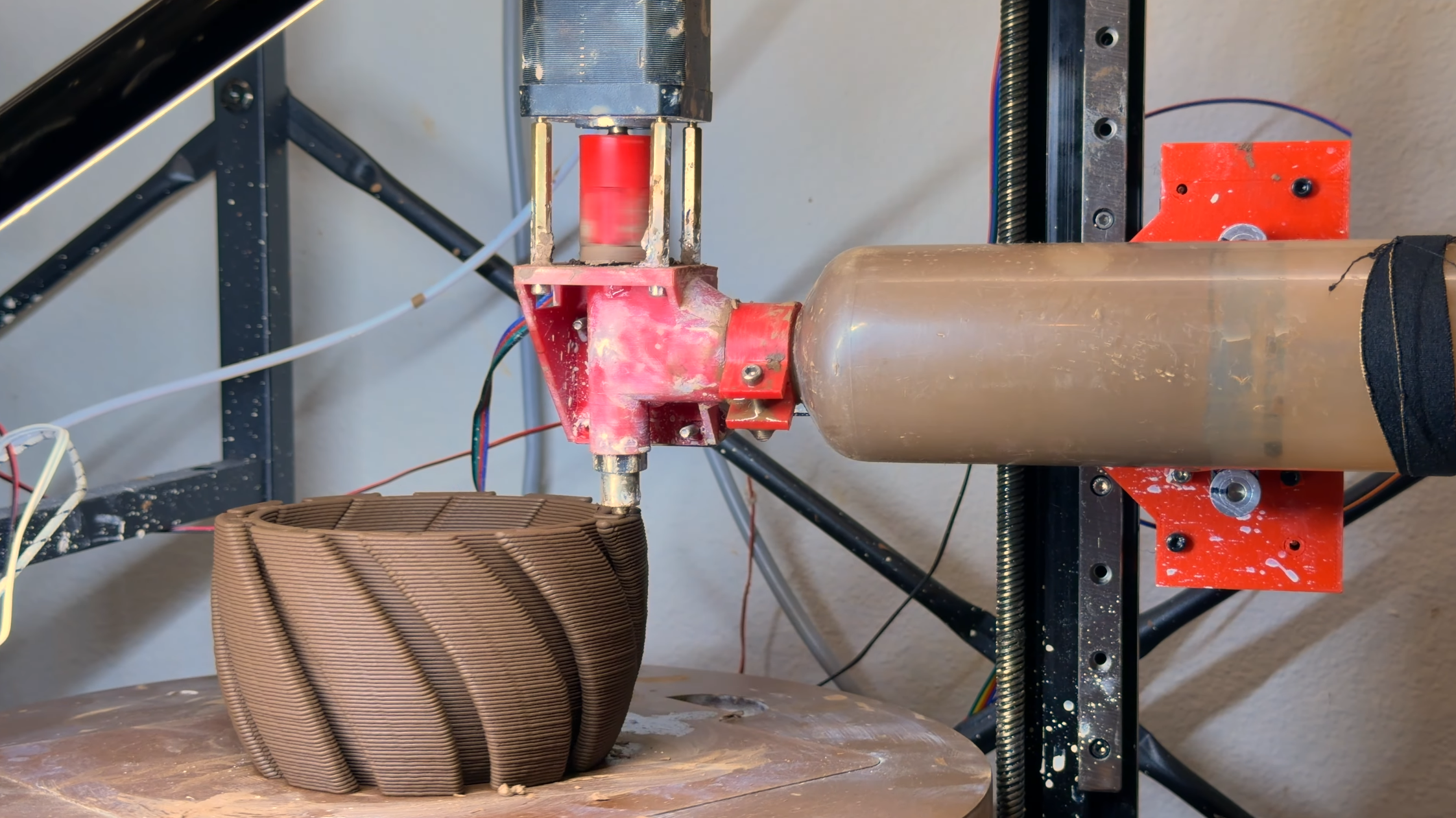
The centerpiece of the printer is the clay extruder: an air compressor pushes clay along a tube into the extruder, which uses an auger to squeeze the clay through the nozzle, while a gap at the top lets trapped air escape. The extruder has enough control for successful retractions, but rheology remained a challenge: the clay needed to be soft enough to flow through the nozzle, but stiff enough to form bridges without collapsing. [Joshua] thus pressurized the clay as much as possible, making it possible to use stiffer clay mixtures. The extruder’s greatest challenge was longevity: [Joshua] tried many 3D-printed plastic augers, but the clay abraded them all much too quickly, often in under an hour of use; a 3D-printed stainless steel extruder solved this.