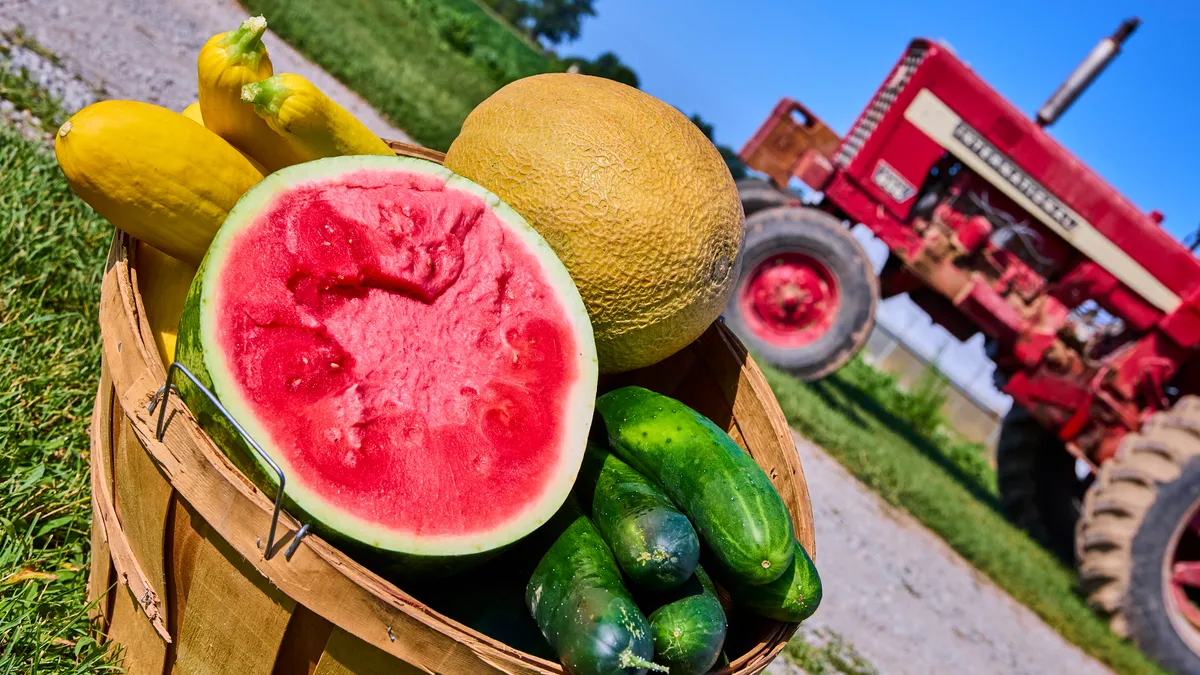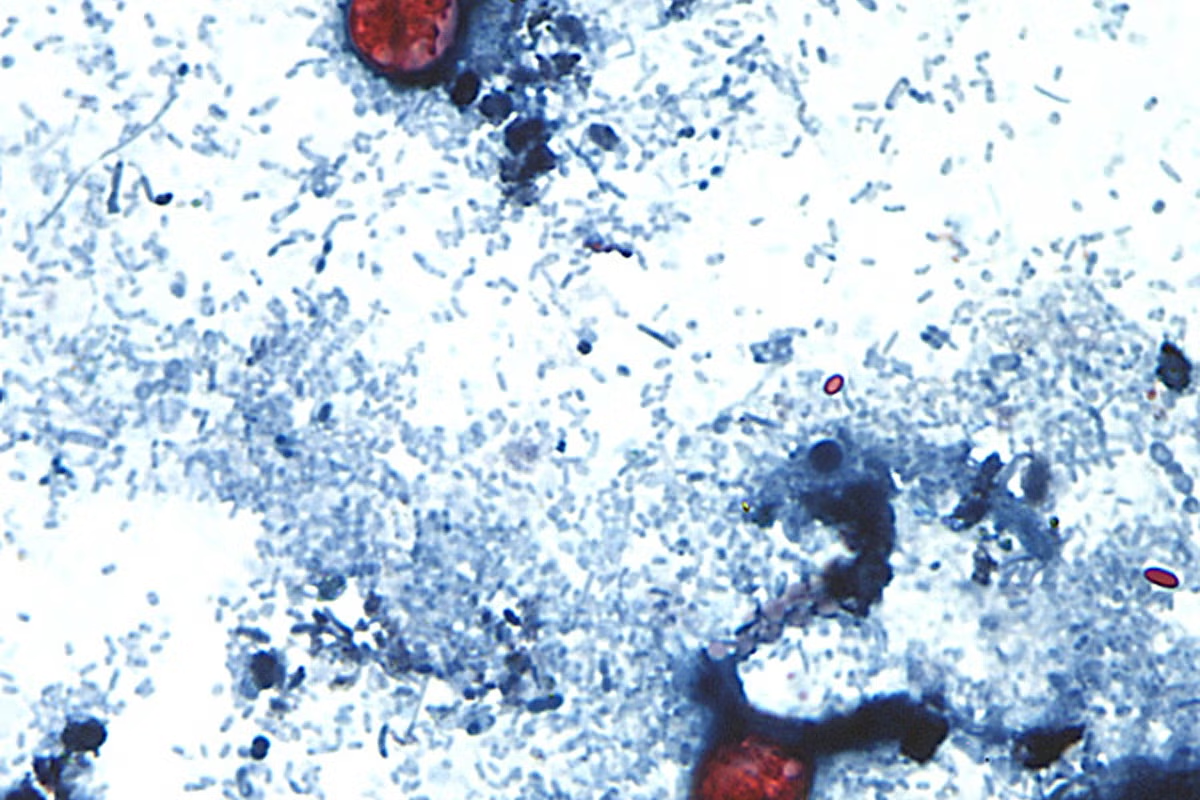
Health officials are racing to find the source of a parasite that has sickened potentially thousands of people across more than 30 states and isn’t showing signs of stopping.The Centers for Disease Control and Prevention said Friday there are more than 800 confirmed cases of the food-borne intestinal illness cyclosporiasis that is typically contracted through contaminated produce. State health departments are reporting hundreds if not thousands of cases. Without pinpointing the source of the outbreak and containing it, cases have the potential to keep rising.“All we need to do is identify the source, but it’s taking a long time,” said Dr. Teena Chopra, an infectious-disease professor at Wayne State University in Detroit.The food-borne intestinal illness cyclosporiasis is typically contracted through contaminated produce.It can take up to two weeks for a person exposed to the cyclospora parasite to show symptoms—creating a hurdle for public-health officials and food-safety experts to swiftly identify the source of the contamination. Infected people may not remember what they ate over a two-week period, and not everyone who is sick might be tested. The illness doesn’t spread between humans, which should make these outbreaks easier to contain once officials know what’s causing it, Chopra said.In Michigan, case counts tripled over less than a week. The Michigan Department of Health and Human Services reported 1,562 cases of cyclosporiasis Friday—eclipsing the 572 reported around a week ago. More than three dozen people have been hospitalized. The state usually reports just 50 cases of the food-borne illness a year, the state health department said.With nearly 200 cases reported in their county alone, the Washtenaw County Health Department in southeastern Michigan is trying to find any commonalities among patients, said Susan Ringler-Cerniglia, spokeswoman for the county health department.“For something this big, where we are getting so much data, it’s a bit strange that we haven’t been able to pinpoint the source,” Ringer-Cerniglia said.The Food and Drug Administration said it was investigating active outbreaks, launching a process that traces the path of food along the supply chain. No specific type of produce or suppliers have been linked to the illnesses so far.Local health departments are advising people to thoroughly wash fresh fruits and vegetables, cook their food when possible and avoid eating produce prepared elsewhere, among other preventive measures.Cyclosporiasis can cause explosive diarrhea and vomiting. It isn’t typically life-threatening and can be treated with antibiotics.For weeks, Dr. Nino Papale has seen dozens of patients stumble in his Michigan emergency room with the same set of symptoms: intense stomach pain, dehydration, and—he can’t emphasize enough—truly explosive diarrhea. In an eight-hour shift, the ER doctor at ProMedica Monroe Regional Hospital might treat five or six patients with telltale signs of cyclospora.Nicole Newcomer, a 40-year-old food-service manager from Fremont, Ohio, ended up at the hospital this week. She went to her local Taco Bell on July 7 and by the next day her stomach was upset. By the evening, she had diarrhea and a low grade fever, and her stomach worsened over the 24 hours. After dozens of rounds of diarrhea, she went to the local emergency room, where she said she was diagnosed with cyclosporiasis and treated for severe dehydration.Newcomer missed two days of work and continues to take antibiotics, but still can’t eat or drink anything.There is no official confirmation that her illness came from that restaurant. Neither Taco Bell nor owners of the franchise responded to requests for comment. An employee of the Fremont Taco Bell said they were still serving lettuce and hadn’t had any issues with it at his store.Other restaurant chains like Chipotle and Wendy’s said the outbreak hadn’t impacted their ingredients or restaurant operations so far, but they were continuing to monitor the situation.A spokesperson for major food distributor Sysco said an investigation by federal and public health officials hasn’t identified a food source responsible for the illness and that the company and its suppliers haven’t been advised to take any additional action or precautions.Write to Jennifer Calfas at jennifer.calfas@wsj.com, Amira McKee at amira.mckee@wsj.com and Heather Haddon at heather.haddon@wsj.com
Explosive diarrhea outbreak continues to grow as authorities race to find source
Health officials are racing to find the source of parasite that has sickened potentially thousands of people across more than 30 states
671 words~3 min read