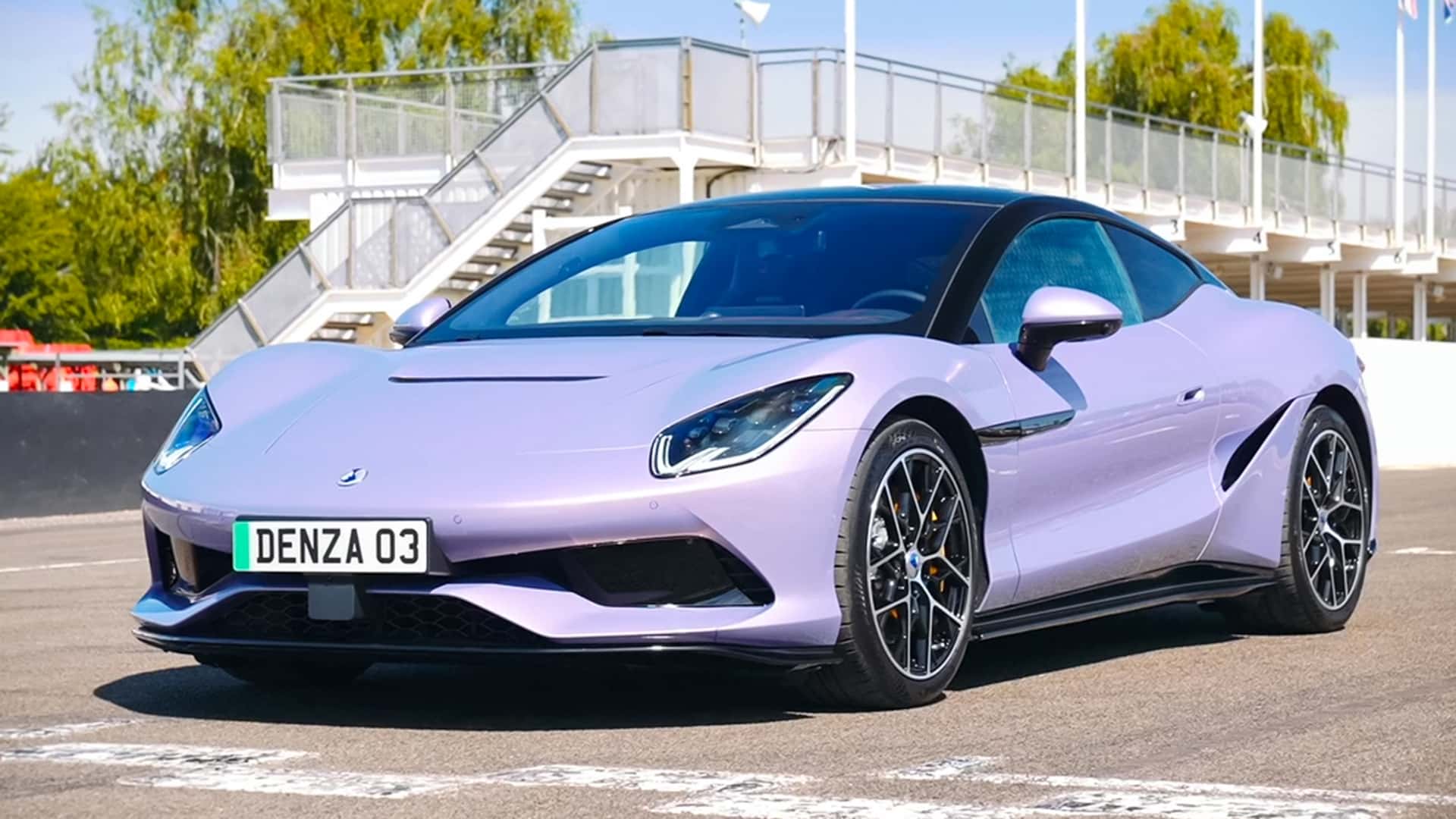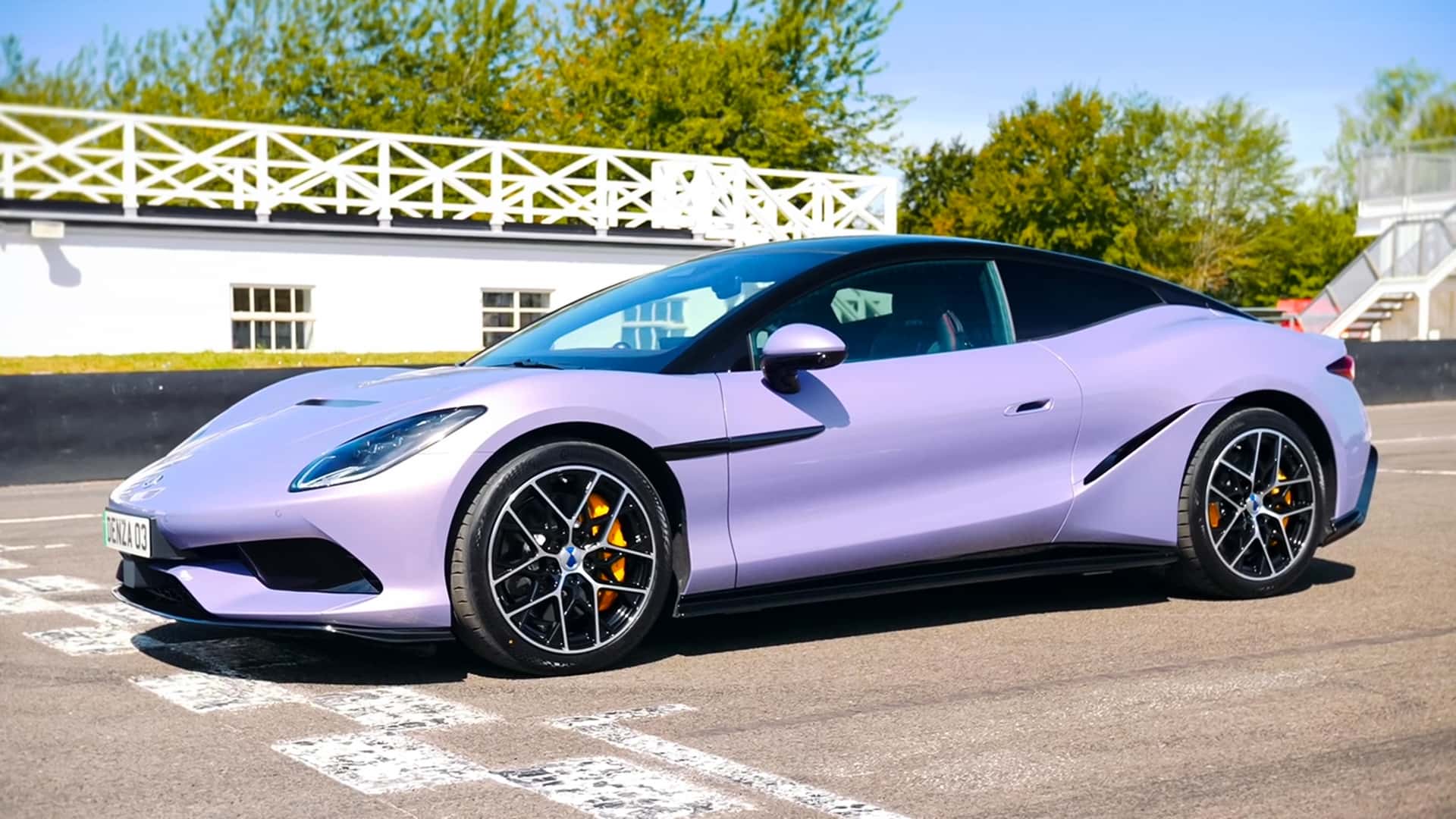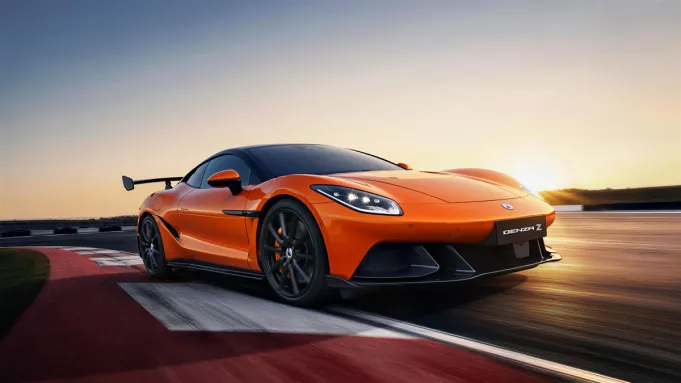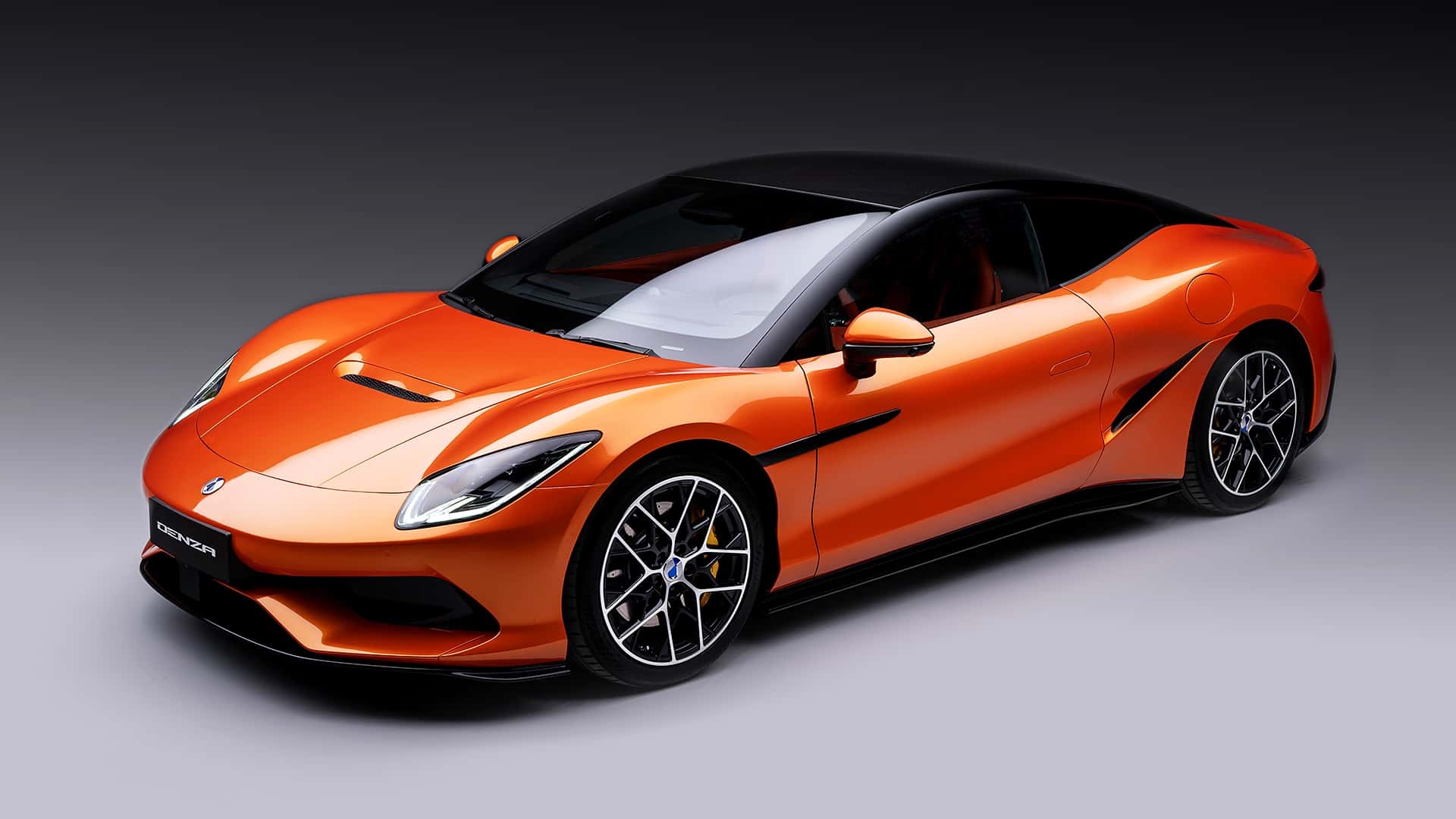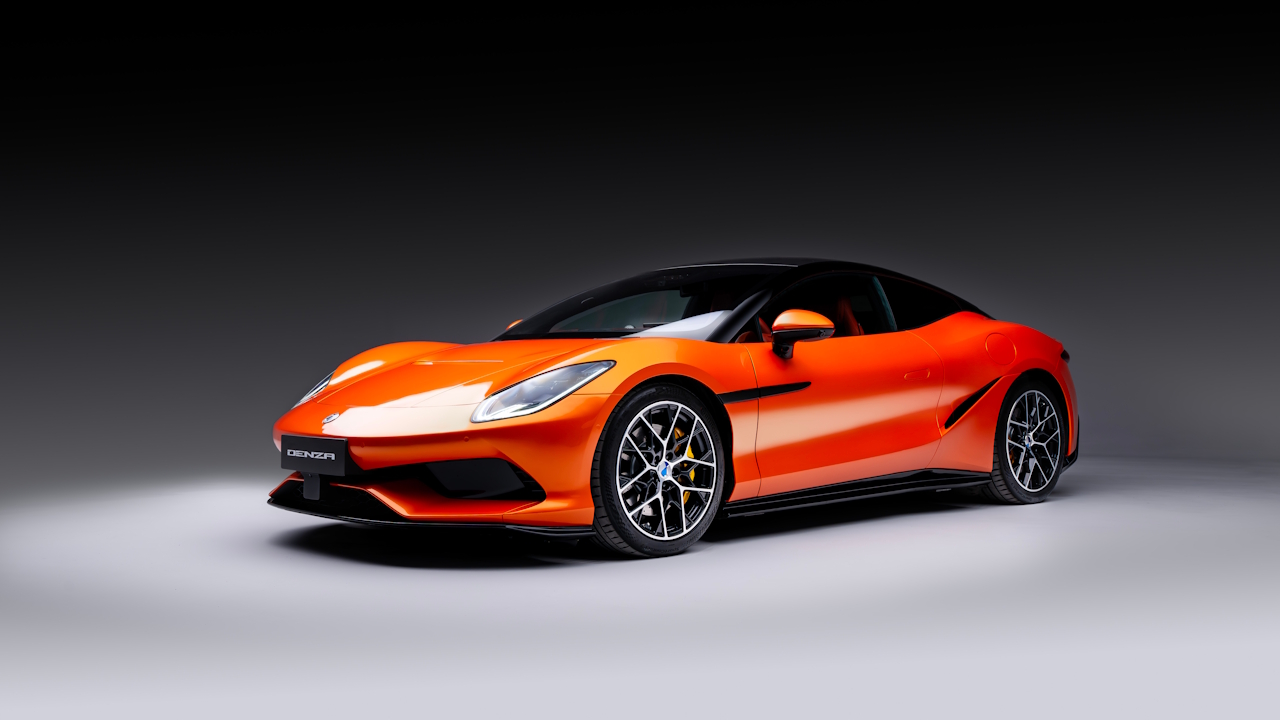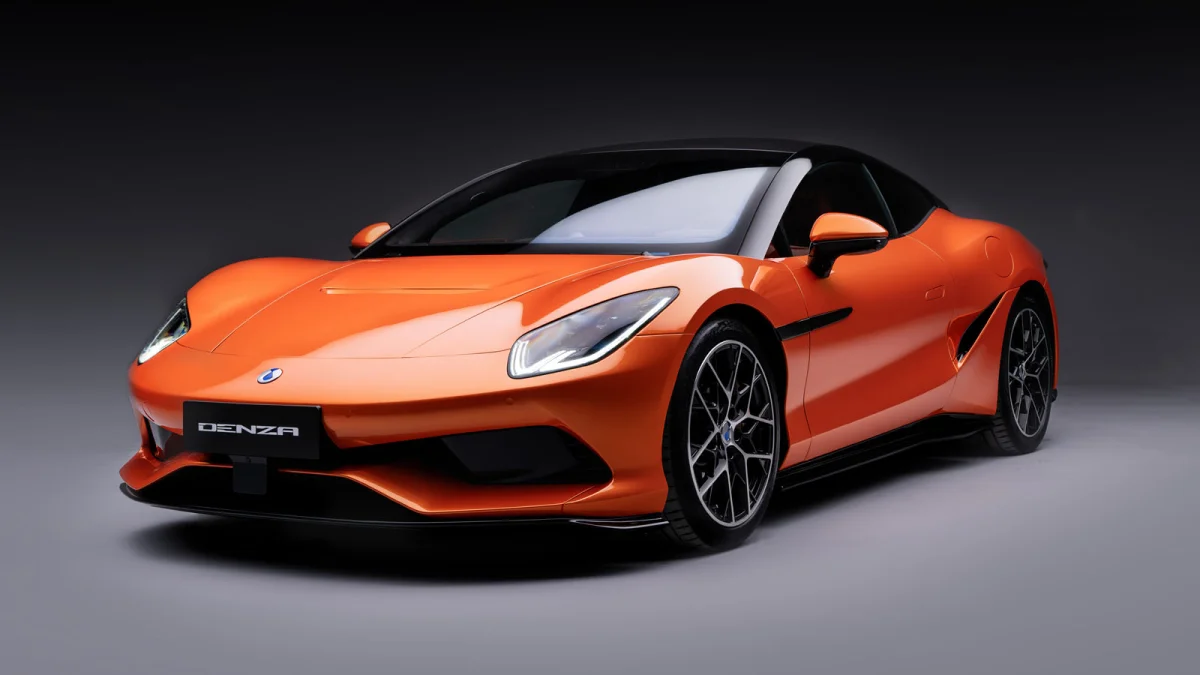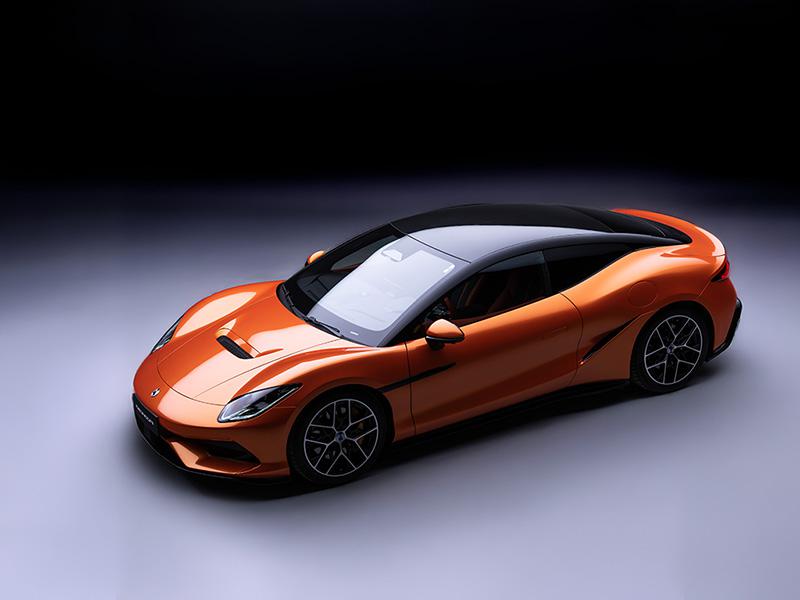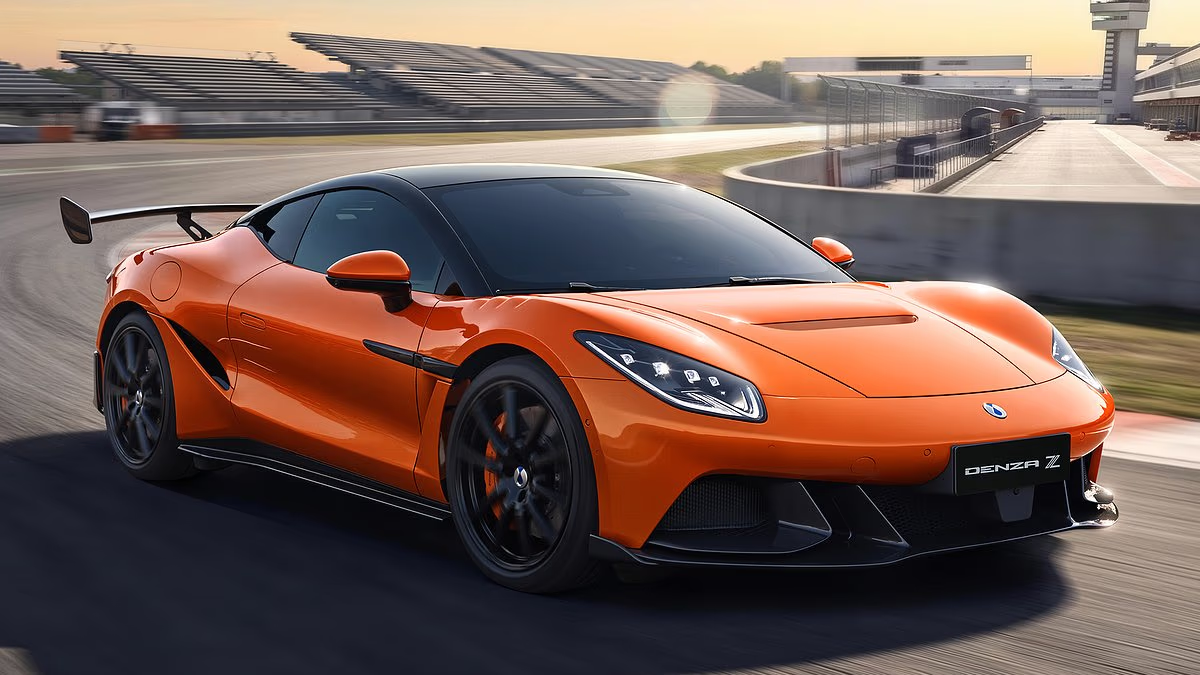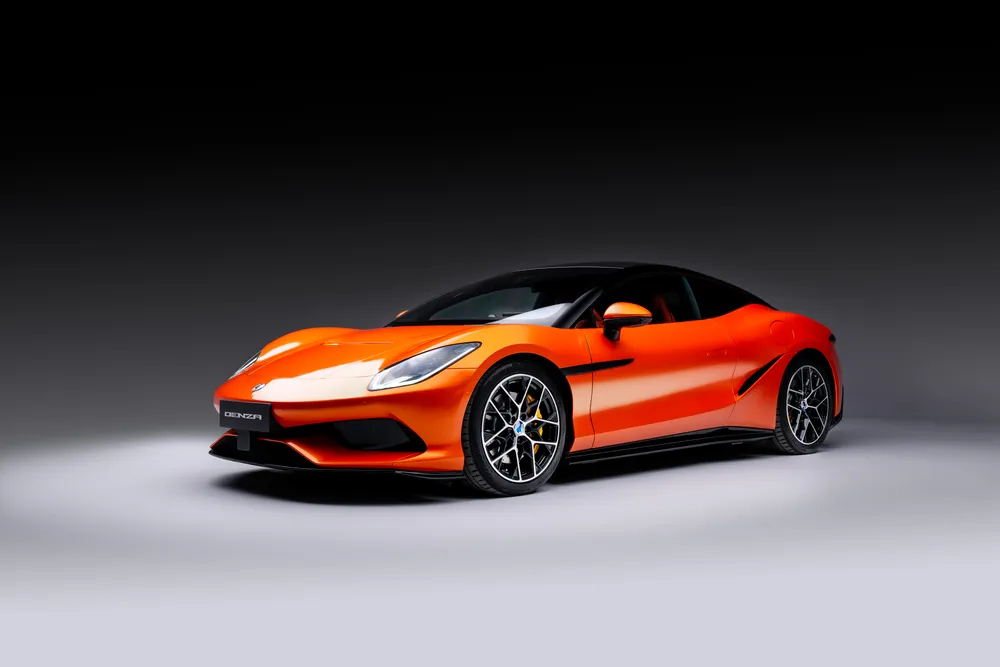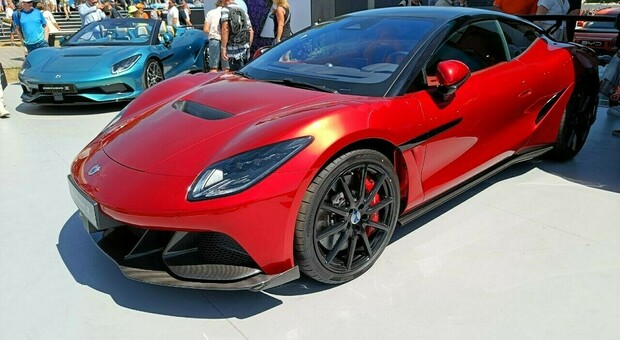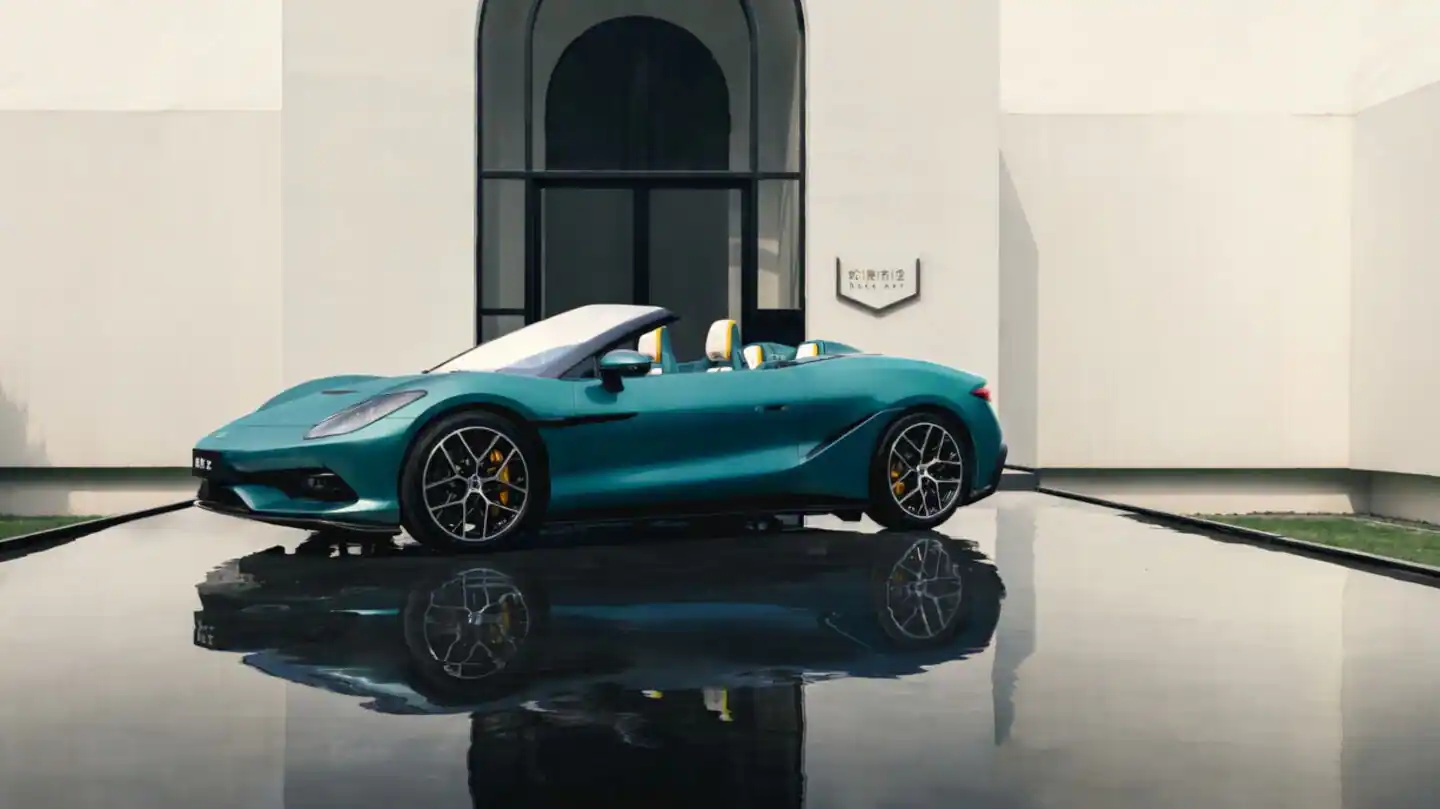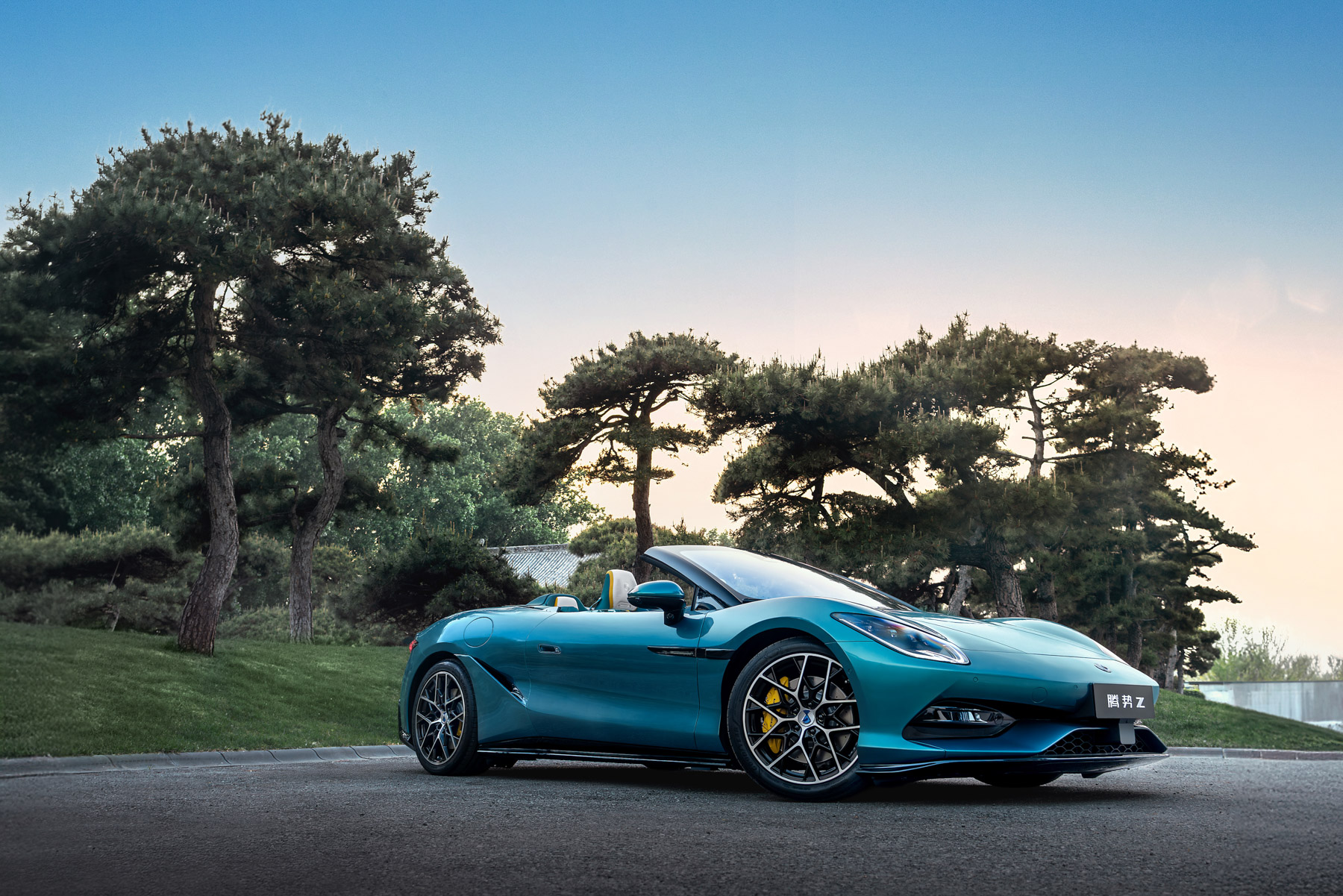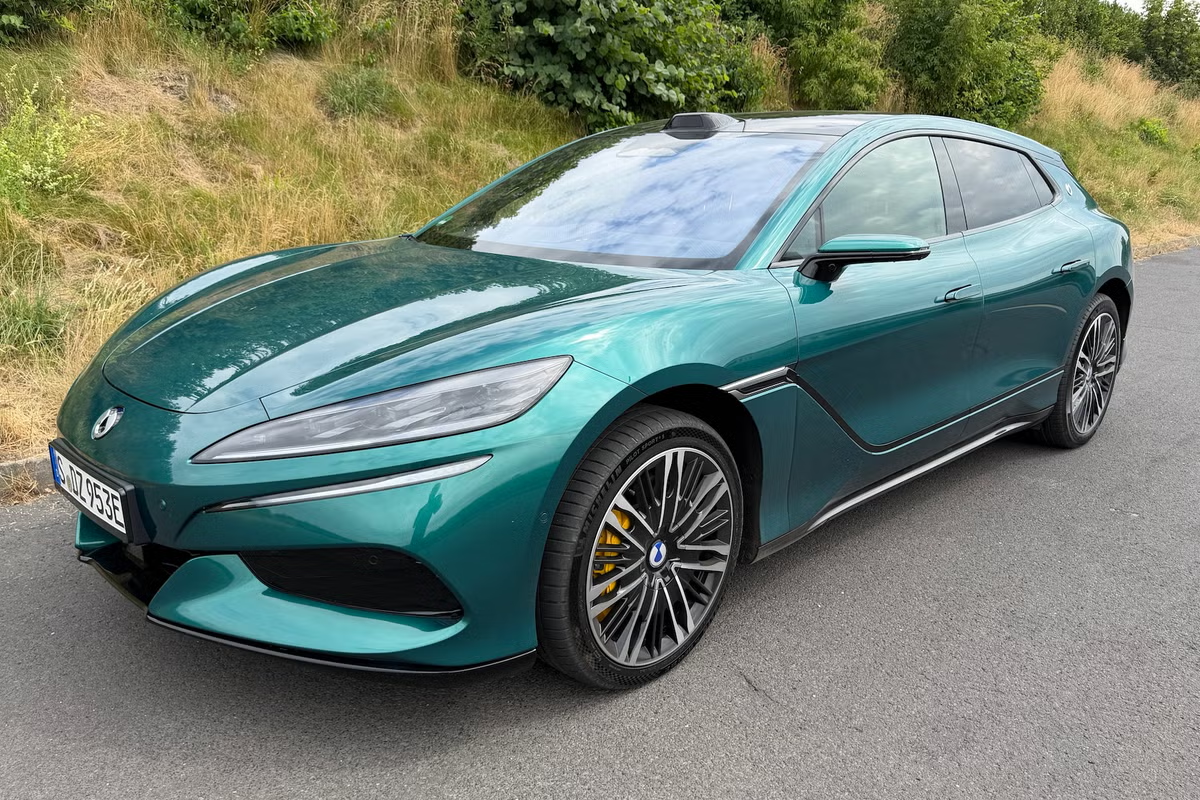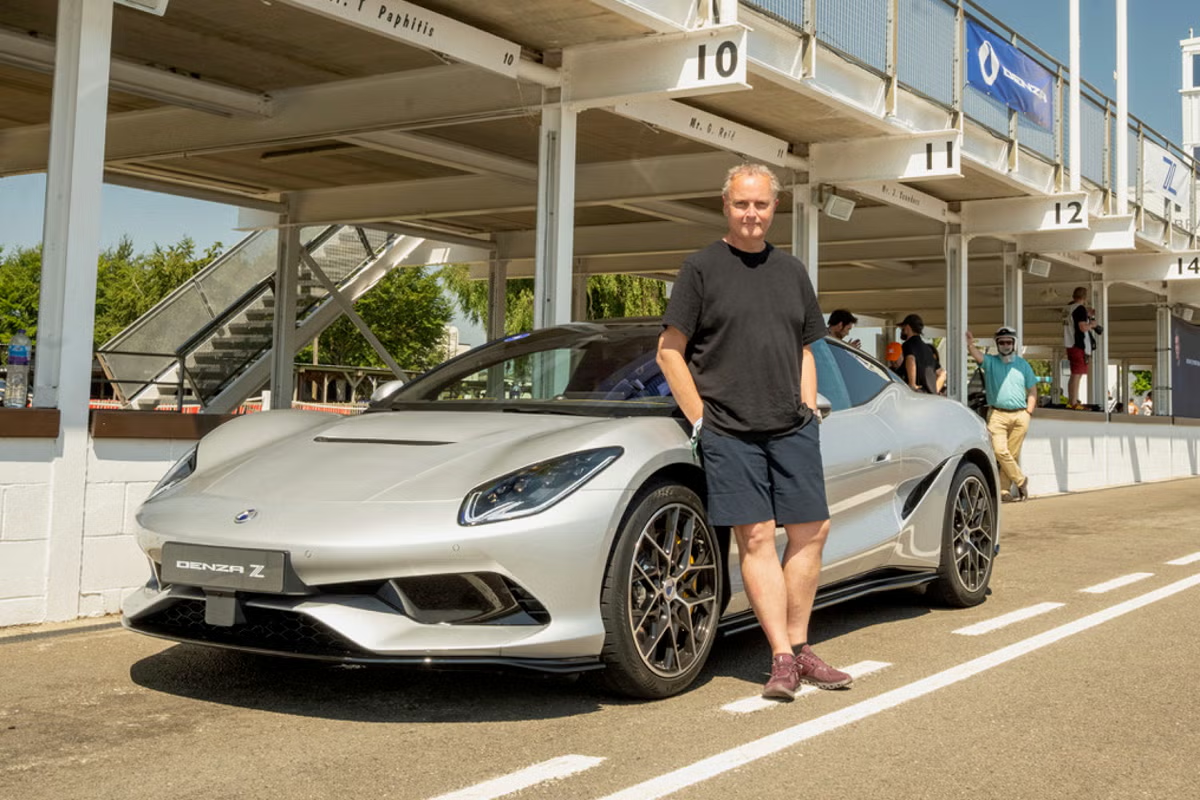
Denza is one of those names that still needs a little explaining in the UK. It’s the premium design- and technology-led brand from BYD, founded in 2010 as a partnership between BYD and Daimler, and now being introduced to Europe with some fairly serious ambition.The Z is its new all-electric supercar, and it’s quite a way to introduce yourself. This is a 2+2 sports car offered in three main versions: Coupe, Spider and Racing. There’s also a Special Edition being prepared for Nürburgring Nordschleife lap-record attempts in the autumn.It made its public debut at the Goodwood Festival of Speed, unveiled by BYD executive vice president Stella Li and former Formula One World Champion Jenson Button – Daniel Craig obviously wasn’t available this time or maybe he just regrets that very odd video he made with the Denza Z9 GT. Anyway, the Denza Z’s numbers are suitably headline-grabbing: three electric motors, 1,582bhp, four-wheel drive, 0-62mph in as little as 1.96 seconds and, in the right Racing specification, a top speed of 217mph.The Z Coupe and Spider are 4,780mm long, which makes this the most compact Denza yet to reach European customers, although “compact” is doing a little bit of work here. It’s low, wide and dramatic, with a 2,780mm wheelbase, four seats and the kind of stance that makes it look like a proper thoroughbred sports car. The only slightly unusual bit is the badge on the nose.That could be the difficult bit. At £142,900 for the Coupe, £159,900 for the Spider and £172,900 for the Racing, the Z isn’t trying to sneak into the supercar world by being cheap. It’s trying to walk straight through the front door with technology, performance, quality and charging speed. The question is whether buyers who know Ferrari, Porsche, Lamborghini, Aston Martin and McLaren will feel ready for Denza.My drive was very brief: three laps of the very fast Goodwood Motor Circuit, as was the case for everyone invited to try it. That means this is very much a first-impressions review rather than a full road test. Goodwood is quick, flowing and smooth, with long bends and a final chicane that slows everything down, so it gives you a good taste of performance and stability, but not a full picture of how the Z deals with ordinary UK roads. I suspect this car may be better suited to the road than the track.How we testedI drove the Denza Z for just three laps of the fast Goodwood Motor Circuit, using its sweeping bends and final chicane to assess performance, braking, steering, body control and cabin usability.Denza Z: From £142,900, Denza.com/ukOur test drive of the new Denza Z was limited to just three laps of the Goodwood Motor Circuit (Denza)Independent rating: 8/10Pros: Fantastic exterior design; immense performance; impressive interior quality; strong braking feel; extraordinarily rapid chargingCons: Feels heavy in corners; cabin isn’t the clearest to understand; Denza badge is a hurdle at this priceDenza Z specsPrice: From £142,900Battery size: 76kWhMaximum claimed range: 254milesMiles per kWh: 3.3Charging : Up to 1,500kW Flash Charging – 10 to 97 per cent in a claimed nine minutesBattery, range, charging, performance and driveEvery Denza Z uses BYD’s 2nd Generation Blade Battery, with a 76kWh capacity. In the Coupe, the official range is 254 miles, the roofless Spider manages 248 miles, while the Racing is rated at 236 miles.The Denza Z looks every inch the £142,900 supercar – as long as you can look past the badge (Denza)Those aren’t huge range figures by everyday EV standards, but this isn’t an everyday EV. It’s an electric supercar with three motors and the kind of performance that makes your internal organs pay attention. A single motor at the front produces 671bhp and 440Nm, while two motors at the rear each add 456bhp and 410Nm. Total system output is 1,582bhp and 1,240Nm of torque.That’s enough for the Coupe to get from 0-62mph in 2.25 seconds and from 0-124mph in 6.36 seconds. The Spider takes 2.3 seconds and 6.46 seconds respectively, while the Racing matches the Coupe’s 2.25-second 0-62mph time and does 0-124mph in six seconds. Add the optional semi-slick tyres to the Racing and the 0-62mph time falls to a launch-control-assisted 1.96 seconds.Top speed is 186mph across the Coupe, Spider and Racing as standard, but the Racing rises to 217mph when fitted with those optional semi-slick tyres. It also gets an aerodynamic package that can produce up to 1,060kg of downforce at 217mph.The Special Edition will get more extreme, with race-grade dual-layer composite bodywork, panels made completely from carbon fibre, a drag-reduction system that coordinates a front active diffuser and a rear wing flap to cut drag by up to 40 per cent, and add more than 2,000kg of downforce at 186mph. Its total system power is more than 1,973bhp and Denza says it can accelerate from 0-62mph in less than 1.7 seconds.The Denza Z is also available as a Spider version costing £159,900 (Denza)The Z sits on Denza’s e3 Sports Car Platform, pronounced e-cube, which has been developed exclusively for the brand. It brings together a triple-motor torque-control system designed for track use, Cell-to-Body battery integration, DiSus-M magnetorheological (sounds like a sneeze to me) suspension, and Flash Charging.Flash Charging is the other truly wild number here. Denza says the Z can take up to 1,500kW through a single connector, allowing a 10 to 70 per cent charge in five minutes and a 10 to 97 per cent charge in nine minutes. Even at -30C, the claim is 20 to 97 per cent in 12 minutes. The phrase Denza uses is “Ready in 5, Full in 9, Cold Add 3”, which is punchy, although the availability of suitable charging hardware will clearly be key to how useful that is in real life – the UK Flash Charger roll out is under way.The battery is integrated into the e3 platform using Cell-to-Body architecture, with the Blade Battery cells positioned directly into the chassis and the passenger compartment floor acting as the top cover. Denza says that’s up to 20 per cent more space efficient than a traditional Cell-to-Pack setup, and it contributes to the Z’s steel-aluminium body stiffness of more than 40,000Nm per degree.There’s also some serious chassis technology beneath the skin. Vehicle Motion Control acts as a hub for the braking, suspension and steering systems, with signal-transmission time as low as 10 milliseconds. The Z can even perform what Denza calls a “compass turn”, using the front wheels as an axis and revolving the rear wheels around them.On track, the first thing you notice is the speed. The Z is very quick; there’s really no other way to put it. The acceleration is huge, instant and deeply serious, and it gives the car that familiar high-performance EV ability to compress straights into much shorter pieces of road.The steering is pleasant enough, too. It’s decently responsive, with reasonable feel, and it doesn’t make the car feel remote or vague. Through Goodwood’s long, fast corners, the Z had very little body roll, which is impressive given the weight involved. The Coupe weighs 2,230kg, the Spider 2,300kg and the Racing 2,250kg, so none of them is light. You do feel that mass, especially through tighter corners and direction changes, but the body control is still good.The Denza Z uses the most advanced tech the BYD group has to offer, including super-fast Flash charging (Denza)The car I drove was on air springs, and the ride felt good on the smooth Goodwood circuit and over the bumpier racing kerbs. Coupe and Spider models use air suspension, while the Racing has coil springs for a more track-focused setup. The DiSus-M dampers use magnetorheological fluid that can change viscosity in milliseconds, allowing the control system to adjust rebound and compression damping very quickly. The suspension layout is double wishbone at the front and multi-link at the rear.The brakes were a real highlight. All Z models get carbon-ceramic drilled discs as standard, with six-piston calipers at the front and four-piston calipers at the rear. They feel nicely judged: not too grabby, with plenty of stopping power, which again is exactly what you want in a car this quick and this heavy. Denza says the brakes save around 30kg of unsprung mass in total and can offer up to 186,000 miles of service life.Interior, practicality and boot spaceFrom the outside, the Denza Z looks fantastic. It has the low, wide, expensive look you want from a supercar, with powerful front and rear wings, a slim beltline, sharp lower-bumper detailing, distinctive LED daytime running lights and intricate diamond-shaped tail-lights. Wolfgang Egger, BYD’s Global Design Director, describes it as “a living sculpture of speed”, which is the sort of phrase car designers enjoy, but in this case you can see what he’s getting at.Unlike many supercars, the Denza Z has two (admittedly cramped) rear seats for more people to enjoy the fun (Denza)It looks like a serious sports car; not a novelty EV, not a concept car that’s been rushed onto the road, but a proper low-slung performance machine. The body mixes smooth curves with more functional aerodynamic elements, including a front intake that directs air to outlets on the bonnet, creating an S-shaped airflow path intended to balance drag, downforce and cooling.The Racing version adds more serious hardware, including a re-engineered front air intake, multi-duct cooling, a carbon-fibre front splitter, underfloor vortex generators, vents across the body and an optional three-position adjustable carbon-fibre rear wing. Its cooling upgrades are claimed to improve electric-motor cooling efficiency by 50 per cent and brake-disc cooling rates by 32 per cent. It’s also longer than the Coupe and Spider, at 4,870mm rather than 4,780mm, and wider too, at 1,990mm rather than 1,975mm.Inside, quality is impressive. That was obvious from the shut of the doors to the materials around the cabin. The Z uses carbon fibre, suede-effect fabrics and metal finishes, and it feels like Denza has worked hard to give it the right level of occasion. The doors are power-assisted and soft-closing, which adds a bit of theatre and also helps the car feel suitably expensive.For once, getting into a hard-top sports car with a crash helmet on wasn’t too bad – access was easy and there’s plenty of headroom, plus good seat and steering wheel adjustment to get the perfect driving position.The cabin layout is focused around the steering wheel, as you’d expect in a sports car. The wheel has six physical buttons in its lower section, giving quick access to key functions including Track and Boost modes. The idea is good, especially in something you may use at speed, because physical controls are easier to find than a buried touchscreen function when the car is moving quickly.That said, this wasn’t the clearest, cleanest cockpit to understand on circuit. There’s a lot going on, and at Goodwood speeds it wasn’t always immediately obvious where everything was or how best to get to it. That may well improve with familiarity, and a road drive would be a fairer way of judging the everyday interface, but on first exposure the cabin didn’t feel as instantly readable as the best sports cars.The space inside is more generous than you might expect. The Z is a 2+2 rather than a strict two-seater, and that gives it a level of flexibility you don’t always get in this kind of car. Both the Coupe and Spider have a four-seat layout, while the Racing can also be specified as a two-seater, replacing the rear seats with a roll cage mounted behind lightweight sports seats.The wheelbase is 2,780mm, close to many executive saloons, which helps Denza package the four-seat layout into a car that still looks compact by supercar standards. The boot capacity is 250 litres in the Coupe and Racing, and the rear seats can be folded to increase that to 550 litres. The Spider’s boot varies from 131 to 176 litres, depending on roof position.That means the Coupe and Racing have enough space for light luggage, although nobody is going to confuse this with a grand estate car. Still, for a car with this much performance, the practicality is stronger than you might expect. The four-seat layout also broadens its appeal, particularly for buyers who want something exotic but still need the option of carrying children, bags or occasional passengers.For a supercar, the Denza's 250-litre boot is a decent size, especially with the bonus of fold-down rear seats (Denza)The front seats include eight-way power adjustment, four-way electric lumbar support, heating, ventilation and massage. Their headrests also include built-in speakers for the Devialet sound system. In Coupe and Spider models, the driver’s seat has active lateral support adjustment for high-speed cornering, which is a clever touch given how quickly this car can build speed and cornering loads.Personalisation is a big part of the pitch. There are 10 exterior colours, including Le Mans Blue, Silverstone Silver, optional Nocturne purple, Riviera Blue, premium optional Phantom Black Matte, Monaco Red and Monte Carlo Orange. There are also 10 interior colour choices, mixing full-black themes with different stitching and brighter finishes. Brake calipers can be specified in orange, yellow, red or blue, while the Spider’s roof has optional colour choices too.Technology, stereo and infotainmentThe Z’s technology story is split between useful everyday kit and the more dramatic performance systems. The main screens are an 8.88-inch digital instrument panel and a 12.8-inch infotainment system, with Google Built-in for Google Maps, Google Assistant and the Google Play Store. Wireless smartphone charging is included, along with remote access through the Denza app.There's no doubting the quality of the Denza Z's interior, but the controls can be a bit confusing (Denza)A digital rear-view mirror is standard, and that should be useful in a low, wide sports car where rear visibility isn’t always a strong point, although the display isn’t exactly crystal clear. There’s also multi-themed intelligent ambient lighting that reacts to the car’s modes, which gives the cabin a bit more theatre without needing to go too wild.The sound system is supplied by French audio company Devialet. Coupe and Racing models get 12 speakers, while the Spider has 10. That includes a spherical central module in the middle of the upper dashboard and speakers built into the front headrests. Dolby Atmos is included, too, although there was little point in assessing the system through a crash helmet.The Z also gets a virtual engine sound, which can be activated through a fascia button and customised through the infotainment system. There are two volume settings, and the sound can be sent to the cabin only, the exterior only, or both. Denza says drivers can choose from different sound styles, including a conventional engine note or a sci-fi-inspired effect. In my brief drive, it didn’t sound too bad, although the rumble did try a little too hard to mimic a proper engine.Boost mode is operated through a steering-wheel button and increases throttle torque by 30 per cent for 20 seconds. When it’s active, the instrument cluster and touchscreen change to reflect the additional performance. That may sound slightly arcade-like, but in a car with this much acceleration it’s also a neat way of making the extra punch feel like an event.Track mode also opens a dedicated app on the infotainment screen. It gives access to real-time vehicle positioning, G-sensor data and lap data that can be analysed and exported to a USB flash drive. There are also dynamic settings for track use, including launch control and a drift setting that adjusts power distribution between the front and rear to allow controllable lateral slip.There’s also a one-touch drifting function that uses torque control and power steering to achieve slides without the driver needing to adjust the steering or accelerator inputs. That’s a very modern take on performance driving, and one that will split opinion depending on how much you want the car to do for you.For those who want to adjust the car properly, the Track app offers three custom profiles. Settings include front and rear power distribution, traction control, brake-energy regeneration, DiSus-M damping, brake assist, torque vectoring, anti-lock brakes and vehicle dynamic control.The 12.8-inch infotainment screen features Google Built-in and supports wireless Apple CarPlay and Android Auto (Denza)Safety kit includes a driver’s airbag, front passenger airbag, two front-seat side airbags, a driver’s side rear airbag and front and rear curtain airbags. Driver assistance includes Driver Fatigue and Distraction Monitoring, Front and Rear Cross Traffic Alert and Brake, Lane Departure Assist, Intelligent Cruise Control and Blind Spot Detection.The technology is impressive, but as with the rest of the cabin, the question is how easy it all is to use, especially when you’re concentrating on driving. On a smooth, fast circuit with only three laps to learn the car, there was too much to take in properly. The quality and kit are there, but the layout didn’t feel immediately as natural as the best driver-focused cabins.Prices and running costsThe Denza Z claims 254 miles of range, while flash charging will take it from ten to 90 per cent charge in just nine minutes (Denza)The Denza Z Coupe starts at £142,900, the Spider is £159,900 and the Racing is £172,900. That puts it in serious performance-car territory, and it means the Z has to be judged against some very established names as well as other electric supercars.Standard equipment is generous. All versions include the digital instrument panel, 12.8-inch infotainment screen, heated and ventilated front seats with massage, power-assisted soft-closing doors, Vehicle-to-Load, the digital rear-view mirror, Devialet sound system with Dolby Atmos, wireless smartphone charging and remote access through the Denza app.Vehicle-to-Load means the car can power external electrical equipment from the battery, which may be less glamorous than the 1.96-second 0-62mph figure but could still be useful.The running-cost story is unusual because the Z’s charging claims are so dramatic. A 10 to 97 per cent charge in nine minutes would change the experience of using a performance EV, provided drivers have access to the right charging hardware. The 11kW AC charging capability is more conventional, but the headline is clearly the up to 1,500kW Flash Charging system.The official range is 254 miles for the Coupe, 248 miles for the Spider and 236 miles for the Racing. Those figures won’t trouble the longest-range electric saloons or SUVs, but they sit in a very different part of the market. In a supercar, charging speed, repeatability and thermal control are just as important as outright distance between stops.Denza says the 2nd Generation Blade Battery has passed fresh safety tests, including a simultaneous Flash Charging and nail-penetration test that resulted in no thermal runaway, smoke or fire, even after 500 Flash Charging cycles. It also says battery degradation is reduced by 2.5 per cent compared with the original Blade Battery.There’s plenty of engineering depth here, and the Z doesn’t feel like a quick show car with a fancy badge stuck on the front. It feels like a proper, high-quality, high-performance electric supercar. The big challenge is brand recognition. The car looks fantastic from the outside, and it really does look like a thoroughbred sports car, but one that wears an unusual Denza badge. At this price, that just might be too big a hurdle for many buyers to get over.The verdict: Denza ZThe Denza Z looks fabulous, goes fast, feels beautifully made and charges at extraordinary speed, although its heavy weight blunts handling and the unfamiliar badge makes it a bold choice at this price.Denza Z rivalsPorsche Taycan Maserati GranTurismo FolgoreLotus EmeyaFAQsHow long does it take to charge? The Denza Z supports Flash Charging at up to 1,500kW DC, allowing a 10 to 70 per cent charge in five minutes and a 10 to 97 per cent charge in nine minutes on suitable hardware. Denza also claims a 20 to 97 per cent charge in 12 minutes at -30C. AC charging is 11kW.How much does the Denza Z9 GT cost - is it worth it?The Denza Z starts from £142,900 for the Coupe, rising to £159,900 for the Spider and £172,900 for the Racing. It delivers huge performance, impressive quality, rapid charging claims and striking design, but the Denza badge is still unfamiliar in the UK, which could make the high price tag a big sticking point for buyers.Does Denza replace batteries for free?The car uses BYD’s second-generation Blade Battery with lithium iron phosphate chemistry and Cell-to-Body construction, with an expected eight-year warranty on the battery.Why trust usOur team of motoring experts have decades of experience driving, reviewing and reporting on the latest EV cars, and our verdicts are reached with every kind of driver in mind. We thoroughly test drive every car we recommend, so you can be sure our verdicts are honest, unbiased and authentic.IDNML is an Introducer Appointed Representative of Automotive Compliance Limited (Firm Reference Number 497010), which is authorised and regulated by the Financial Conduct Authority (FCA). Our role is limited to making introductions to Automotive Compliance Limited only. We do not give advice or arrange finance. You can verify this information on the Financial Services Register at https://register.fca.org.uk.Automotive Compliance Limited will pay us an introductory fee for making the introduction. This fee does not affect the interest rate, amount you borrow, or the terms of your finance agreement.
Denza Z review: I drove the 186mph electric supercar that’ll charge in nine minutes
Denza’s first electric supercar has 1,582bhp, three motors, up to 254 miles of range, a 217mph top speed in Racing form and a price from £142,900
3,530 words~16 min read