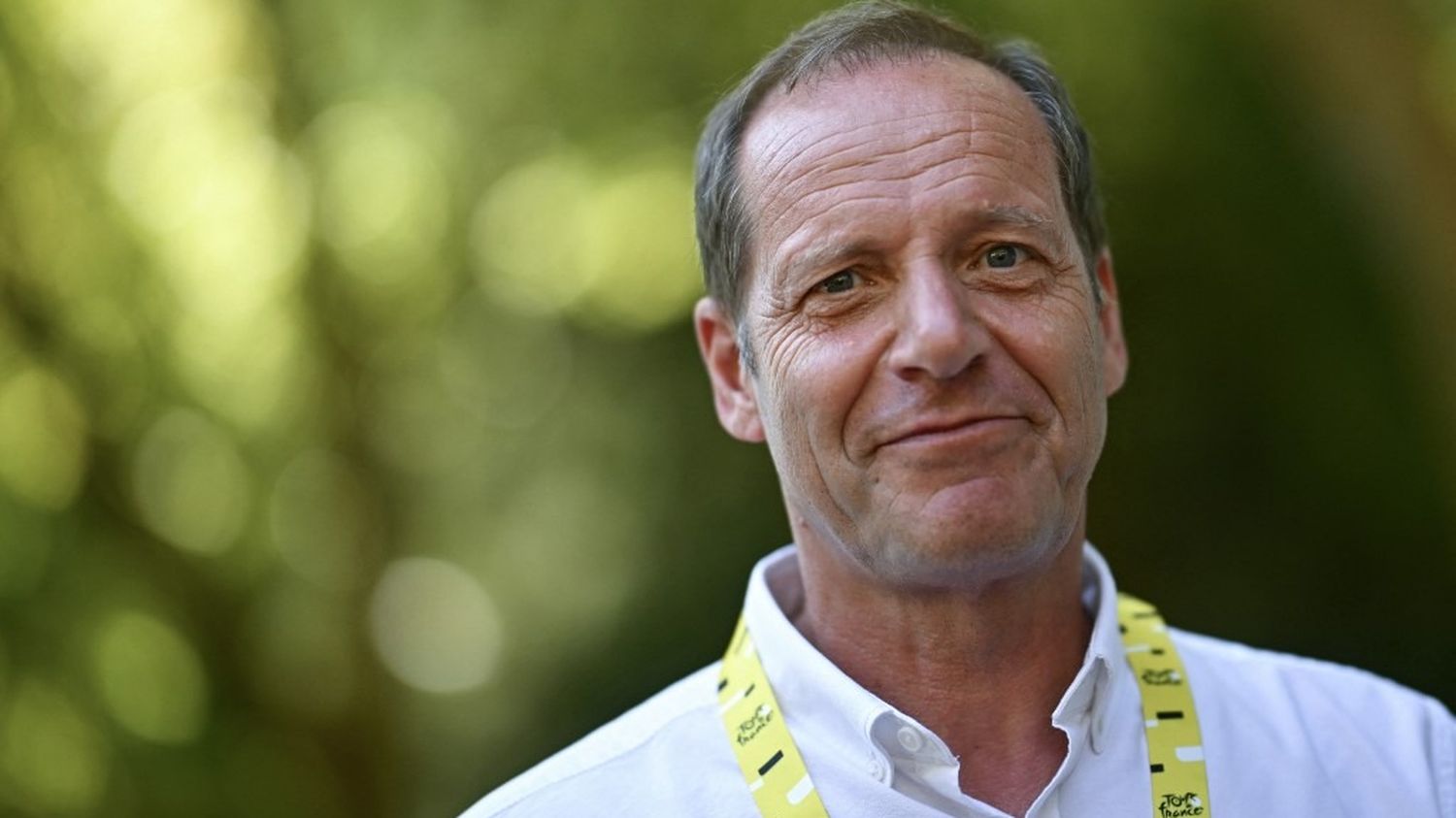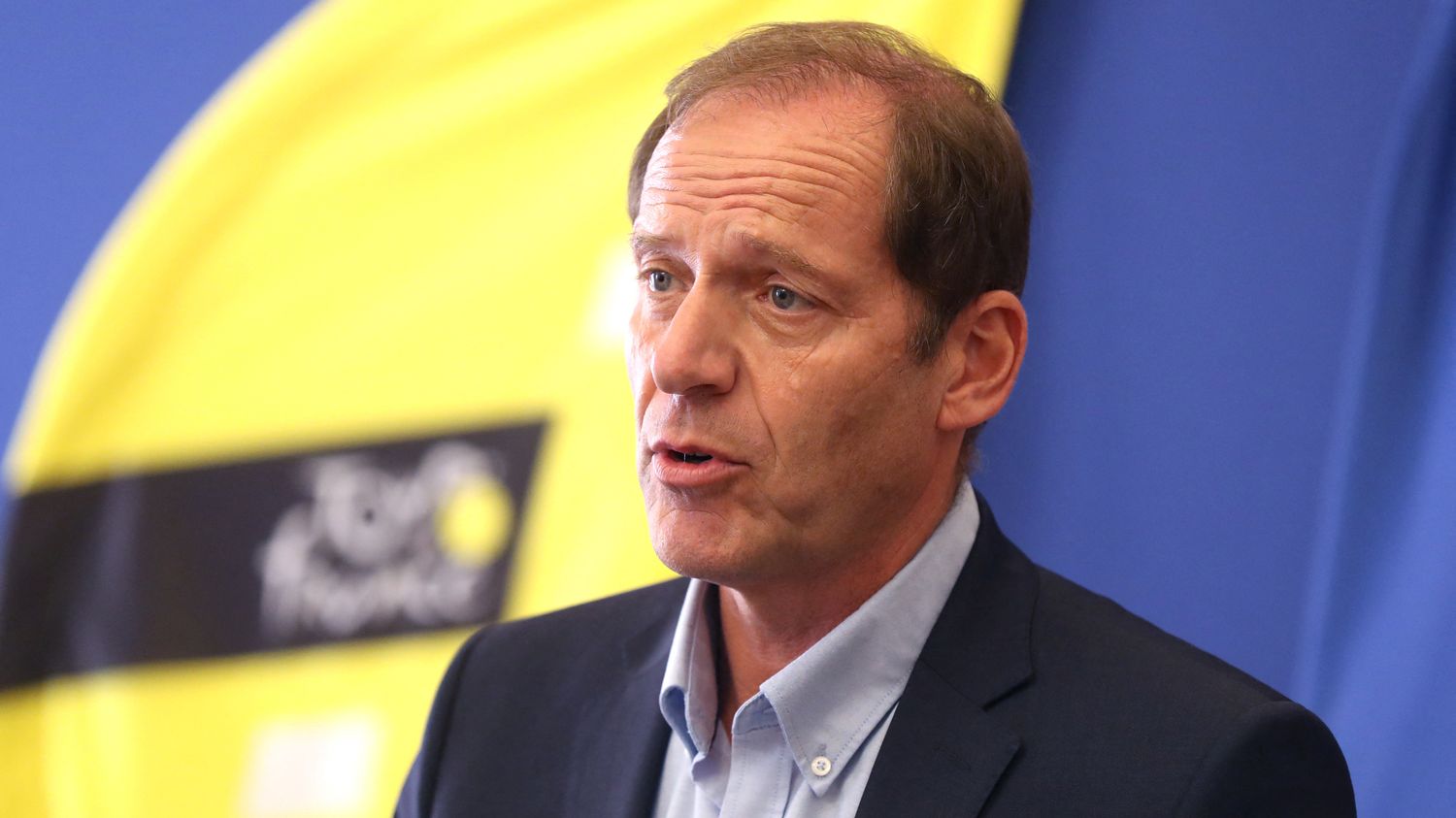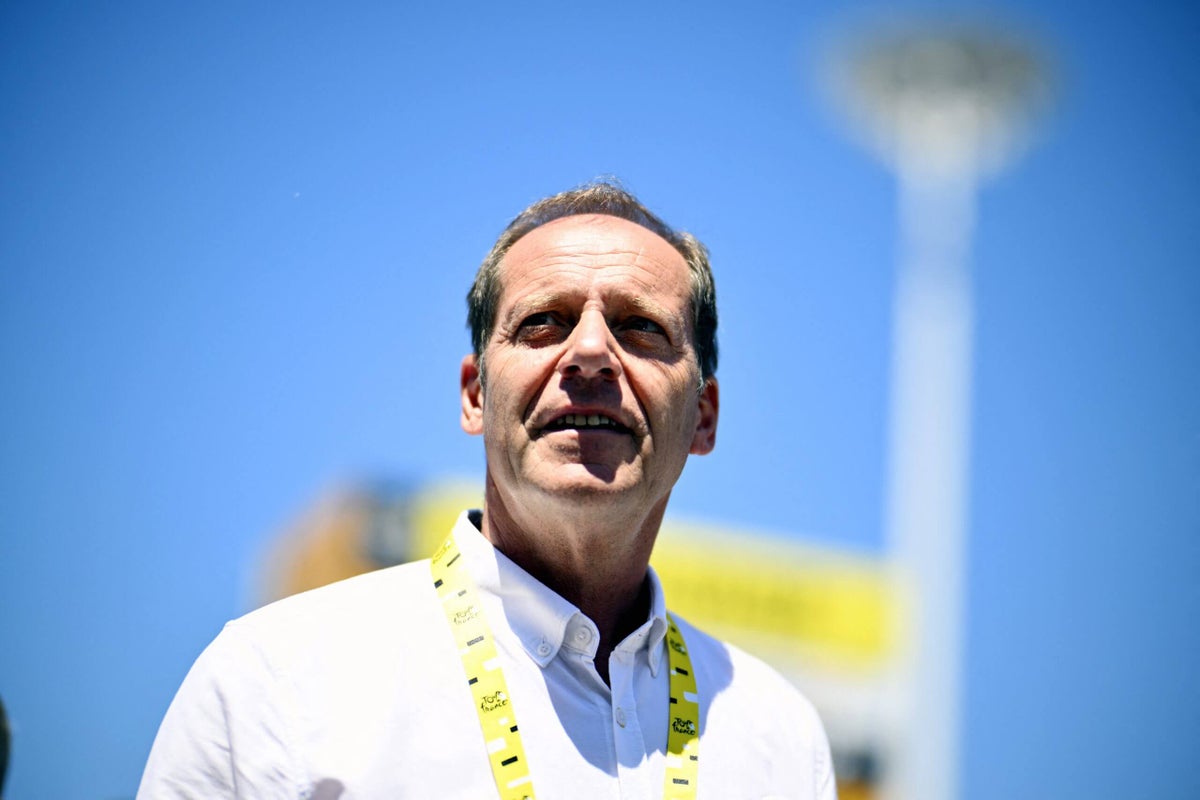
“I messaged my wife earlier, saying the tornado starts up at two o’clock,” Christian Prudhomme tells The Athletic.It is early May and we are deep in the French countryside, 300 miles south of Paris. He has just shaken umpteen hands, downed a few coffees, conducted several interviews, climbed a viewing tower shaking in the rain and now it is off to the next engagement. Yesterday, the general director of the Tour de France was in Clermont-Ferrand in the Puy de Dôme department (county), today we are driving around the Corrèze, tomorrow, it will be the Cantal.Watching the Tour de France on TV, you might only notice Prudhomme poking his head out of the sunroof of the red car leading the peloton to wave the start flag for every stage, but that is just the tip of the iceberg, one of a thousand different tasks.It takes a different kind of panache and endurance to that exhibited by the Tour’s peloton. Prudhomme has to be across the macro and micro — sport, culture, politics, even weather.As the physical manifestation of cycling’s biggest race, he is not just an organizer at the Amaury Sport Organisation (ASO), but mouthpiece, messenger and hype-man; the permanent, dignified face behind the race.Three weeks of bike racing in July is underpinned by 11 months of hard graft: internal and external meetings, organisation, administration, media and public-facing events. If this job is like being tossed around winds, swirled by people, press, problems and pressure, Prudhomme appears comfortable.The Athletic joined him in the eye of the storm, spending 36 hours with Prudhomme and ASO’s head of external relations Cyrille Tricart to see what life is like for the man who runs the Tour away from the race.The rain pelts down as we drive away from Brive station, 300 miles south of Paris. Prudhomme gallantly lends me his umbrella as I apologize for bringing the British weather.Our destination: the short, sharp, last categorized climb 25 kilometers from the end of Stage 9, Mont Bessou. What’s in a name? A lot: in a TV interview conducted an hour before my arrival, Prudhomme made a minor mispronunciation on air with the wrong emphasis. It is not Mont Be-ssou, but Mont Bess-ou. He goes over it in the car. Old journalistic habits die hard: correctness implies a scintilla of added respect and credibility with locals.As we go to park, Prudhomme spots president of the department of Corrèze, Pascal Coste, with a polka-dot jersey stretched over his white-collared shirt. “I’ll put on the green jersey,” Prudhomme says excitedly, rooting around to find a maillot vert to pull on. “Very plausible.”Christian Prudhomme dons the green… T-shirt. (Andy McGrath / The Athletic)Next to the steps to Mont Bessou, there is a welcoming committee sheltering from the rain under several pop-up gazebos. There are trestle tables laden with myrtle cake, beakers and giant coffee urns. It is a whirlwind of bonjours, handshakes and photographs, meeting regional officials and a local cycling champion along the way.“Attaque de Pascal Coste!” Prudhomme shouts mischievously as the polka-dot-clad politician leads the way to the viewing tower, built to take Corrèze’s highpoint to 1,000 meters, for a photo opportunity and unfurling of a banner celebrating the stage. The structure moves around in the wind and rain; hopefully this will not be the weather on this baroudeur’s stage on July 12.Prudhomme holds court to several microphone-wielding local journalists. He is never lost for words, his answers fluent, flowery and free of ums or ers. Asked inevitably about Paul Seixas, he responds: “Any terrain suits him,” Prudhomme says. “I won’t stop you from dreaming; on the contrary, I’ll dream a little bit myself.”Later, Prudhomme mentions how even Spanish journalists have questions for him about the Decathlon CMA CGM rider. The fresh-faced Frenchman has been on his own radar for some time. When Prudhomme sent a text message to Seixas in September 2024, congratulating him on his junior world time trial title, the champ took four days to respond, indicating that his phone network tariff hadn’t allowed for network in Switzerland so he only received it on his return. A typical teenager’s oversight.On the walk back to the car, Prudhomme looks at his step count — just below 3,000. “In April and July, it’s impossible to reach 10,000,” he says, referring to his activity on ASO-organized races. He has two drivers on the Tour de France: former yellow jersey racer Pascal Lino for in-race, another for the activities afterwards because of the fatigue and focus required.His day does not end with the stage finish. Sometimes, there are three dinners with local officials and dignitaries or 2am bedtimes before rest days. Prudhomme runs on five hours of sleep during the race and has three months a year where he is teetotal. July is not one of them: well, it would be rude to refuse the local tipples and toasts.An Alsatian by birth, to which he attributes his large appetite and support of Strasbourg football club, Prudhomme has his finger on the sporting pulse. He had been in Cardiff weeks earlier for a Six Nations rugby match, bumping into Geraint Thomas.Brive rugby club is the fitting destination for our next rendezvous. This does feel rather like electioneering; as we pull into the car park, he recounts the famous words of Jacques Chirac, whose family roots are in the Corrèze region, about the campaign trail: “Eat when you can eat, drink when you can drink, sleep when you can sleep and piss when you can piss.”When Prudhomme took on this job, Chirac was still French president and Instagram was a glint in the eye of its founder. His trajectory changed when incumbent race director Jean-Marie Leblanc mentioned to him in a press room at the Grand Prix de Denain in 2001 how right he would be for the role, but indicated they were going with deputy race director Daniel Baal.Back then, Prudhomme was a well-liked, accomplished journalist and presenter, hosting French TV Tour de France coverage and commentating on the race next to two-time winner Bernard Thévenet.However, with Baal due to leave the Amaury Sports Organisation (ASO) which organizes the Tour, Leblanc asked him again in 2003 and it was too good an opportunity to pass up. Prudhomme’s gratitude to his mentor, who took him to every meeting and passed on his decades of experience, is clear.He was given time to shadow Leblanc and understand the race’s operations before taking on the role. At the 2004 Tour, Prudhomme rode in a blue ASO car, with a free rein. He spent a day in the publicity caravan. He talked to protestors, often stopping them from delaying the race. He even spent the night with constructors and barrier builders, working to build the next day’s finish line. “To see everything that I could see,” Prudhomme says.Former and current race directors Jean-Marie Leblanc and Christian Prudhomme pictured at the presentation for the 2006 Tour. (Christophe Simon / AFP via Getty Images)However, there are always challenges for which he cannot prepare. In his early tenure, that tended to be doping positives, leading to ejecting some riders or teams. In 2020, he tested positive for Covid-19 and spent a week off the race. Last year, there was a required stage shortening due to a herd of diseased cows; this summer’s edition has already had a finale where fans were advised to stay away due to nearby wildfires. With the Tour, you can expect the unexpected.Even after 20 years doing this, Prudhomme is like a veteran farmer presiding over an immense acreage. He cannot cover every blade of grass or know every secret it has to offer.Under his guardianship, the race has become a constant traveller, with a dozen foreign grand départs, and less formulaic, finding new finishes in the Vosges, Jura and Massif Central, throwing in more cobblestones and punchy late climbs.“Do you know The Leopard, the 1960s film with Alain Delon, by Luchino Visconti? One of the protagonists says, “Everything must change for everything to remain the same”. That is exactly what guides me.“So you have to adapt to a changing world, because the essential does not change: to know that love for the Tour. My obsession is that children dream like I did as a kid.”That evening, he is on stage with La Montagne journalist Gilles Lalloz, talking through Tour anecdotes and his life story. While his job is often serious, he does not take himself too seriously. “I haven’t changed, eh,” he says to laughter when an old photograph of himself and his now-adult daughter flashes up in the Corrèze snow before rattling telling a story about how he left a yellow jersey in his hotel room before meeting the Pope and had to rush back for it.There is a strength of feeling attached to the Tour passing through less densely-populated departments When the mayor of Malemort, Laurent Darthou (one of 14 newly-elected mayors to add to his mental rolodex) heard they would be a ville départ for stage nine, he shed a tear. The desire to be on the route remains strong: Prudhomme says there were 250 applications to be stage towns, with 50 coming from abroad.Taking it from pipe dream to passing peloton requires an abundance of conversations and connecting roots. “It’s not more complicated to organize, it’s more complex,” Prudhomme says. “There are more processes, it’s longer. For example, 20 years ago, we signed an agreement uniquely with the mayor of the town. Today, it’s with the department, the municipality and the mayor. There are many more people involved and each edition of the Tour de France is 200 exterior meetings.”The Tour is both globally popular and hyper-local and Prudhomme embodies this dichotomy. After being on-stage, this man who has dined with Eddy Merckx, had Arsène Wenger as a race guest and shared his Tour lead car with Nicholas Sarkozy patiently signs stage posters (scrawling “Vive le Tour”) for everyone from little kids to septuagenarian volunteers, who tell him about the agricultural field sculptures they are making for Stage 9’s passage.This event is much more than sport. “It showcases the landscapes and the heritage, but it also instills a sense of pride in people and that is absolutely essential,” Prudhomme says.That is why his encounters in the Corrèze have the feel of an evangelical mission, spreading a gospel: “The Tour has to be loved, that’s the most important thing.”The next morning at 9:45 a.m., there are greeting kisses on the cheek for Cyrille Tricart outside the Best Western hotel in Brive. Despite an evening with local politicians and rugby club head honchos, there is no sign of sore heads. The pair are used to this routine. Tricart is an ASO veteran who runs the Tour’s external relations and is his right-hand man on races, helping to keep him on time.Prudhomme cannot help but point out Tour banners big and small, spotting the yellow ville départ signs in Malemort as we head east. “C’est super,” he murmurs.France gets ready to host the Tour a long time before July rolls around. (Andy McGrath / The Athletic)As Tricart accelerates past a field of cows, Prudhomme reads a text sent to him from the mayor of Alpe d’Huez. He hopes that the 2026 edition’s gruelling penultimate stage there will give the race its crescendo and a close finish. Tadej Pogačar may have other designs.We are now driving the route of Stage 10, a Bastille Day (July 14) full of climbing which goes from Aurillac to Le Lioran. If Corrèze is low, the landlocked Cantal is practically the lanterne rouge for population density, 91st of the 96 mainland French departments.Paris is a six-hour drive to the north and even the freeway is an hour away from the stage start town. As the rural, cheese-producing land of green volcanoes unfolds before us, it is time to press Prudhomme on some modern cycling matters.The idea of a salary cap in pro cycling is a relevant place to start, especially given the dominance of UAE Team Emirates-XRG, Lidl-Trek and Visma-Lease a Bike in the first half of the 2026 Tour de France. Could it be introduced?“Us (at ASO), we’re clearly favourable (towards it), and it exists in French rugby,” Prudhome says. “There are discussions in effect with the UCI, the riders, teams and us.“At the moment, the three or four richest teams hoover up all the best young riders. So that there is real competition, the most promising cyclists need to go to numerous, different teams. And then, private entrepreneurs in businesses need to be able to still invest; without that, it’s too expensive… it’s very important for the future of cycling.”“They have the means to buy the best riders every year,” he adds when I mention UAE Team Emirates-XRG. “So it is necessary to rebalance that. But I cannot say whether a solution will be found in the coming years.”This drastic measure would surely yield a closer Tour and more rivals in close quarters is better than fewer. “We always want to have exceptional champions and at the same time, suspense,” Prudhomme says, giving his deep chuckle. “In fact, it’s not about the winner, it’s about the manner the Tour plays out and if there is this suspense.”Organizationally, there are the shifting sands of contemporary sport to consider. LIV Golf is financed by Saudi Arabia’s PIF Investment Fund and there has been talk of Saudi interest in a global cycling breakaway league. Is there ever a future where the family-owned Tour is for sale or even sold?The race is owned by the Amaury family and Prudhomme recalls seeing ASO founder Philippe, who died in 2006, angry during a conflict with the UCI under the presidency of Hein Verbruggen. “He said, ‘No one will damage the Tour de France that was passed down to me, no one will damage the Tour de France, which is bigger than me, the boss, the owner; no one will damage the Tour de France, which is stronger than I am.“So there is this respect which remains for the Tour. I don’t know, it goes a lot higher than me. The Tour undoubtedly belongs to the Amaury family, but also to all who love it. The Tour is totally private, but also totally public.”The Tour is both globally popular and hyper-local and Prudhomme embodies this dichotomy. (Andy McGrath / The Athletic)Given that regard, you also cannot have the Tour de France without political synergy. The nation’s flagship sporting event began in 1903 and has been held annually since 1947, a symbol of post-World War Two rebirth back then, a national emblem of high summer ever since.Coronavirus almost ended that consecutive run. In mid-April 2020, Prudhomme had just one Tuesday to get 75 answers of accord from the presidents of the relevant municipalities to finalize the Tour’s necessary date change to late August. He and his wider team’s phonathon started at eight o’clock in the morning and ended 15 minutes before midnight with the positive response of Paris mayor, Anne Hidalgo. “If I hadn’t had all those yeses, there would not have been a Tour de France in 2020,” he says. “Because the next day, there was a UCI communiqué (announcing the revamped race calendar) … I knew how to do it in 2020, I wouldn’t have known how in 2008. Impossible. Because I didn’t know this world.”He had a little help from a higher power too. Prudhomme shows me a WhatsApp message from an EM. “No, it is not Eddy Merckx,” he says, smiling. Emmanuel Macron, the president of the Republic, pushed for the event to go ahead and also helped the race to realize a showcase finale through Montmartre last summer.On the ground at the 2024 Olympic road race, ASO president Jean-Étienne Amaury had messaged Prudhomme about how impressive it was and that it was a shame it could not be replicated. “It was an impossible dream that even I did not have,” Prudhomme says.In September 2024, he met the then-prefect of Paris police Laurent Nuñez and it went up the chain. In a later message, regular Tour attendee Macron told him he will take care of it with the casual sign-off of “biz” — kisses.
Le Tour de France profunde: 36 hours on the road with race director Christophe Prudhomme
The Tour is not just three weeks in July. The Athletic spent time with Christophe Prudhomme in May as he met locals preparing for the race
3,486 words~16 min read