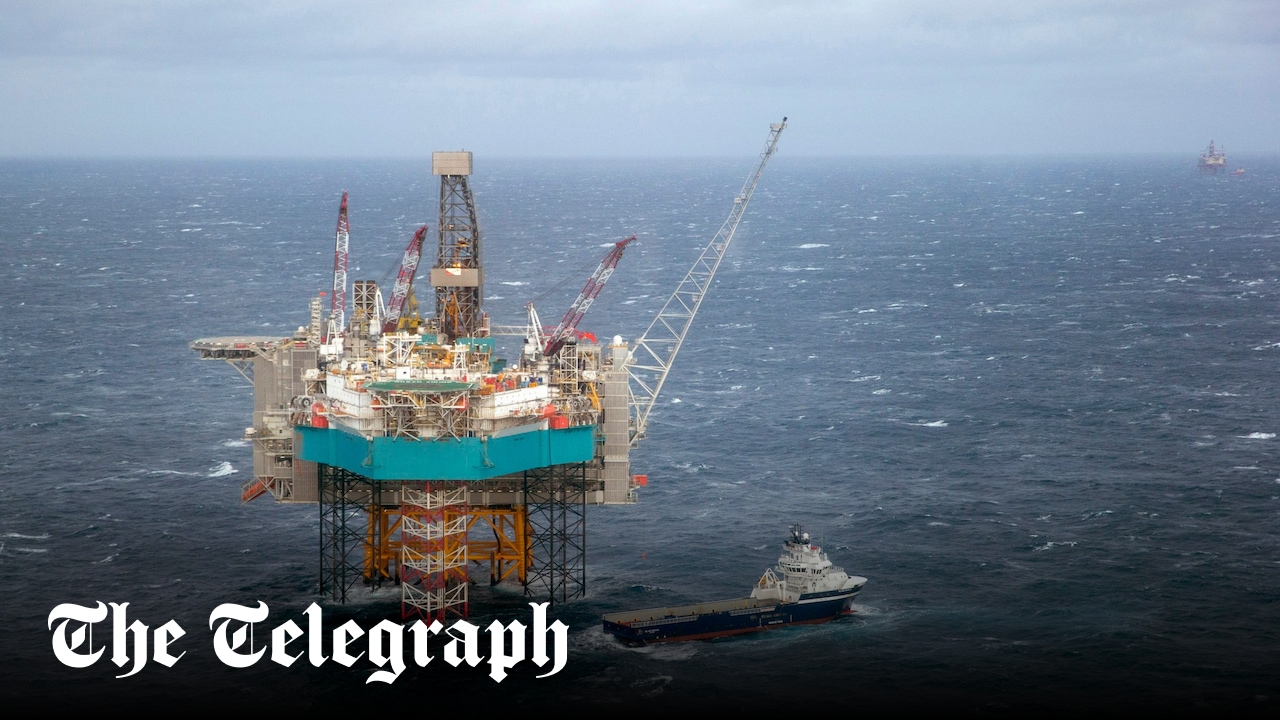
As England and Norway battle it out in the World Cup on Saturday evening, it is worth focusing on one economic story that sums up the different philosophies of both countries.In the late 1960s, both Norway and Britain found large quantities of oil in the North Sea. By the late 1970s, the spigots were gushing. Britain – in effect England – decided to blow the windfall; Norway decided to invest for future generations. Today, the oil bonanza has increased the wealth of every Norwegian citizen by $370,000 (€323,000) and it is still generating cash. Norway’s coffers are full and it is still squirrelling away billions every year for its people. In contrast, today England has nothing to show for its oil wealth and the government in Westminster has run out of money. How did this happen? It is a story of Britain’s class politics, pump-priming economics and short-termism, as well as greed, cronyism and economic mismanagement. Norway’s tale is about crystal-clear economic thinking, long-term planning and a mature political system that puts the interests of the citizens above the interests of insiders. Most of us know the story of the UK economy in the 20th century but maybe not Norway’s. Norway was in a personal union with Sweden, only declaring independence from Stockholm in 1905. Its economy was poor, agricultural and characterised by an absence of any real industry. As a result, between 1836 and 1930, 860,000 Norwegians emigrated. In Europe, only Ireland’s emigration rate was higher.Anyone who has travelled to Minnesota or Wisconsin or watched the TV show Fargo will be aware of the deep Norwegian influence on parts of the American Midwest. During the second World War, Britain entertained invading Norway to secure the North Atlantic shipping routes. In response, Nazi Germany did invade and occupied Norway until May 1945. After the war, Norway joined the UN and Nato, but never joined the EU, preferring instead a free-trade arrangement with Brussels. Like its Scandinavian neighbours, Norway’s postwar Nordic model, was rooted in equality, social cohesion, high taxes and a generous welfare state.When oil was discovered, both Norway and Britain immediately set themselves on widely different trajectories. Since 1975, Britain has pumped a total of 47 billion barrels of oil and Norway a little bit more at 56 billion. Norway has the world’s largest sovereign wealth fund, valued at around NOK 21,300 billion or €1.9 trillion, equal to roughly 1.5 per cent of the value of every listed company on the planet, with stakes in around 7,200 companies. The country of five million now has a fund larger than Saudi Arabia’s entire GDP. The UK has nothing to show for almost the same amount of oil pumped. When the size of the potential windfall became clear, Norway immediately set up its own state oil company, Statoil, which lately became Equinor. The oil reserves were declared assets of the Norwegian people. The UK farmed out licences to the big oil producers and the one British company that had significant state ownership, BP, was privatised in the 1980s, giving the profits of the oil bonanza to shareholders rather than citizens, thus creating wealth for the few. The oil windfall came at just the right time for Margaret Thatcher. Britain of the late 1970s was characterised by the three-day week, energy shortages and ultimately the need for an IMF bailout. The oil started flowing in earnest in 1978/79 and by 1981 Britain was a net oil exporter. The value of the oil increased dramatically in the 1970s, going from $2.96 to $37.10 a barrel by the mid 1980s. This money could have been invested for the future, but the Conservative government decided to give it all away in tax cuts, creating the unsustainable UK boom of the late 1980s, culminating in a large housing bubble which burst around 1990. [ Why the American dollar was more important than US constitutionOpens in new window ]The UK economy in the early 1980s suffered from what is called Dutch disease, where money (from oil) flooded into the economy, pushing up wages and costs in other industries, putting manufacturing out of business. The rapid demise of the British car, steel and coal industries can be seen against this background. Ironically, given that the oil was discovered and pumped in Scotland, the end result was a massively unbalanced UK economy centred on services and located in London. The north and the midlands of England paid for the oil boom in unemployment and deindustrialisation.Today, about 90 per cent of Britain’s oil reserves are gone, the government is constantly increasing taxes to pay its bills and countless prime ministers and chancellors, who could have used the windfall effectively, have blown it. Norway understood exactly what an oil find can do and set about insulating the economy from this positive oil shock by insisting that only four per cent of any oil revenues can be used for state spending in any one year. Not only did this set aside billions for the future, but it made sure the existing local industries were not suffocated by higher costs. It avoided Dutch disease. Obviously, such a far-sighted policy required national cohesion around not spending the windfall by throwing money at every problem and, maybe more tellingly, it demanded political maturity on the part of Norway’s politicians not to try to buy elections. The Norwegian people have collectively decided to give the money to people who they will never meet, people who have yet to be born. This is the essence of what it is to be a good ancestor: thinking more about your descendants than yourself. When seen from this perspective, the story of Norwegian oil is a tale of extraordinary individual selflessness. The British, in contrast, just couldn’t help themselves and, to use the vernacular, pissed it all away. The lesson for Ireland is that the multinational tax windfall is exactly the same story. It must be invested for future generations, but we are hurtling down the disastrous English road, spending on every possible item of current expenditure, rewarding failure and papering over the cracks on everything from national infrastructure to housing by throwing money at the problem as if the bonanza will never end. As you sit down to watch Norway v England, think of this tale of two windfalls and then think of Ireland.
Norway the clear economic winners after England’s own goal with North Sea oil
Scandinavian nation’s mature political system in stark contrast to greed, cronyism and economic mismanagement
1,055 words~5 min read