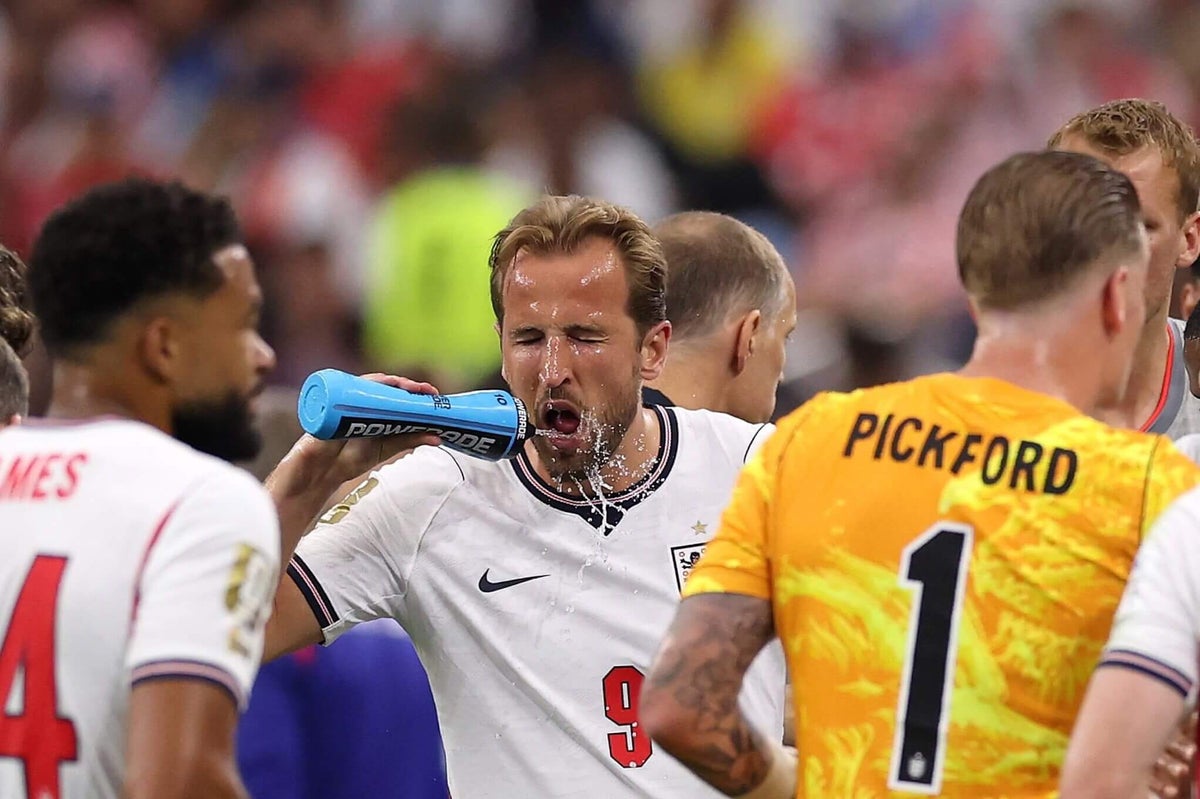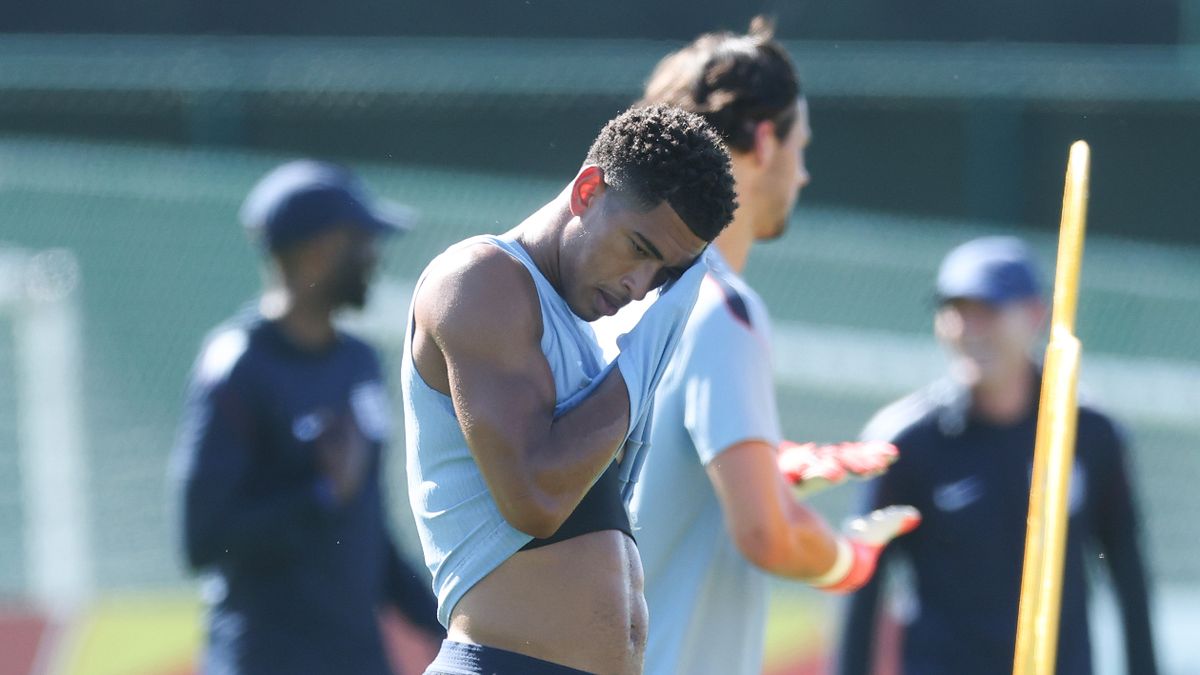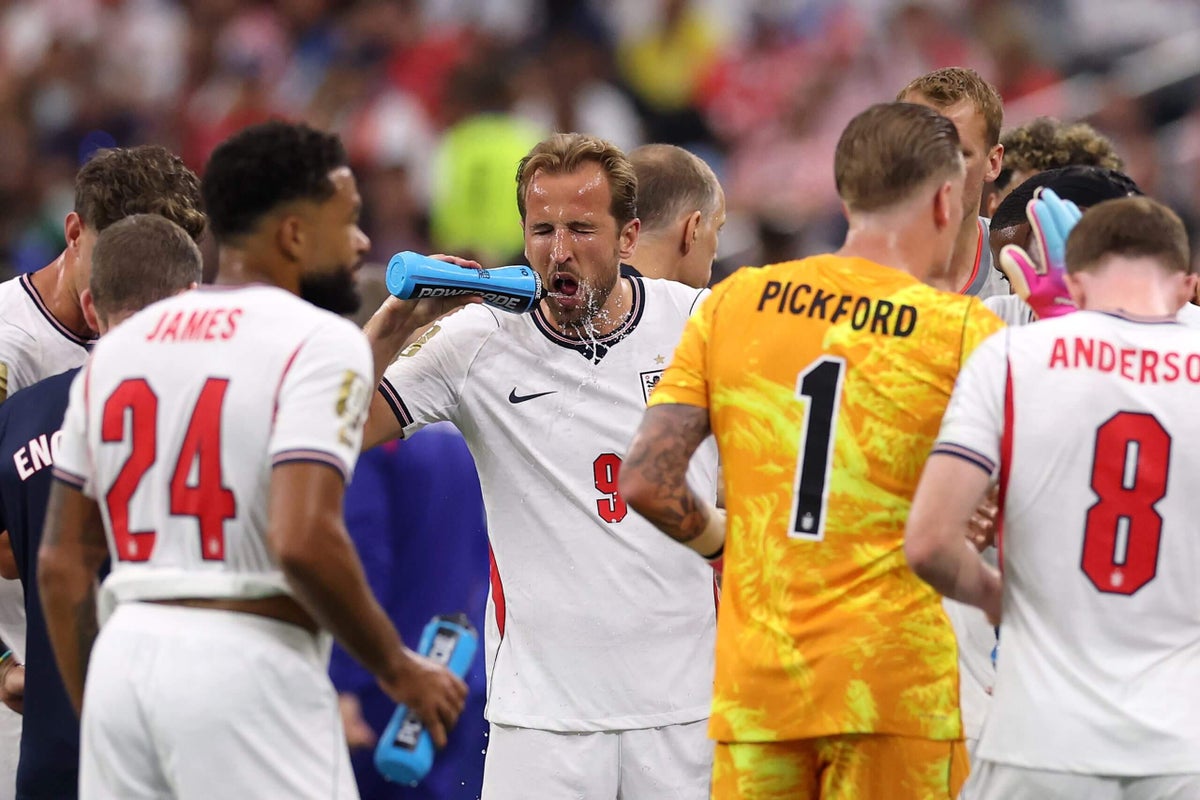
In The Athletic’s World Cup performance series, Alan McCall draws on more than 20 years of experience in elite football to explain the science behind the challenges teams are facing this summer and the strategies they will use to cope.For England’s quarter-final clash with Norway in Miami, he turns his attention to how heat influences players and shapes the game — and why preparation matters.Having faced the challenge of playing at altitude against Mexico in the last round, England now face the challenge of playing Norway in hot and humid conditions in Miami. Temperatures are expected to reach 92F (33C) but the humidity will make it feel much hotter on the pitch.In this instance, the conditions do not confer an advantage on either team as both Norway and England will find them challenging. How they manage the heat will be crucial.Reflecting on Germany’s 2014 World Cup win in Brazil, Per Mertesacker recalls something that still surprises him: “I stopped celebrating goals.” Essentially, he changed how he celebrated them — staying back with the goalkeeper to recover and rehydrate instead.“Sometimes it was so hot that any stoppage in the game was a relief,” the former centre-back says. “Pressure and heat give you a double whammy. Fatigue sets in quicker. I was in energy-save mode.”As a central defender, celebrating with team-mates often meant sprinting 70 or 80 metres up the pitch before quickly reorganising defensively. “And it was even worse if you got caught in the middle of the celebrations, with players jumping on you,” says Mertesacker. “It’s a weird feeling — you can’t breathe.”For Mertesacker, every unnecessary sprint could come at a cost later in the match. “The match isn’t over after you score: in tournament football, it comes down to tiny margins,” he says.Former England midfielder Alex Oxlade-Chamberlain remembers a similar feeling from the same 2014 World Cup in Brazil. “The heat and humidity gets you physically, but it’s more from a mental point of view,” he says. “As humans, you find reasons something might be harder. In the heat and humidity, with the sweating, you anticipate: ‘This is going to be hard’.”That anticipation may matter as much as the physical strain itself. Heat raises core temperature, increases sweating and makes exercise feel harder — the body is genuinely working more. But players are not simply reacting to fatigue as it arrives; they are also managing it in advance, becoming more selective about when to accelerate, press, pass or take risks.The game slows not only because bodies tire more quickly, but because players begin pacing themselves earlier — conserving energy for the moments that matter most.Argentina players, including Lionel Messi (right), battle to stay cool during their win over Cape Verde in Miami (Megan Briggs/Getty Images)Data from the hottest matches at the 2014 World Cup — classified using wet-bulb globe temperature (WBGT), a measure combining temperature, humidity, wind and solar radiation to estimate heat stress on the body — pointed in the same direction.In those matches, players performed around 10 per cent fewer sprints than in matches with lower heat stress — roughly 40 fewer sprint efforts across a team over a full match. High-intensity running also dropped, while jogging and walking increased.Overall distance covered remained broadly similar, and pass completion rates even increased slightly, from around 74 per cent to 77 per cent — potentially reflecting players favouring shorter, simpler passes or more controlled ball circulation.The pattern extends beyond a single tournament. Across professional football, as heat stress rises, players tend to make fewer passes, touches and dribbles, appearing to simplify their decisions and preserve energy for decisive moments.“Decision-making goes down with fatigue,” says Oxlade-Chamberlain. “In the heat, you’re struggling more, and then you’re probably more prone to making an error.”Managing those demands — simplifying decisions, controlling tempo and conserving energy — may be as much a feature of playing in the heat as the physical strain itself. Players are not only working harder to maintain the same output; they are thinking and playing differently, too.Survive or thrive in the heatAs the tournament moves deeper into the knockout rounds, heat becomes one more challenge to manage rather than simply endure.The foundations for whether a team survives those conditions or thrives in them were laid long before the first knockout match — through pre-World Cup preparation and the adaptations built over the opening weeks of the tournament. As the physical and mental demands continue to accumulate, those preparations begin to reveal their value.Norway’s Martin Odegaard tries to stay cool during their game with Brazil (Elsa/Getty Images)Perhaps the most important tool teams had available was heat acclimatisation — repeated exposure to hot conditions before competition so the body adapts to performing in them.Scientific guidelines generally recommend around 10 to 15 days of heat training, although the speed and extent of adaptation varies between players depending on fitness, recent environment and previous exposure to heat.
England vs Norway will be hot and humid so what strategies can players use to keep cool?
Performance expert Alan McCall explains the science and strategies behind coping with heat during a game
2,293 words~10 min read