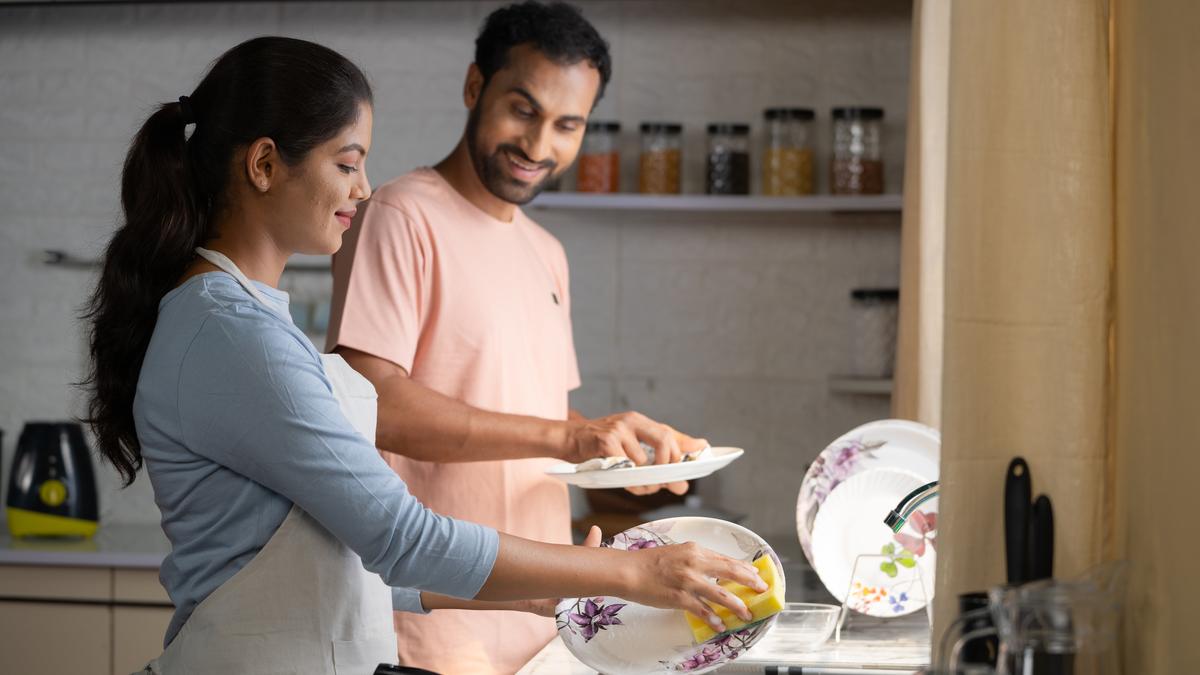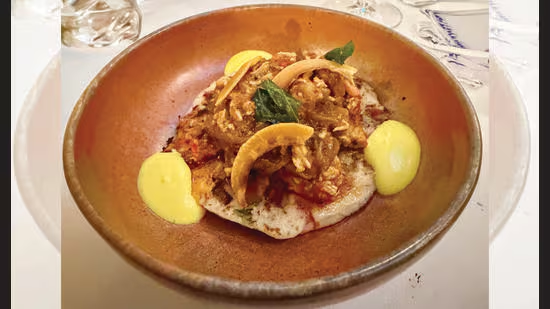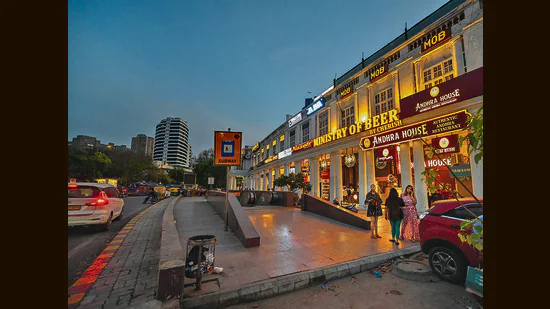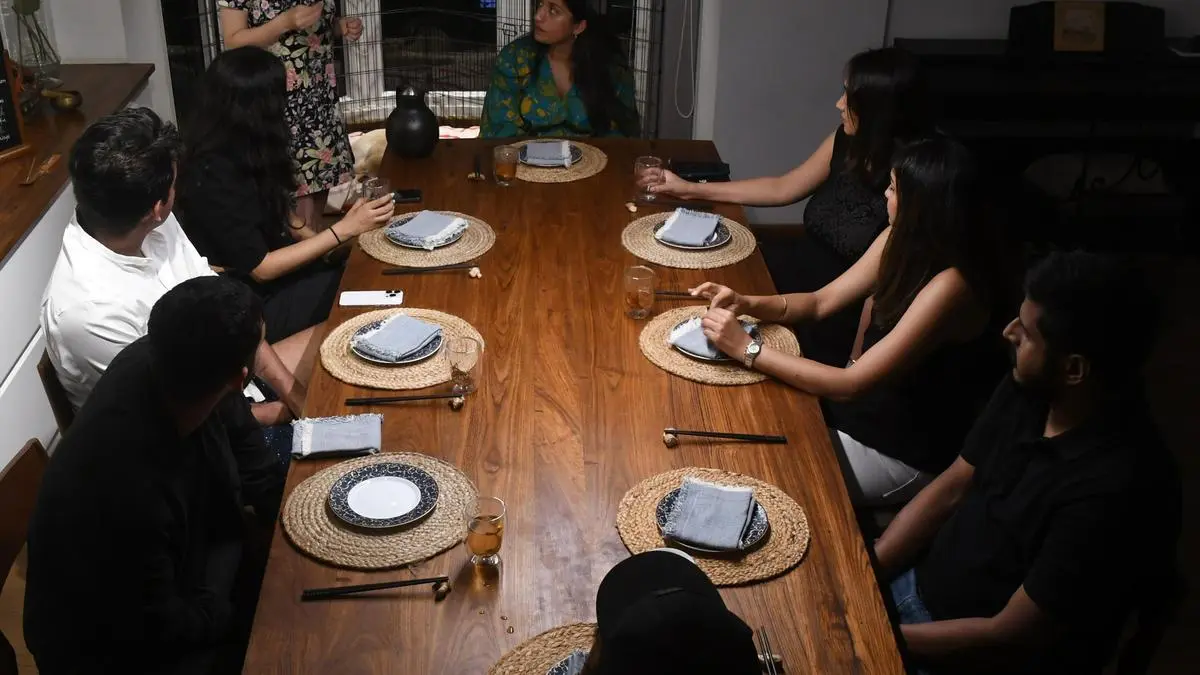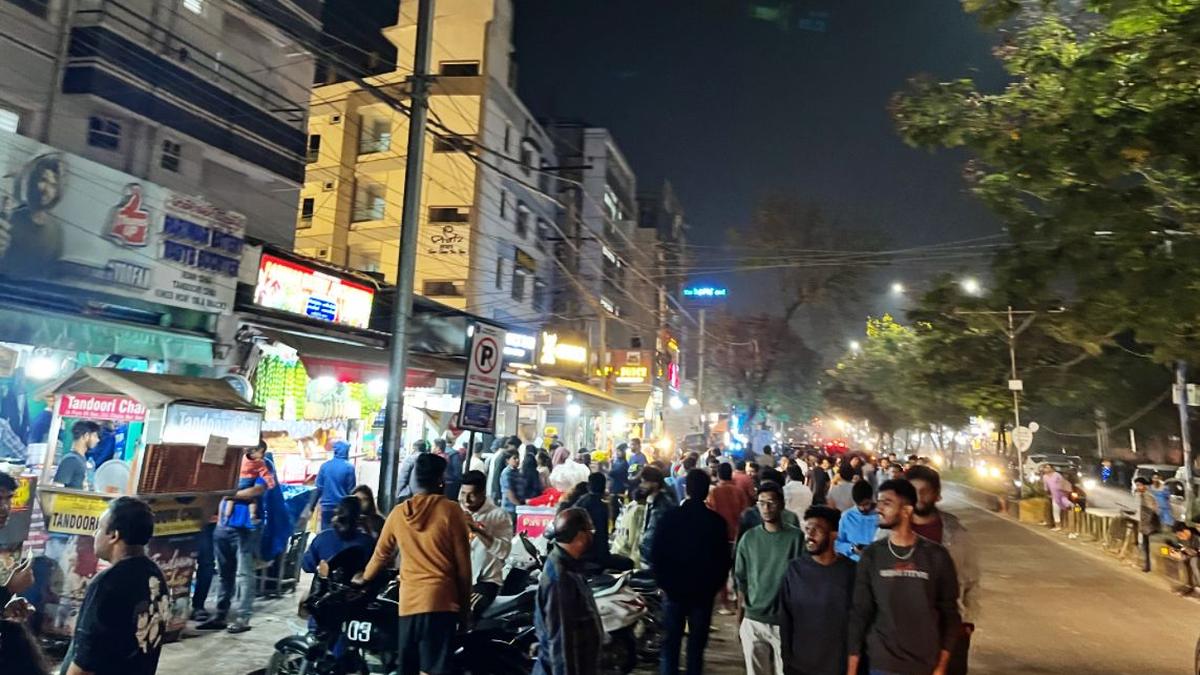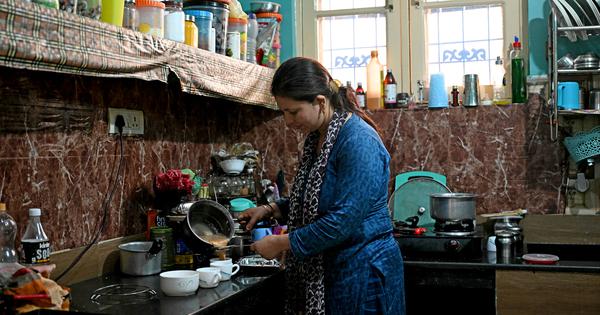
In recent years, food – a basic human need – has become more publicly visible than ever before.There are food columns in newspapers and magazines and entire television channels dedicated to cooking. Images, recipes and food stories proliferate across social media platforms.There are discussions about organic food, plant-based foods, vegan foods, protests by farmers, advice by dieticians and diet charts by nutritionists, recipes by celebrity chefs, food competitions, health foods, natural foods, food technologies and food service.Since the liberalisation of India’s economy in the 1990s, eating out has been normalised by a small slice of metropolitan India – single people, young working couples and upper-middle-class nuclear families. But now, fundamental changes that run contrary to the practice of eating out can be detected in the domestic kitchens of people belonging to these groups.Their kitchens are becoming smaller, underutilised and functionally diminished. The table has assumed an industrial character: served meals are ordered-in; crockery and cutlery are either replaced or supplemented by food packages and disposable ware: plates, spoons and glasses. Even meals eaten at festivals are a mix of ordered-in and home-cooked dishes.At the table, laptops and smart phones are used actively. Face-to-face conversation is replaced by virtual interactions.As a sociologist who has worked on the new eating-out culture in liberalised India, this phenomenon interests me.These changes in the kitchen and the eating behaviour were, to begin with, induced by the Covid pandemic. Lockdown made it impossible to eat out. This opened the doors to a new phenomenon – eating in-eating out.Today, this phenomenon is only intensifying.Women have lunch at a restaurant as India eases lockdown restrictions in New Delhi on June 2020. Credit: Reuters.Consequent to the outsourcing of cooking, the kitchen gas stove has receded quietly into the background. At the same time, the refrigerator and microwave – the metropolitan kitchen’s go-to appliances – have moved to the foreground. In the scheme of eating in- eating out, the gas stove may not be switched on at all regularly, either by the Grihalakshmi – the goddess of the house – or other members of the family.At the base of these shifts are food-delivery apps such as Swiggy, Zomato and Blinkit. Swiggy delivers an average of two million-2.5 million orders every day while Zomato and Blinkit deliver an average of 3.6 million-four million orders.At the same time, Marketresearch reports that India’s annual sales for the microwave oven stand at 1.6 million. The top markets for both food apps and microwaves are Delhi-National Capital Region, Mumbai, Bengaluru, Hyderabad, Chennai and Pune.Adapting eating behaviour to apps is tempting as it holds the promise of liberating the tired individual – most often a woman – from the task of cooking. It also wards off expectations from the family that working women should be superwomen, handling both her professional and domestic lives with equal aplomb.The new phenomenon of eating in-eating out also reflects a lifestyle choice.This signals a more fundamental change in urban India. The metropolitan kitchen is symptomatic of a growing individuation of Indian society. It is about social loss.Cooking simultaneously produces a means of sustenance – food – and reproduces the cook and eaters physiologically, emotionally and relationally. The daily acts of cooking and eating together at home affirm the social bonds between members of a household.Cooking is a ritual involving repetition – recipes and styles of food preparation; small talk; appreciation or disapproval of a dish; emotions of love attached to cooking, or frustration at having to bear the burden of cooking.A worker packs food for delivery inside a kitchen of a local restaurant in Mathura in this photograph from August 2016. Credit: AFP.Each domestic kitchen emits distinctive aromas. It has its own atmosphere.As the market moves from the public realm into more intimate space of private kitchens, it validates an impersonal, business-like relation between food and the people who eat it. The engagement with food becomes functional, pragmatic or aspirational: food is enjoyed in a utilitarian manner.With the relocation of the production, procurement and cooking of food to cloud kitchens and restaurants, the possibility of building relationships is reduced.In place of relationships, food and eating enter the flitting world of situationships. Eating in-eating out results in alienation – embodied by the eater, the delivery partner and the unseen and unknown cooks. The small tip, added voluntarily to the total amount payable, is an unreflective acceptance of the lost sacredness of social relationships and a sign of what remains of the lost social bonds.My reflections about these new consumption patterns were prompted by my encounter with the Japanese The Kamogawa Food Detectives series by Hisashi Kashiwai. In the books, the food detectives at the Kamogawa Diner, guided by their customers’ memories, recreate a dish from their customers’ pasts. These dishes not only tantalise the tongue, please the stomach and nourish the body but also unleash the power of food tasted and relished yesterday.By savouring the recreated dish, consumers acquire the supernatural powers to experience time passed yet remembered and regain time locked in memories.The intensity of transformations in the domestic kitchens of urban India has no room for the baptisms by fire, flavours, textures, colours, conversations, appreciations, emotions: the stuff of the heirloom of memories. Here, the food detective will wither away.But the food detective may yet find employment in another India. The epicurean delights of Greater Indian Kitchens still flourish in older households and in joint families amidst the mess, noise, exploitation, oppression, sweat, chatter, laughter, onion-induced tears, the lost and found bottle of asafoetida, grime, spiced fumes, stacks of crockery gifted by an aunt, a brass urn, three cockroaches, one big knife and two small knives, tea, sugar and a bit of milk spilled on the counter.Anjali Bhatia is a professor in the department of sociology at Lady Shri Ram College for Women, New Delhi.
Eating out-eating in: How food apps have changed family bonds in urban India
In place of relationships, food and eating enter the flitting world of ‘situationships’.
975 words~4 min read