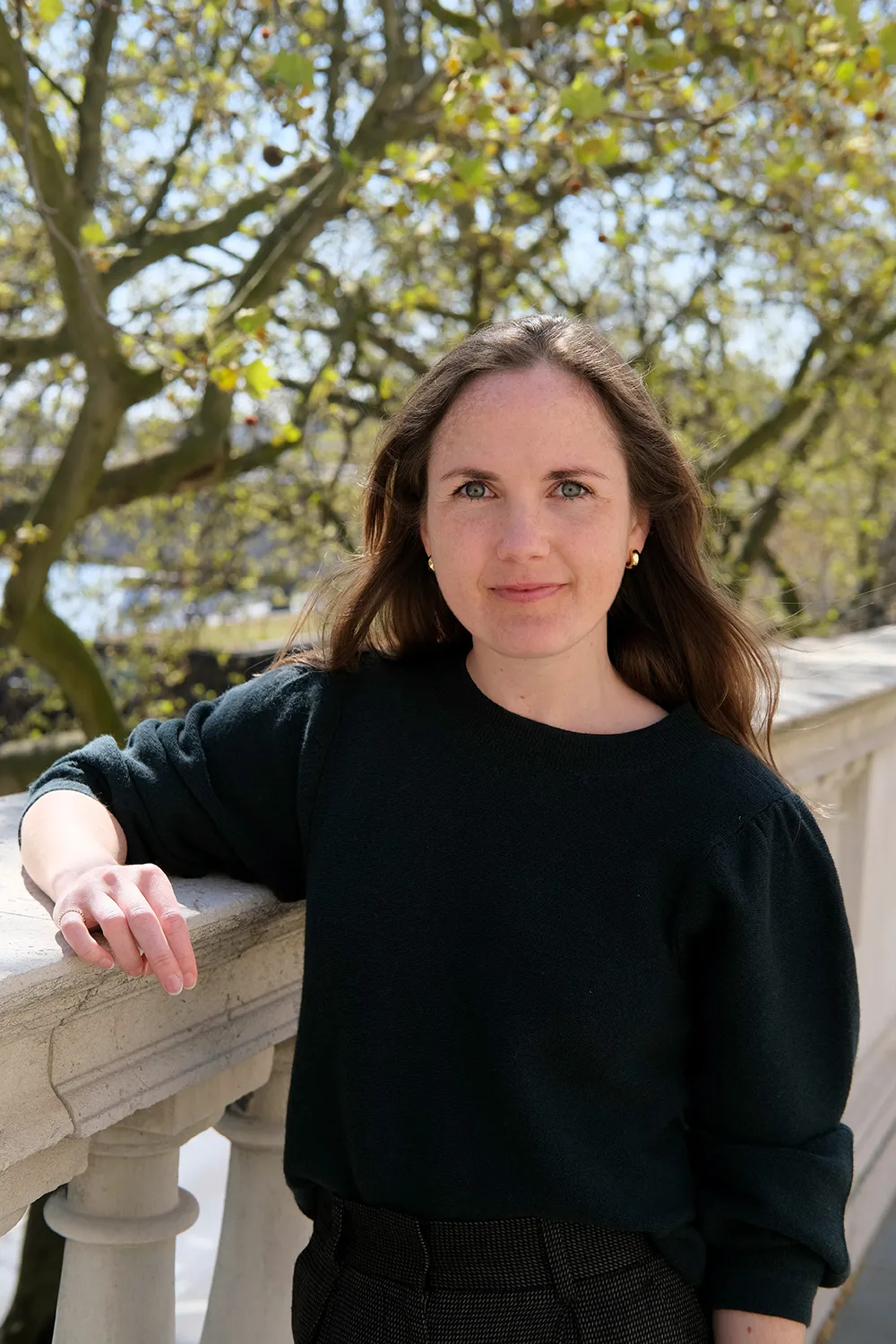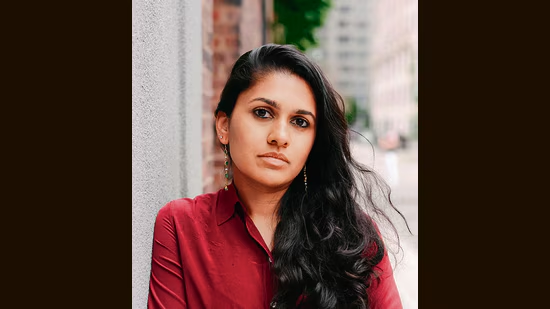
Under Water’s first two parts establish timelines and histories, while ‘Home’ appears to dissolve time. Would you agree?Author Tara Menon (Lauren Crothers)Each of the chapter headings in the first two parts explicitly mention the place and date. Time is extremely important. Seeing these dates — 28 October 2012 and 25 December 2004, some readers will know immediately that these are the dates before the Indian Ocean tsunami and Hurricane Sandy. But the last section has a different temporality; I wanted it to feel like Marissa is returning, coming back, with no sense of a deadline, no upcoming event. But I do think it is open to interpretation. For some readers, there might be a sense of finality in her homecoming, but for others, this might feel like a short trip before she moves away again.The contents of the nightmares in the novel are central to how it unfolds. How difficult or fun was it to write them?There are three nightmares in the book, but I wrote five. I had the most fun writing them. I had a strict word count for them because I wanted them to fit on a single page (which ended up not happening). For me, these are micro-stories that feel complete in themselves. My editor had some doubts about starting the novel with a nightmare. As a debut novelist, I was hesitant about pushing back, but I insisted on the opening nightmare.These nightmares were built on a real fear in South East Asia after the tsunami. There were so many corpses in the ocean that people whose primary staple food is seafood worried they might be consuming the flesh of the bodies that had gone missing. I wanted that fear to be part of Marissa’s psyche. The novel is very concerned with the physical body, and the real corpse scene towards the end of the novel is the stuff of nightmares.In a way, Under Water is a very traditional realist novel about the quotidian and the ordinary. Writing the nightmares — a slightly different genre — offered a different kind of pleasure.Reading mentions of the Mayans, Quaker parrots making New York their home, or Marissa perplexed by her father saying Thailand is home to him, makes the reader feel that Under Water is interested in origin stories.Under Water is full of characters, and indeed species, who are trying to find a home. And home means something different for different people. One question that the novel is posing is: what does ‘home’ mean?Marissa’s father saying “Thailand is my home” sounds absurd to her, and to many readers. But it’s also not absurd. Thailand is an extraordinarily meaningful place to him. It offers everything he would want from home. Thailand is home for Marissa as well. There’s something strange about this, but also true. To take a very different example, it’s absurd to say now, in 2026, that the Quaker parrots don’t belong in New York. Even though it is true to say that they shouldn’t have been brought to New York.There is a question about globalisation and immigration here: in the 21st century, what does it mean to say that some people only belong in some places. At the heart of the book is a re-evaluation of what home is or can and should be.From the book: “Since that day, I have become obsessed with disasters”. Do grief-stricken children notice things collapsing around them more?There must be some psychological studies on it, I think, but I haven’t read deeply in that area. What I can say is that for Marissa, it’s extraordinarily frustrating to grapple with the fact that everyone around her just lives as though everything is fine.She has lived through a real catastrophe, a deeply personal tragedy, that was an absolute horror show. To be caught in the tsunami and then to walk around the world, seeing people picnicking and going to eat at restaurants doesn’t fit with Marissa’s understanding of the world. Moments of horror and disaster — like the caretaker killing the children in New York or Hurricane Katrina in New Orleans — accord more closely with her understanding of what the world is like.Marissa and Arielle’s relationship with knowledge is central to the novel. Please talk about the acquisition of knowledge and its payoffs?I wanted to write about female friendships and avoid the trend which depicts them as fundamentally competitive. I think knowledge is probably the key to Marissa and Arielle’s relationship. One of the beautiful features of learning and acquiring knowledge is that it can always be a shared enterprise. If you know something that doesn’t mean another can’t. Their relationship is rooted in learning together. They’re constantly sharing facts with each other and going into the forest with an arborist or an ornithologist together. They don’t compete; they collaborate.I also think that Marissa is very uncritical about the fact that she’s not Thai. She has a sense of ownership over a place that she is not from. But I wanted to contrast this with the way tourists come in for a week or two and immediately claim the place as their own. There’s a difference between the kind of touristy knowledge you gain of a place and the one you learn from having lived there for years. Marissa might not be Thai, but she has a deep intimate knowledge of the country’s reefs and forests and beaches.Grieving a friend isn’t supposed to be given the same respect as, say, losing a family member. Please talk about these different standards of measuring loss. There’s something perverse in the way we typically think about closeness and relation. Being related to somebody by blood is the most random thing in the world. But there’s a societal expectation that you should feel closer to them. [On the other hand] a friend is someone you actively choose via reason and emotion. It’s the most beautiful bond for this reason. Because it’s not just chosen once; it’s repeatedly chosen. In fact, a strong friendship is unlike some marriages where a choice is made and then people are locked into relationships. Obviously, you can exit via divorce but there’s an institutional structure that makes you stay in a relationship for a long time because the exit costs are high. But people don’t stay in friendships if they don’t want to. We don’t have a legal contract around friendship. So, because we choose our friends repeatedly, maybe we should mourn these relationships more.You note the difference in responses towards the two tragedies. Was it intentional?In the case of hurricane Sandy, there were constant warnings: the hurricane is coming, you should evacuate; you should buy torches and bottled water, etc. In contrast, with the tsunami, there was no warning at all. Everyone was just lying on the beach. They had no idea about what was coming.I also wanted this book to present the vast difference between the way the Western media responded to one catastrophe in which less than 300 people died, and another in which 250,000 people died. I went to a school in Singapore where parents often cared deeply about deaths in America or Europe and seemed totally unconcerned about tens of thousands of people dying in natural disasters in countries close by. Even as an 11-year-old child, I felt this was wrong. I felt the same when Sandy happened and there was breathless coverage for weeks.Could you talk about Marissa’s alertness as she moves about New York?Marissa grows up on an island among professional observers — scientists whose job it is to look closely, whether at birds or trees or manta rays. Marissa is educated in the acts of watching, looking, and noticing.In the New York sections, Marissa is like a one-way glass: she can look out, but no one can really look in. She’s quite opaque and protective of herself. She’s numb, she doesn’t have any friends, and she is very lonely.The New York sections are also in conversation with the long tradition of flaneur novels. But I was interested in what happens when the gender of the flaneur shifts. A young woman walking around a big city anywhere has to be constantly in a state of alert. A male flaneur in a 21st-century novel can pick and choose what to pay attention to, but Marissa can’t. She observes and watches closely, not only because of her childhood training but also because she is a young woman walking around a city.Would you say that your depiction of New York was an extension of your teaching work on city fictions?Yes. My students have asked me this: Is this a city fiction? The New York chapters are fundamentally influenced by writing about cities.In my academic work, I write about the rise of anonymous interactions between characters in 19th-century fiction, and how that kind of indexes a sudden sociality that’s newly possible in urban, industrial, capitalist cities. Marissa has several of these interactions — carrying a stranger’s stroller down the subway stairs or being cat-called. This is part of what makes it belong to the category of city fiction.Invoking Tennyson’s poem and the works of other authors makes it seem that Under Water is interested in language and its utility and impossibility in the face of events. In Memoriam by Tennyson was a huge influence on Under Water in many ways. There’s a stanza in that poem that goes:I sometimes hold it half a sinto put in words the grief I feel;for words, like nature, half revealand half conceal the soul within Tennyson is, to my mind, talking about the inability of language to always put grief in words. Sometimes it’s helpful, illuminating and other times, it obscures feelings further, making them difficult to grasp. My etymological digressions in the book, looking at the origin of words like “apocalypse” and “nepenthe” are attempts to understand when language can be useful in this way, and when words don’t do the job that we may want them to do.The book has a photojournalist, Matthew, and there are several comments on capturing reality. Marissa thinks some images don’t fully do that. Yes, I do think she feels there’s something insufficient about the genre itself. For example, the luxury travel magazines with all these pristine and beautiful photographs of places, they don’t tell you anything at all about the places. That may be unfair on photography in general, but the book is invested in sensory details — touch, taste, and smell — and photographs can’t capture those. Marissa feels that the genre is insufficient in representing reality or place. For her, there has to be a better way to do that.In the acknowledgements, you write about stealing a line from Erik Gray. Which one?Erik is the professor who changed my life. He was my undergraduate thesis advisor. He taught me Victorian and Romantic poetry. He was the reason why I decided to major in English. The line is from one of his lectures that all of Tennyson’s poetry is a response to [Arthur Henry] Hallam’s death. Not just In Memoriam but also Ulysses and Tithonus, for instance. Hallam’s death changed Tennyson’s life. Everything he wrote was in response to Hallam’s death. That really stood out for me, experiencing a grief so profound that everything you write becomes a response.Saurabh Sharma (they) is a nonbinary, queer writer, essayist, and culture critic. On X: @writerly_life; Instagram: @writerlylife.
Tara Menon: “People don’t stay in friendships if they don’t want to”
The Harvard academic on the media reception to two tragedies continents apart, and the influence of Alfred, Lord Tennyson’s ‘In Memoriam’ on her debut novel, Under Water
1,893 words~9 min read