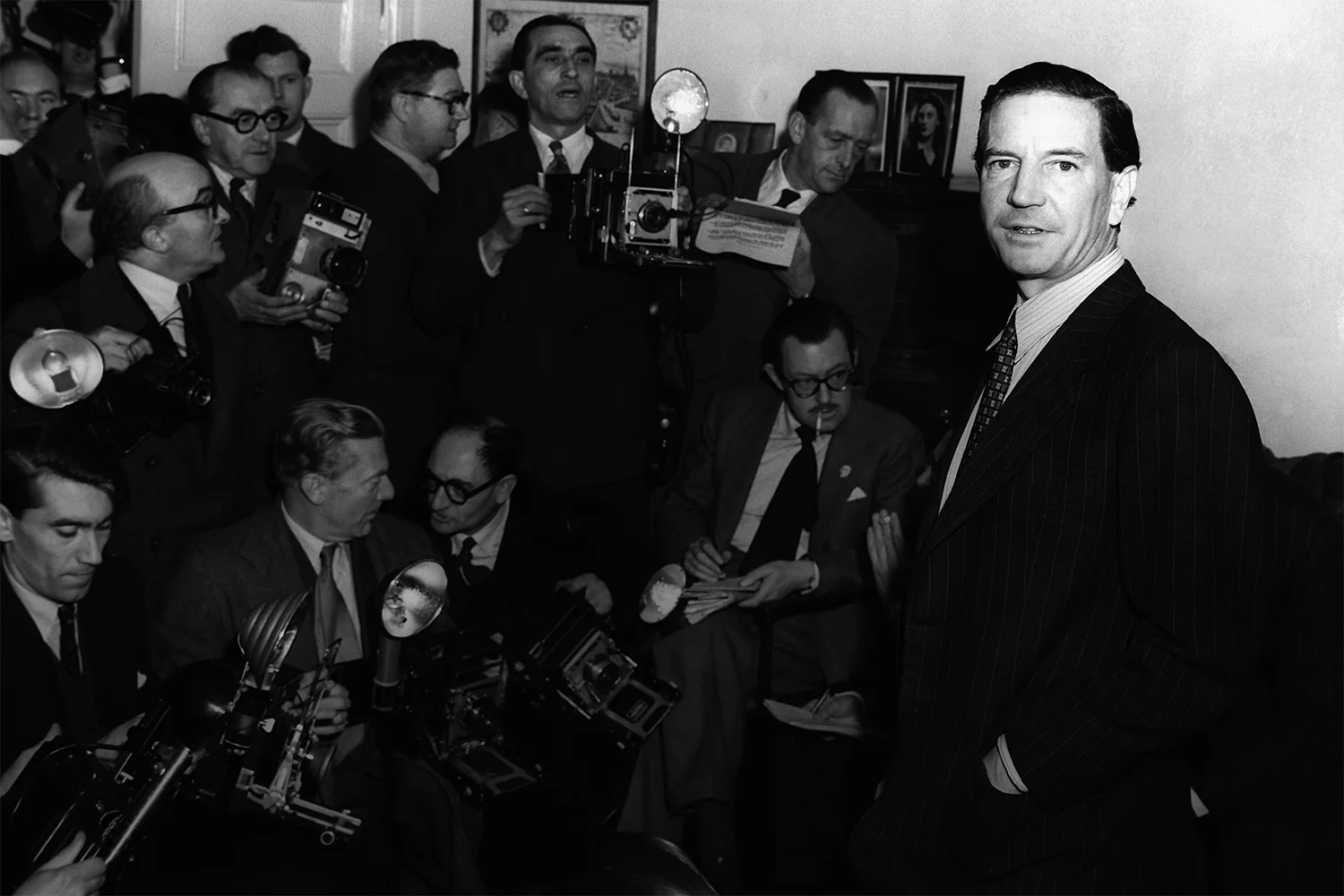
For decades, there was an easy, pat narrative that developed about the West’s first covert operations to topple a communist regime. It goes something like this: During the late 1940s and early 1950s, the United States and United Kingdom launched a series of clandestine infiltration missions across Albania, parachuting in a series of agents to try to overthrow Enver Hoxha’s government. The operation, however, was a spectacular, almost legendary failure—all because British intelligence officer Kim Philby, perhaps the Soviet Union’s most notorious mole, tipped off his handlers in Moscow, who in turn warned allies in Tirana.
Decades later, that narrative still has certain elements of truth. Yes, there were parachute drops across Albania during the early Cold War. And yes, the operation was a joint British-U.S. affair. But as political scientist Stephen Long argues in his new book, A Rich Harvest of Bitter Fruit, almost everything else about that story is false. Thanks to his archival research and dozens of interviews, Long discovered that these missions were never necessarily about toppling Hoxha, nor ending communism in Albania. And in perhaps the greatest corrective, he writes that Philby and the Soviet Union may have played no role whatsoever in the operation’s ultimate failure.