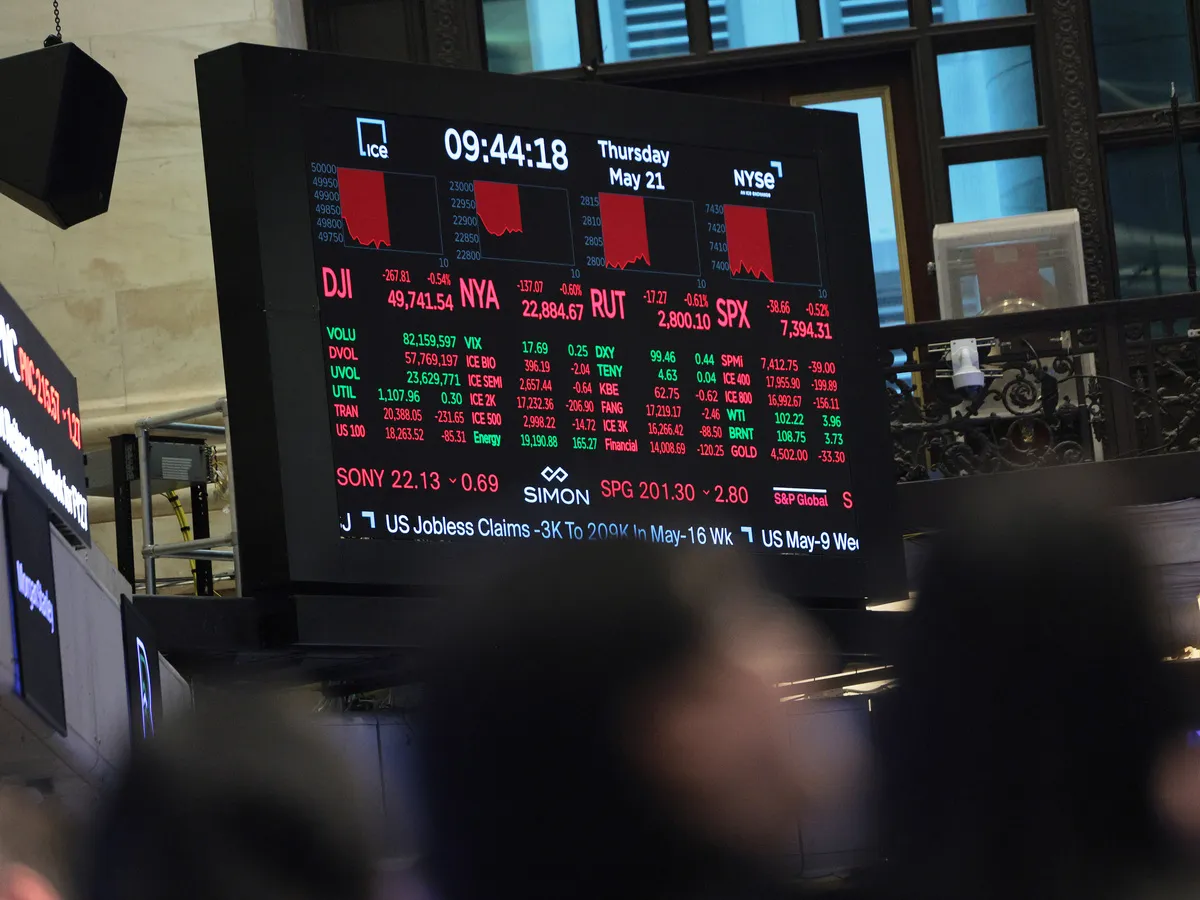
Skip to Content News Archives Economy Energy Oil & Gas Renewables Electric Vehicles Mining Commodities Agriculture Real Estate Mortgages Mortgage Rates Finance Banking Insurance Fintech Cryptocurrency Work Wealth Smart Money Wealth Management Investor Personal Finance Family Finance Retirement Taxes High Net Worth FP Comment Executive Women Puzzmo Newsletters Financial Times Business Essentials More Innovation Information Technology FP500 Podcasts Small Business Lives Told Tails Told Shopping Financial Post Store Obituaries Place a Notice Advertising Advertising With Us Advertising Solutions Postmedia Ad Manager Sponsorship Requests Classifieds Place a Classifieds ad Working Profile Settings My Subscriptions Saved Articles My Offers Newsletters Customer Service FAQ News Economy Energy Mining Real Estate Finance Work Wealth Investor FP Comment Executive Women Puzzmo Newsletters Financial Times Business Essentials HomeInvestorWhen you should sell a stockPeter Hodson: From the cockroach theory to tax losses, here's when to call it quits, reduce risk or take some profitLast updated 1 hour ago You can save this article by registering for free here. Or sign-in if you have an account.Traders work on the floor of the New York Stock Exchange on July 9, 2026, in New York City. Photo by Spencer Platt /Getty ImagesThere are many reasons not to sell a stock, no matter how tempted. My last column covered some of these reasons.Subscribe now to read the latest news in your city and across Canada.Exclusive articles from Barbara Shecter, Joe O'Connor, Gabriel Friedman, and others.Daily content from Financial Times, the world's leading global business publication.Unlimited online access to read articles from Financial Post, National Post and 15 news sites across Canada with one account.National Post ePaper, an electronic replica of the print edition to view on any device, share and comment on.Daily puzzles, including the New York Times Crossword.Subscribe now to read the latest news in your city and across Canada.Exclusive articles from Barbara Shecter, Joe O'Connor, Gabriel Friedman and others.Daily content from Financial Times, the world's leading global business publication.Unlimited online access to read articles from Financial Post, National Post and 15 news sites across Canada with one account.National Post ePaper, an electronic replica of the print edition to view on any device, share and comment on.Daily puzzles, including the New York Times Crossword.Create an account or sign in to continue with your reading experience.Access articles from across Canada with one account.Share your thoughts and join the conversation in the comments.Enjoy additional articles per month.Get email updates from your favourite authors.Create an account or sign in to continue with your reading experience.Access articles from across Canada with one accountShare your thoughts and join the conversation in the commentsEnjoy additional articles per monthGet email updates from your favourite authorsSign In or Create an AccountorHowever, it’s also important to know when to call it quits, reduce risk or take some profit. So here are some reasons you should sell.The absolutely easiest reason to sell is for risk management purposes. When you have a stock that has done really, really well, it may have become a large part of your portfolio. If you targeted a four per cent weighting in a stock and it is now eight per cent, simply re-balancing is a totally legitimate reason to sell. Such a move reduces risk, rebalances a portfolio towards goals, and, let’s face it, makes one feel good about picking a winner. You are not exiting a full position, just re-positioning. This reason to sell becomes even easier if you have a giant winner that has become, say, 15 per cent of your portfolio. Now your entire portfolio is essentially taking a bet on a single position. We like letting winners run, but only to a reasonable bet. Once a whole portfolio’s performance is dependent on stock, it is generally time to let some of it go.Canada's best source for investing news, analysis and insight.By signing up you consent to receive the above newsletter from Postmedia Network Inc.A welcome email is on its way. If you don't see it, please check your junk folder.The next issue of Investor will soon be in your inbox.We encountered an issue signing you up. Please try againThere are no guarantees in the stock market except this: If you sell a stock and can claim a capital loss (in a non-registered account), you will pay less in tax than you otherwise would have. A loss can be carried back three years, used in the current tax year or carried forward indefinitely. There is a guaranteed tax saving in taking a loss, whether now, back-dated (one needs to refile taxes) or in the future. An investor in the highest tax bracket can save up to about 25 per cent in current, future or past capital gains taxes by taking a loss. Sure, taking a loss on a stock and admitting defeat can be painful. But who doesn’t like paying less tax? Tax-savings can take a bit of the sting out of losing money and is one of the best reasons to sell. Such tax discipline is also quite helpful in ensuring you get the loser stocks out of your portfolio. If you change your mind, it is no big deal. In Canada, investors can re-buy the same stock and still claim the tax loss, provided they wait 30 days before the repurchase.Does it seem that with one of your investments there is always something bad going on? Does the company continually miss earnings estimates? Is there a revolving door at the executive suite? Is there always some lawsuit, or weather event? It is funny how some companies always blame the weather for bad results, as if they are the only ones affected. The cockroach theory for stocks implies that when you start seeing one or two problems, there are always more to come, just hidden beneath the surface. This theory goes hand in hand with frustration (see below). When a company has a continuous stream of problems, its valuation multiple has a hard time expanding and its stock typically struggles. After a few cockroaches, or problems, show up, investors actually start anticipating even more, and put any new buys on hold. Now, many companies can fix one or two problems. But when there are four, five, seven or ten issues a year, companies end up simply putting out the fires rather than prospering. This sell theory can at times be hard to execute, but if you start swearing to yourself every time your company issues a bad press release, it is often a good sign that maybe this is a sell candidate.This follows the cockroach theory. Now, I am not talking about bailing out of a long-term position simply on one missed quarterly report. I am referencing continued frustration from a stock that never seems to rise, falls even when the market is up, a company that uses its stock like an ATM (continually issuing shares), a company where there is always (it seems) some insider selling. To put things another way, if you are always frustrated by a stock holding, then you must realize that other investors are likely feeling something similar. In such cases, it is often best to sell. With a declining, annoying stock, it often takes a catalyst to turn things around, and a catalyst can be a long time coming. A frustrating stock uses up a lot of mental energy for an investor, and can be time consuming, trying to figure out what is wrong. This energy is probably better spent trying to find a new, better, investment.It has been proven that sector selection is just as important — if not more important, according to a Dow Jones study — than specific stock selection. In other words, you might own the greatest company in the world, but if it is in the wrong sector at the wrong time the stock may still not go up. Gold, metal and oil investors know this all too well. When oil falls, for example, it really doesn’t matter what stock you own: They may all struggle. Thus, selling to rebalance sector allocations may be just as important as rebalancing a big winner, as noted above. Trimming a sector does not mean you own bad companies, just that you might own them at the wrong time. This sell theory is difficult, as it does constitute a form of market timing. Sectors can turn (both ways) quickly. One way of looking at it is to look at market weightings. The TSX, for example, right now is about 17 per cent energy stocks. If your portfolio is at 26 per cent energy, you are now taking a bet on the sector. You may be right or you may be wrong, but either way your portfolio is now more closely tied to a single sector. This can be a good reason to make adjustments.Peter Hodson, CFA, is founder of 5i Research Inc., an independent investment research network helping do-it-yourself investors reach their investment goals. He is also portfolio manager for the i2i Long/Short U.S. Equity Fund. (5i Research staff do not own Canadian stocks. i2i Long/Short Fund may own non-Canadian stocks mentioned.) If you like this story, sign up for the FP Investor Newsletter. Join the Conversation This website uses cookies to personalize your content (including ads), and allows us to analyze our traffic. Read more about cookies here. By continuing to use our site, you agree to our Terms of Use and Privacy Policy.
When you should sell a stock
Peter Hodson: From the cockroach theory to tax losses, here's when to call it quits, reduce risk or take some profit. Read on for more here.
1,561 words~7 min read