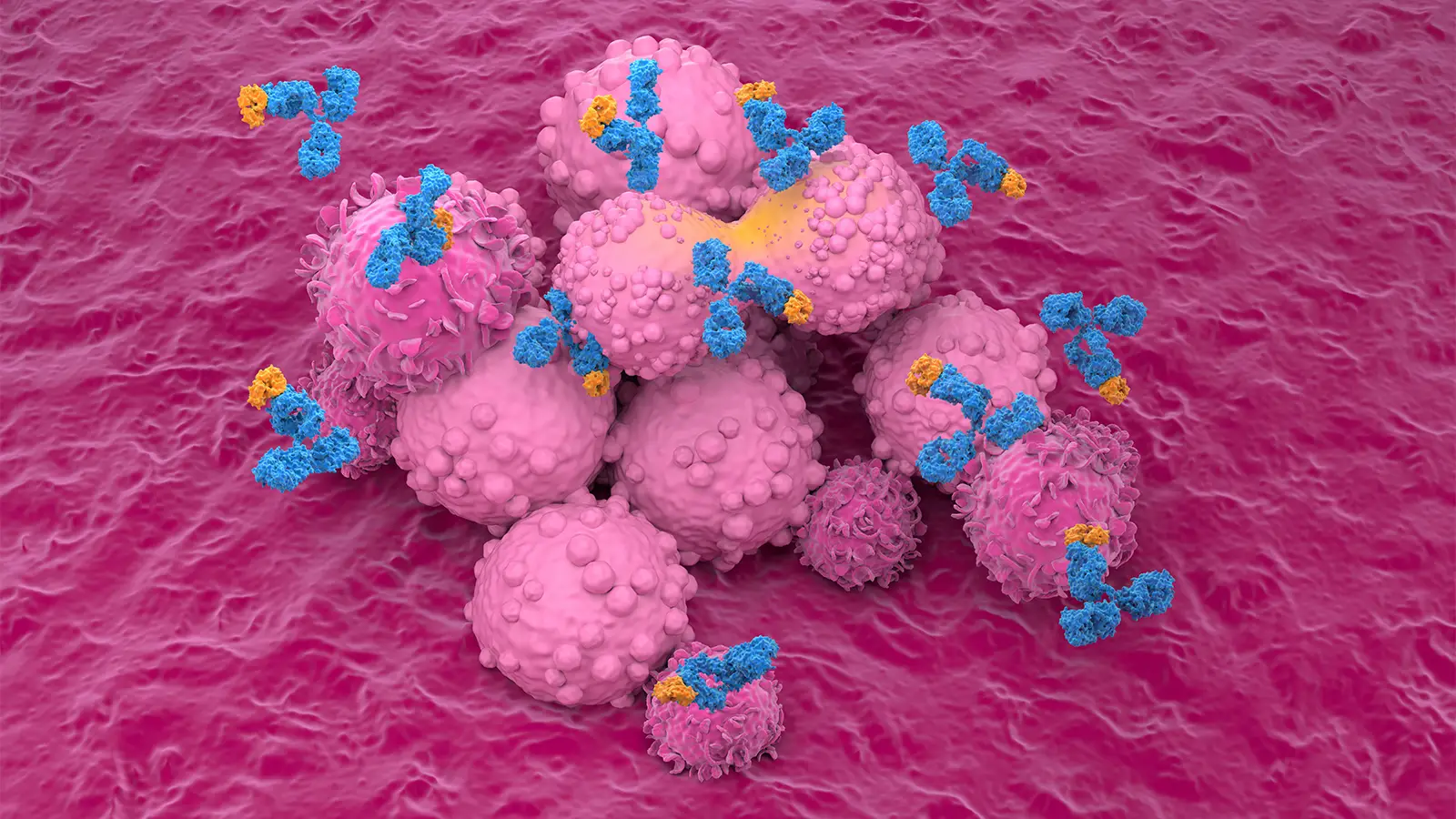
Antibody-drug conjugates (ADCs) are becoming an increasingly relevant first-line treatment option for metastatic triple-negative breast cancer (TNBC).
"ADCs are a fairly old class of drug that has really transformed the treatment of many different cancer types in the last 5 years or so," said Sheheryar Kabraji, BMBCh, chief of Breast Medicine at Roswell Park Comprehensive Cancer Center in Buffalo, New York.
ADCs aren't necessarily geared toward new targets but use "new payloads and chemistry that allow them to be more potent and effective with less toxicity than the previous generation of drugs," Kabraji added.
There are currently two ADCs approved by the FDA as options in unresectable or metastatic TNBC: sacituzumab govitecan (SG; Trodelvy) and datopotamab deruxtecan (Dato-DXd; Datroway).
SG was initially approved in 2020 in the third-line setting. In the ASCENT trial of TNBC patients who had received two or more prior lines of therapy, SG showed significant improvements in progression-free survival (PFS) and overall survival (OS) compared with physician's choice of chemotherapy.