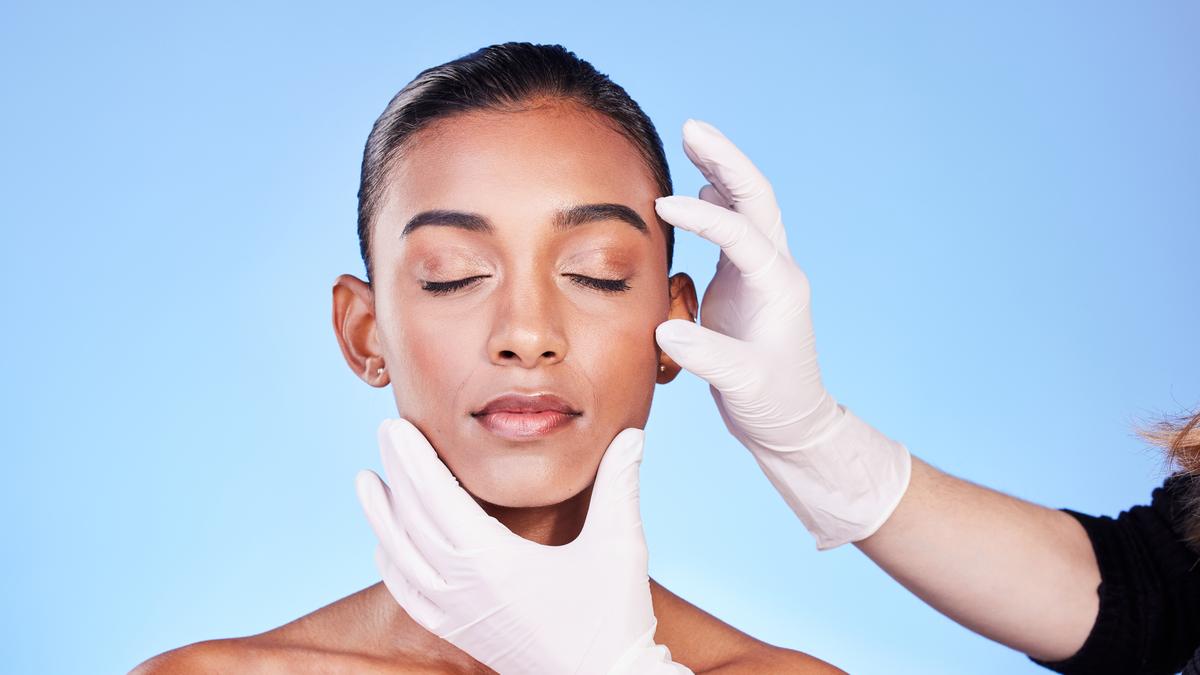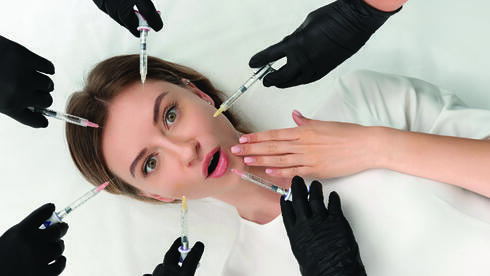
One in 5 Israeli women who have undergone cosmetic treatments may be at risk of addiction to injections and surgery, according to a new Hebrew University and Israel Center on Addiction study; so when does it become too much?Noga Shavit-Raz|A few years ago, American actor Courteney Cox acknowledged that for a long time, each filler injection seemed small and insignificant on its own. Only when she looked at old photos did she realize how far she had moved away from her natural appearance.That feeling — that there is always one more small thing to fix and that one more treatment will not hurt — is at the center of a new Israeli study that examined whether, for some women, cosmetic treatments can turn into a pattern with addictive characteristics. The finding, which surprised even the researchers themselves, is especially striking: One in five women in Israel who have undergone cosmetic treatments is at moderate to high risk for an addictive pattern of use.GalleryCosmetic treatments (Photo: Shutterstock)It is difficult to overstate the importance of the study given the sharp rise in the number of cosmetic procedures in recent years. According to the latest published data, some 38 million cosmetic procedures were performed worldwide in 2024, compared with about 34.9 million a year earlier and a cumulative increase of about 40% since 2020. That sharp growth has also led to a shift in the research focus. While past studies tended to focus more on why people seek cosmetic treatments, emphasizing negative body image, social anxiety, perfectionism and body dysmorphic disorder, known as BDD, recent studies have also begun examining whether some patients develop a pattern resembling behavioral addiction: compulsive preoccupation with appearance, short-term satisfaction after the procedure, a growing desire for additional treatments and difficulty stopping despite the costs, risks or repeated disappointments.The study, conducted by the Hebrew University and the Israel Center for Addiction and Mental Health and recently published in the scientific journal “Journal of Health Psychology,” is unique in its scope and in its attempt to examine the prevalence of the phenomenon in a broad population and identify prominent psychological and social risk factors.“The rise in cosmetic treatments, especially repeated treatments, is visible both in personal circles and in the media and advertising, and we thought it would be very interesting to examine the issue,” says Dr. Vera Skvirsky, a senior researcher, research coordinator and lab director at ICAMH — the Israel Center for Addiction and Mental Health — who collaborated with Dr. Uri Lifshin of the Hebrew University of Jerusalem and their colleagues. “We wanted to examine the psychological risk factors — personal and social — that could be linked to the phenomenon. We did this through a broad online survey of 1,614 women of various ages, from 25 to 71, 710 of whom had undergone at least one cosmetic procedure. The others answered questions on a range of topics, such as body image, cosmetic attitudes and more. The risk of addiction was measured using a questionnaire based on the criteria for addiction defined in the psychiatric diagnostic manual, the DSM.”What surprised you most in the study?
One more injection: Are you at risk of addiction to cosmetic treatments?
One in 5 Israeli women who have undergone cosmetic treatments may be at risk of addiction to injections and surgery, according to a new Hebrew University and Israel Center on Addiction study; so when does it become too much?
2,017 words~9 min read