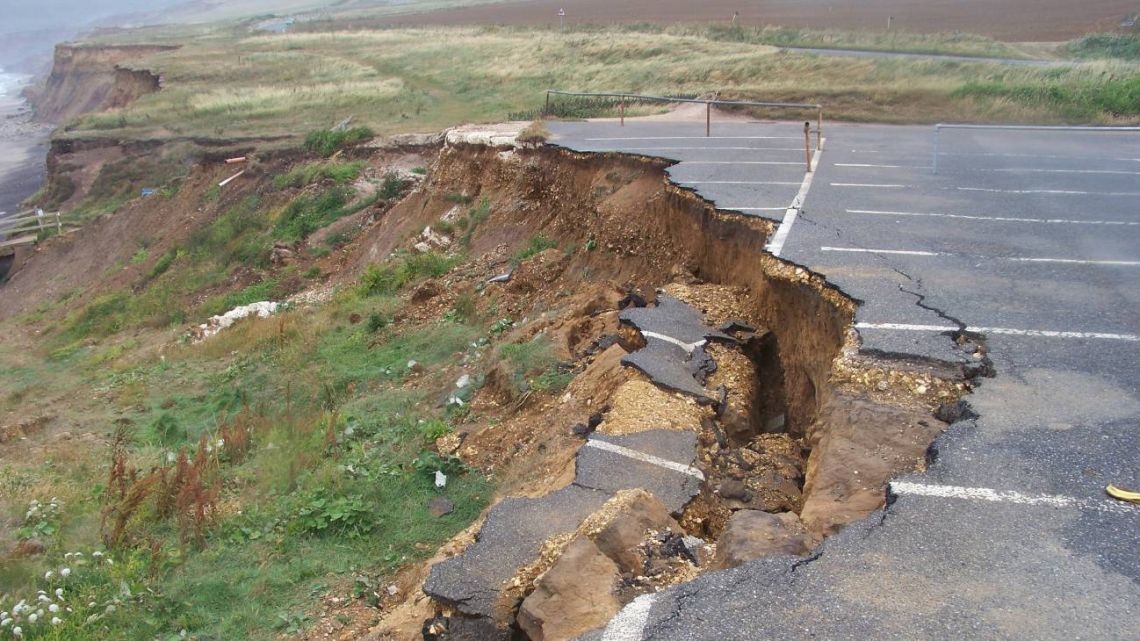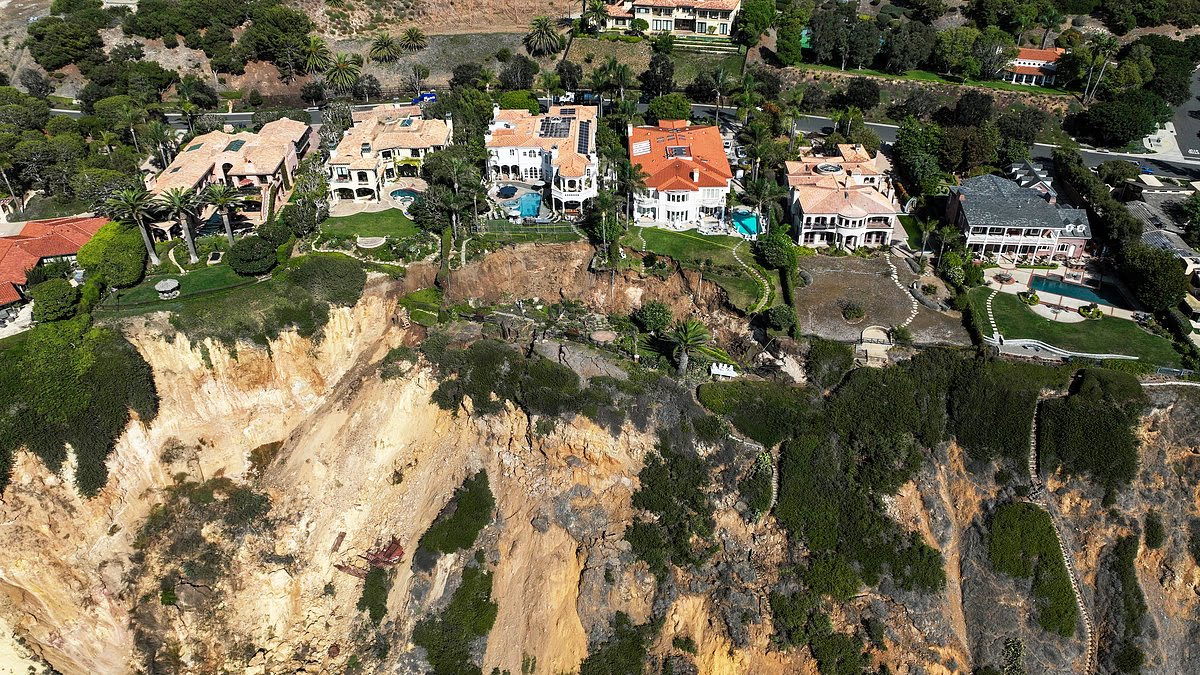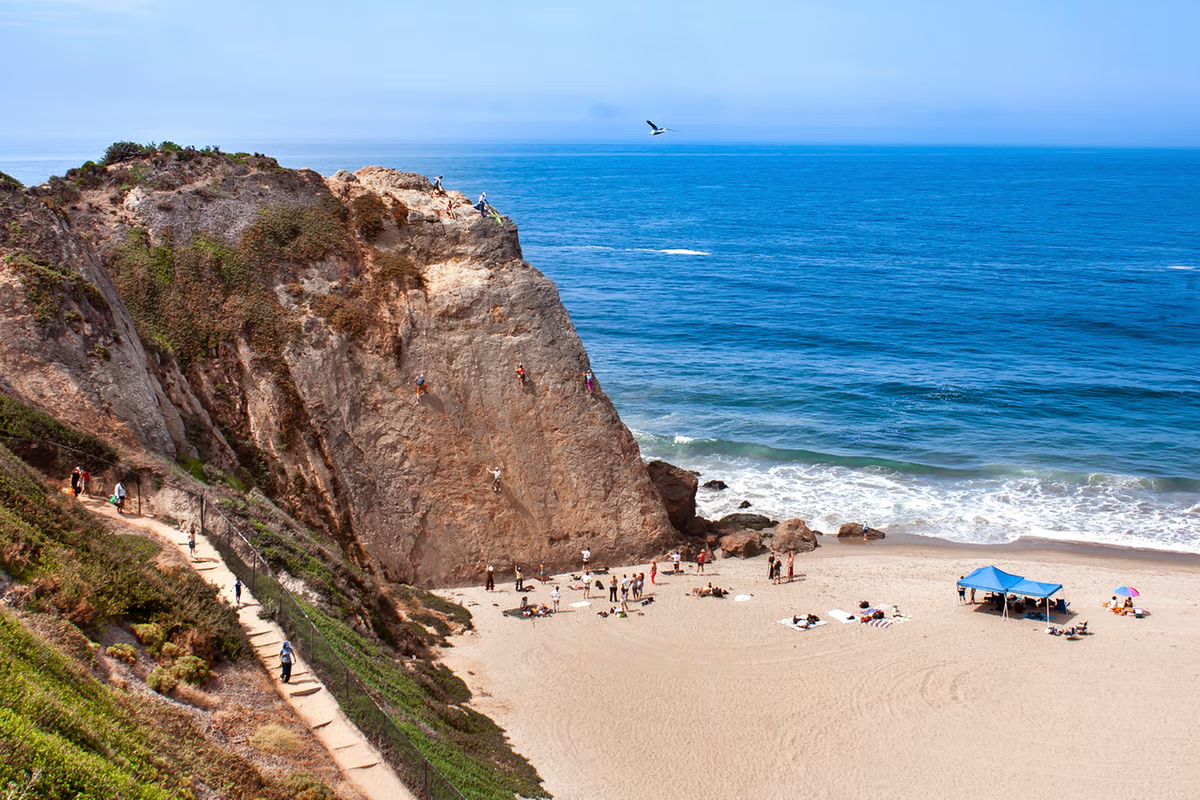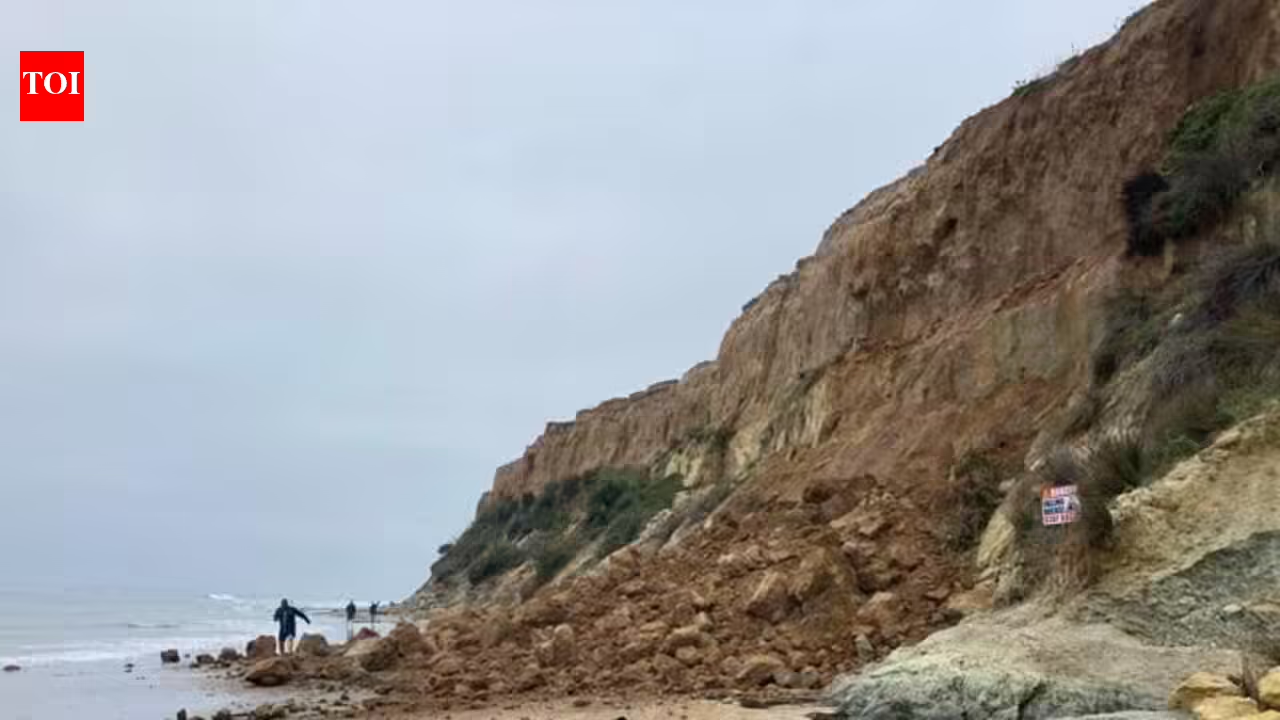
California's iconic cliffs face erosion, prompting new safety measures. Advanced sensors now detect ground deformation indicating potential collapses. Scientists successfully warned authorities about a Del Mar landslide days prior. Image credit: Adam Young/ Coastal Processes Group at Scripps Institution of OceanographyThe picturesque coastlines of California have long been iconic worldwide. For decades now, the spectacular golden cliffs with the pounding waves of the Pacific Ocean in the background have acted as the perfect setting for beach road trips, surfing in the early mornings, and relaxing beach strolls. The cliffs are a defining part of California's coastal landscape and attract many visitors. However, erosion and landslides have prompted coastal towns to rethink their relationship with the coast.According to data from the Scripps Institution of Oceanography, roughly seventy per cent of the California coast is made up of eroding coastal cliffs. As sea levels rise and weather patterns become more variable, these cliffs face pressure from waves below and rainwater above. For decades, beachgoers and city planners alike viewed cliff collapses as sudden, unpredictable catastrophes. However, new technology is showing that these earth movements can be detected before a collapse. To grasp the change in this landscape, you have to focus on a study by the Scripps Institution of Oceanography, called the California Coastal Landslide Early Warning Research report. Led by scientists specialising in coastal geomorphology and geophysics, the study involved placing sensors in the ground near some of the most vulnerable beaches. The report found that coastal bluffs send out signals well before a collapse.Heartbeat of the bluffsThe key to finding those elusive indicators lies in using highly sensitive geophysical instruments that were initially developed to measure the slight movements of earthquake fault zones. To detect when a cliff begins to collapse, scientists used high-accuracy tiltmeters placed underground. Those highly sophisticated instruments can measure ground tilting to an accuracy of 10 micrometres over a one-metre baseline, which is roughly equivalent to one-eighth the width of a human hair. In addition to these tiltmeters, the research team installed specialised fibre optic cables known as extensometers perpendicular to the cliff edge. These fibre optic sensors extend or compress if any ground deformation occurs, allowing researchers to detect movements as tiny as a nanometer, or one-billionth of a meter.According to the California Coastal Landslide Early Warning Research report, this sophisticated array of sensors allowed scientists to gather real-time data across several active test sites, including the railway corridor in Del Mar and San Elijo State Beach. The true value of this technology became undeniable on 21 April 2024, when an estimated two hundred tons of material suddenly broke away from a cliffside in Del Mar. Days before the landslide, the tiltmeter network picked up a steady, accelerating pattern of ground deformation during intermittent rainfall soaking into the coastal soil. Because the instruments sent data in real time indicating that a collapse was highly likely, Scripps researchers were able to notify coastal managers two days before the failure occurred.The finer nuances of how these cliffs move due to the pressures on them are further revealed by a study conducted in the Journal of Geophysical Research: Earth Surface. Written by researchers themselves, the paper reveals how five separate cliff failures were observed during the long period of monitoring. In all cases, the in-ground sensors detected a tipping point in time, suggesting that cliffs accelerate before collapse.This technology allows for early warnings to coastal communities and beachgoers. Future applications may include smartphone apps for enhanced public safety planning. Image Credit: Jesse Kerr/ Coastal Processes Group at Scripps Institution of OceanographyDesigning a safer coastal lifestyleAs prediction techniques improve, researchers are considering everyday applications. Since the research suggests some collapses show warning signs, local authorities may be able to develop warning systems for citizens. Like a weather app, a future warning system could alert beachgoers when a section of cliff is under increased stress.The research team also developed an experimental smartphone app to forecast beach width several days in advance. Because a wider sandy beach can increase distance from unstable cliffs, tracking wave heights and tide cycles may help inform safety planning. By integrating real-time ground monitoring with public safety applications, coastal cities may reduce some of the risks associated with living along the coast.
California's collapsing cliffs do warn before they give way; they begin moving hours before disaster strikes, scientists found
The picturesque coastlines of California have long been iconic worldwide. For decades now, the spectacular golden cliffs with the pounding waves of the Pacific Ocean in the background have acted as the perfect setting for beach road trips, surfing in the early mornings, and relaxing beach strolls.
706 words~3 min read