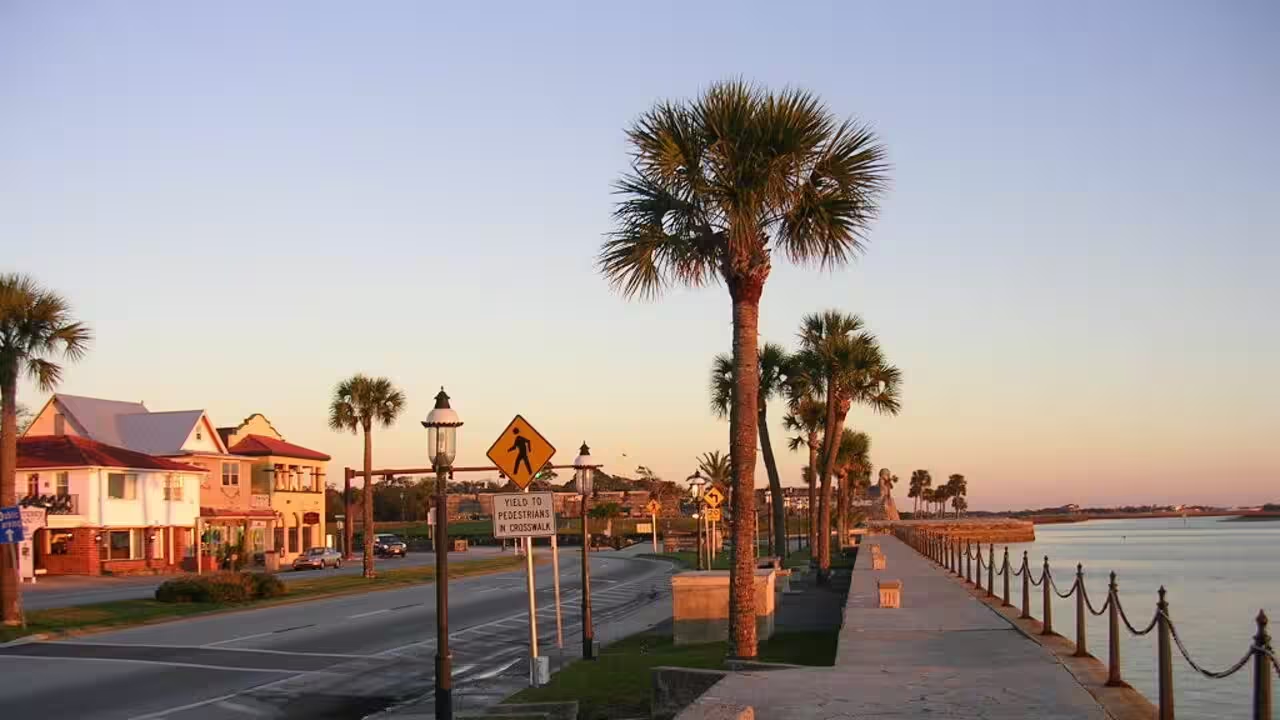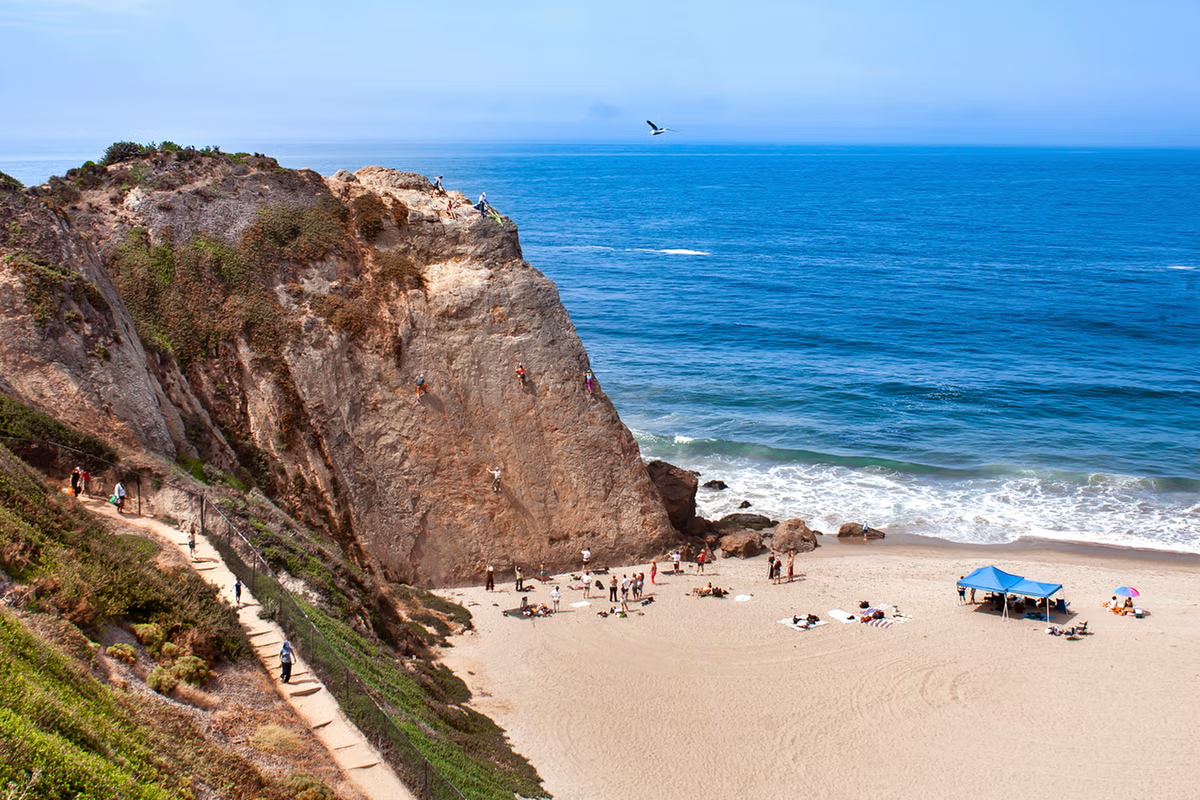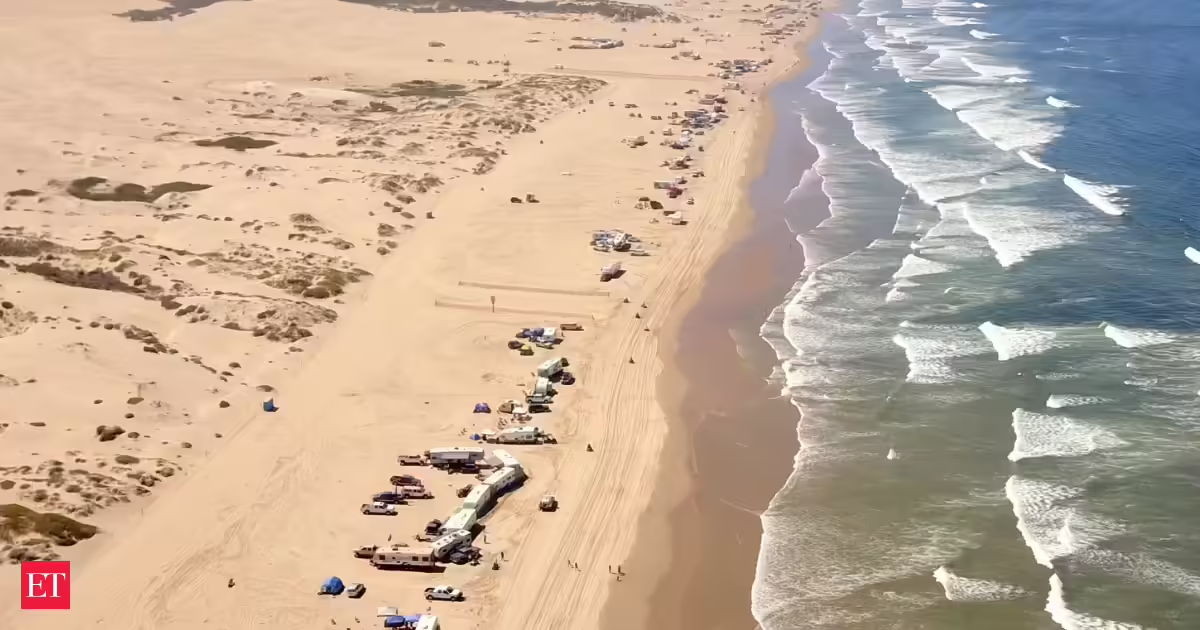
For generations, California’s beaches have defined an entire way of life: the surf culture, the sunsets, the sense that the coast goes on forever. But there has been a natural system working quietly behind those beaches, and it has been disappearing since the Gold Rush, and most people have never heard of it.According to a study, ‘Significant Coastal Dune Loss Challenges California's Climate Resilience and Biodiversity Goals,’ published in the journal Earth's Future by researchers at UC Santa Barbara, more than half of California's coastal sand dune systems are gone. The study found that 60% of the dunes present around 1850 have disappeared due to urban development, land-use changes and erosion. It is the first such survey ever conducted for the California coast, and one of the largest and most detailed dune inventories ever produced anywhere in the world.The remaining dunes, less than 300 square kilometers (116 square miles) of an original 739 square kilometers (285 square miles), are more than just scenic backdrops. They trap and deliver sand to nearby beaches, protect wildlife, and act as a natural barrier to the very coastal dangers that keep California’s planners up at night.Three snapshots, one story: Humboldt Bay's dunes mapped in 1854, photographed in 1948, nearly gone by 2016. Image Credits: Earth's Future (2026). DOI: 10.1029/2025ef007790Decades quietly building over natureAccording to the Earth's Future study, migration and settlement transformed California's coastline, and its dune systems began eroding as early as the 1848 Gold Rush. For the next 165 years, the vast majority of dune loss was due to human activities, including road construction, agriculture, urban infrastructure, and the introduction of invasive plant species. Only about 18 square kilometers (7 square miles) were lost through natural processes such as erosion at estuaries and river mouths.Losses were greatest in the more developed parts of the state. More than 95 percent of dunes in the San Francisco and Los Angeles areas, some 108 square kilometers (42 square miles), were removed to create roads, housing, commercial buildings, and city infrastructure. "The thing that surprised me most was the scale of loss in San Francisco and Los Angeles," said co-author Kyle Emery of UCSB's Marine Science Institute.Central California was only a little better. The region has lost about 60 percent of its coastal dunes, some 331 square kilometers (128 square miles), and about half of the remaining dunes are now cut off from coastal processes by roads and other infrastructure.Where dunes used to be. Image Credits: Wikimedia CommonsWhy losing dunes is more dangerous than it looksSand dunes do more than just hold the scenery together. “There are major implications of this loss for the California coast, including reduced habitats for plants, insects and other invertebrates, birds and small mammals,” said lead author Tim Baxter, a postdoctoral researcher and physical geographer at UCSB. “Importantly, we also lose coastal protections against storms and sea level rise.”That last point is quite serious. According to USGS research modeling nearly 1,760 kilometers of California's coastline, between 24% and 75% of the state’s beaches could be totally eroded by the end of the century under sea-level rise scenarios the State of California considers plausible. Coastal communities face direct exposure with no dunes to absorb that pressure.Forecasts of the economic effects are already being made. According to a study, ‘Shoreline retreat and beach nourishment are projected to increase in Southern California’ published in Communications Earth & Environment, coastal erosion is speeding up in Southern California thanks to rising sea levels and urbanization, and the cost of living along the coast in the region could increase fivefold by 2050 as communities spend more and more money on beach nourishment projects.Dune restoration is growing, but it is not a fix-allThe research carries a hint of cautious optimism. In parts of Southern California, the researchers observed some dune growth, including at locations where active restoration efforts are already in progress, the Earth’s Future study noted. Unlike concrete sea walls, dune systems are self-healing and can rebuild themselves after storms, making them an attractive long-term investment in climate adaptation.Cities ate the shoreline. Image Credits: PexelsBut restoration isn’t a one-size-fits-all answer. The same study found that dune restoration will be a viable option for a given stretch of coastline only if it is cost-effective, has enough space, is in the right location, and is a priority for the local government.The UCSB team’s methodology, combining historical archive analysis, machine learning tools, high-resolution aerial photographs, LiDAR data and site visits, is being offered as a model for other coastlines around the world. The framework could help identify and prioritize dune restoration sites around the world, helping offset past losses and preparing coastlines for the pressures of climate change.In California, the sheer magnitude of what has already been lost makes the urgency of that work hard to overstate. Two hundred years of growth built one of the world’s most enviable coastlines and quietly dismantled the natural system that had been protecting it all along.
California has lost more than half of its coastal sand dunes, and the first-ever map shows how 165 years of development and erosion have shrunk a natural shield against storms and rising seas
A groundbreaking study reveals that California has lost over half of its coastal sand dunes due to urbanization and erosion, significantly impacting its climate resilience and natural coastal protection.
823 words~4 min read