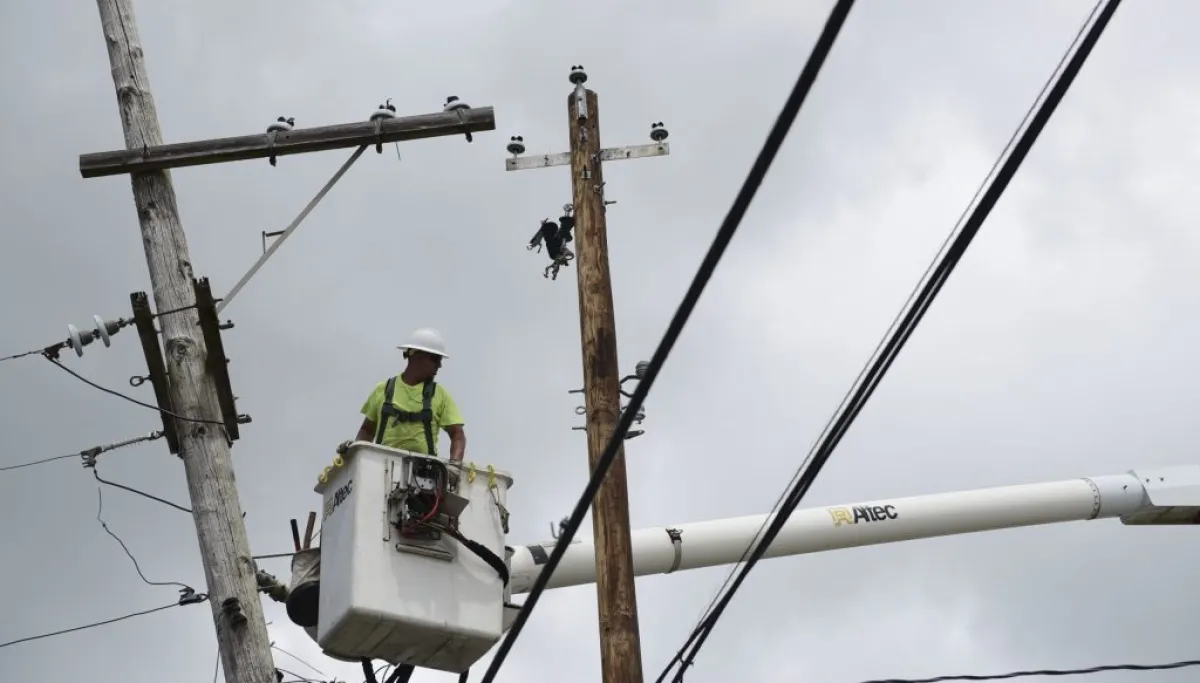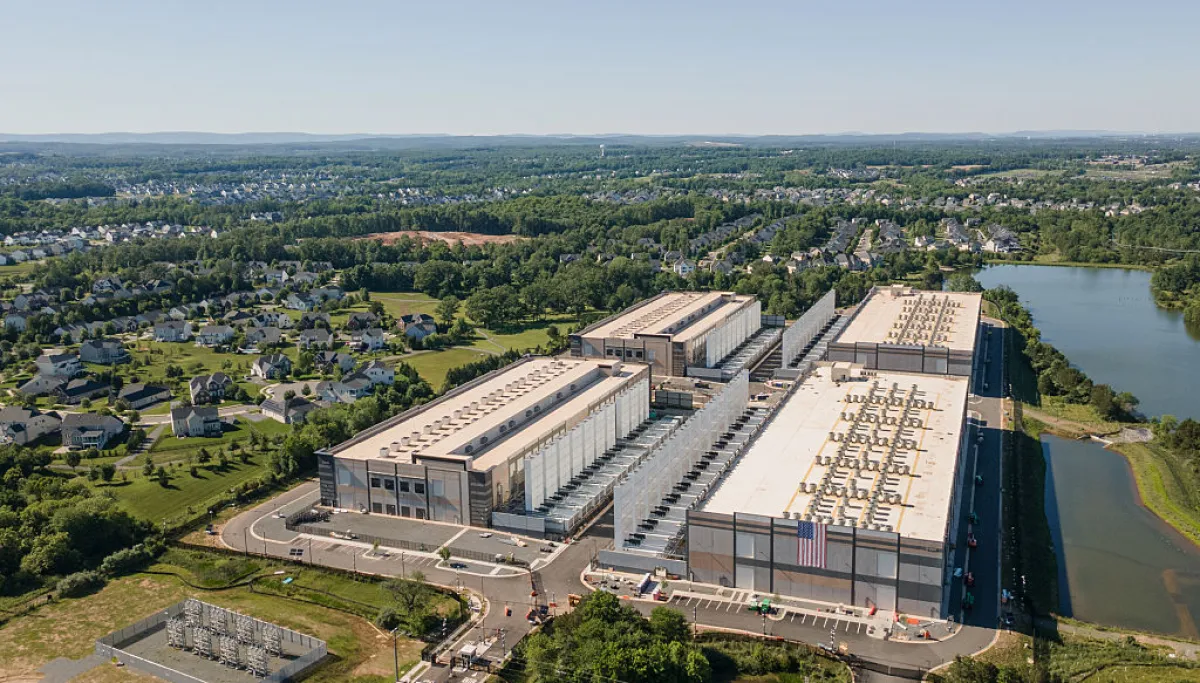
Charley Daitch is CEO of Rowan Digital Infrastructure, a rapidly growing developer of sustainable hyperscale data center campuses in the US.gettyOn Independence Day, we reflect on the ideas that shaped America’s first 250 years: freedom, opportunity and the belief that each generation can build something better than the one before it. We tend to tell that story through people—founders, inventors and political leaders. But just as often, progress has been defined by something less visible: the infrastructure that made those ideas real.The railroads didn't just move goods—they unified a continent. The electric grid didn't just power cities—it unlocked entirely new industries. The internet didn't just connect computers—it reshaped how knowledge, commerce and communication flow through society.Each era had its builders. Each era had its skeptics as well.Today, a new infrastructure layer is reshaping how we live, work, share information and create. It places today’s technology leaders in a lineage that stretches back to the builders of railroads, the architects of the electric grid and the pioneers of the early internet era.It’s the modern data center.Building The Digital FoundationThat framing may feel simple for something so complex. Data centers rarely enter public conversation until there's tension around them, often tied to energy demand, land use, water consumption or the pace at which digital growth is outpacing local infrastructure planning.Those concerns are real. They deserve attention, not dismissal.The industry has begun to recognize that technical solutions alone aren't enough. Concerns about power availability, water use, infrastructure readiness and community impact increasingly require long-term planning, greater transparency and closer coordination among developers, utilities, policymakers and local stakeholders. In many cases, the conversation has shifted from whether digital infrastructure should be built to how it can be developed responsibly and sustainably.But it's also true that most transformative infrastructure has followed a familiar pattern: rapid buildout, public scrutiny and then gradual recognition that what was being built wasn't optional but foundational.The Physical Side Of The Digital WorldThe tech industry runs on infrastructure most people never see. Every search, transaction, streamed video, AI model and cloud-based workflow depends on physical systems designed to store, process and move data at massive scale. Radiologists screening for cancer now rely on a vast network of fiber and silicon that are being built across the U.S. Next-generation advanced manufacturing facilities now count on digital infrastructure as part of their supply chain in the same way they do the roads, ports and railroads that deliver raw materials.We often describe the digital world as virtual, but there's nothing abstract about the infrastructure behind it. It's steel, concrete, fiber, chips, cooling systems and power delivery, designed and operated under real-world constraints. And like every major infrastructure buildout before it, it's colliding with concerns about scale and consequence.Communities are asking fair questions: What do we gain, and what do we give up? These questions aren't a distraction from progress. The dialogue is part of how progress gets built responsibly.The Pattern Of ProgressRailroads reshaped land use and local economies. Power plants changed environmental expectations. Highways redrew the geography of entire regions. None of these systems arrived without friction. All of them required a shared answer to the same question: How do we build what we need while raising the standard for how we build it? Data centers now sit in that same category of national infrastructure.Although the debate today often focuses on immediate impacts such as energy usage, permitting and siting decisions, the more important story is what this infrastructure makes possible over time. The last 25 years of digital progress have already changed nearly every industry. But we're still early in the arc of what compute-intensive technologies will enable. Advances in medicine, materials science, climate modeling, education and artificial intelligence will increasingly depend on access to reliable, scalable infrastructure.If the internet era taught us anything, it's that we consistently underestimate the downstream effects of connectivity. The same will be true of computation at scale.That's why this isn't simply about how much infrastructure we build, but how thoughtfully we build it and how seriously we take both innovation and impact at the same time.History is useful here, not as analogy for its own sake but as a reminder that infrastructure is never static. It evolves under pressure. It improves under scrutiny. It becomes more efficient because it's asked to do more with less over time.Looking To The Next 250 YearsAs we celebrate Independence Day and America’s 250th anniversary, it's worth stepping back from the daily news cycles and recognizing the longer arc we're part of: creating a new foundation of infrastructure that will benefit the generations that come after us.The builders of past eras weren't only responding to demand. They were shaping what demand would become.Today’s infrastructure leaders are doing the same. Whether designing energy systems, deploying new compute capacity or rethinking how digital services scale, they're participating in a buildout that will define the next century of economic and technological progress.The data centers that are being built today will be judged, as all infrastructure eventually is, by what they enable for future generations.Forbes Technology Council is an invitation-only community for world-class CIOs, CTOs and technology executives. Do I qualify?
Why Tech Leaders Should Think Like Infrastructure Builders
The builders of past eras weren't only responding to demand. They were shaping what demand would become.
855 words~4 min read