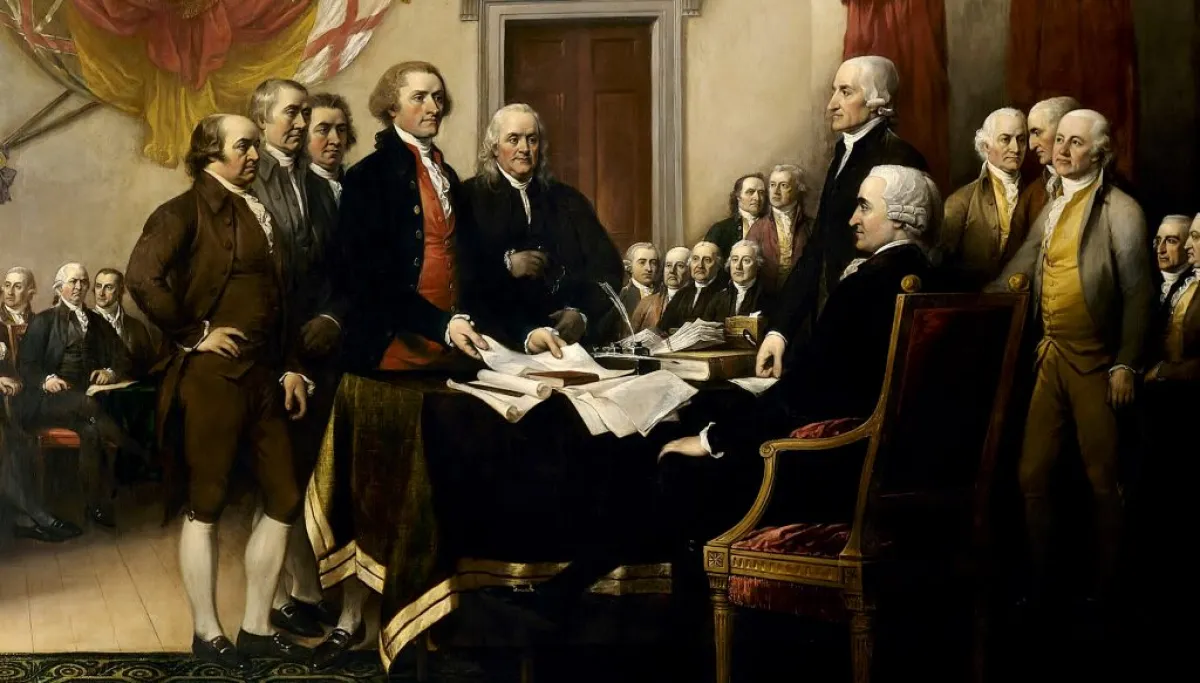
Two hundred and fifty years ago, a group of founders gathered in Philadelphia with quill pens, ink, and parchment to draft what would become one of the most durable governance frameworks in modern history: the U.S. Constitution. The framers couldn’t have foreseen the technological revolutions that would follow, from global electrification to the internet and artificial intelligence.
Yet they managed to create a system resilient enough to endure revolutions, technological upheaval, and centuries of reinvention.
It may be the greatest startup story ever told.
What made it so extraordinary was its ambition and the architecture behind it. Many of the founders recognized something that remains deeply relevant today: durable systems require both stability and the capacity for adaptation. The British system concentrated ultimate authority in Parliament and the Crown. The American experiment blazed a new path, and with great risk. It sought to distribute authority across competing institutions, creating a durable, adaptable framework that could withstand the many tests of its time.
At the edge of an uncertain frontier, the founders organized people, knowledge, and governance in a way that could survive the unknown.