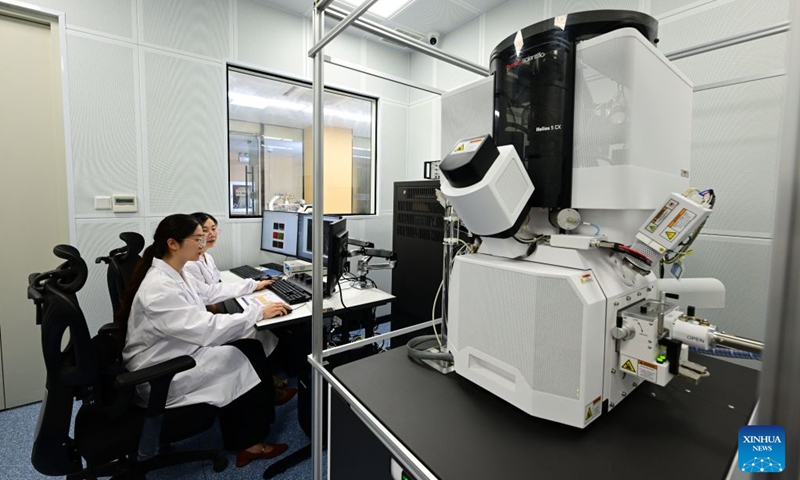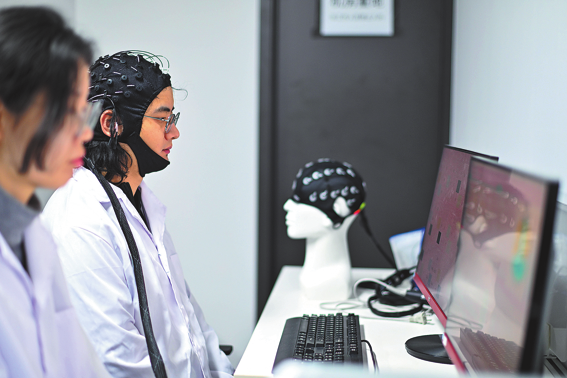
Technicians run tests on cutting-edge brain-computer interface technologies at an intelligent computing firm in Tianjin on Feb 27. ZHAO ZISHUO/XINHUA
TIANJIN — With electrodes taped to her forearm and a sensor-studded cap on her head, a stroke patient watched a screen where a virtual hand slowly closed. She fixed her gaze on the image, let her attention narrow, and held one thought: make a fist.
The electrodes fired, and her fingers curled inward. She looked at her hand and smiled, then lifted her head, waiting for the next signal.
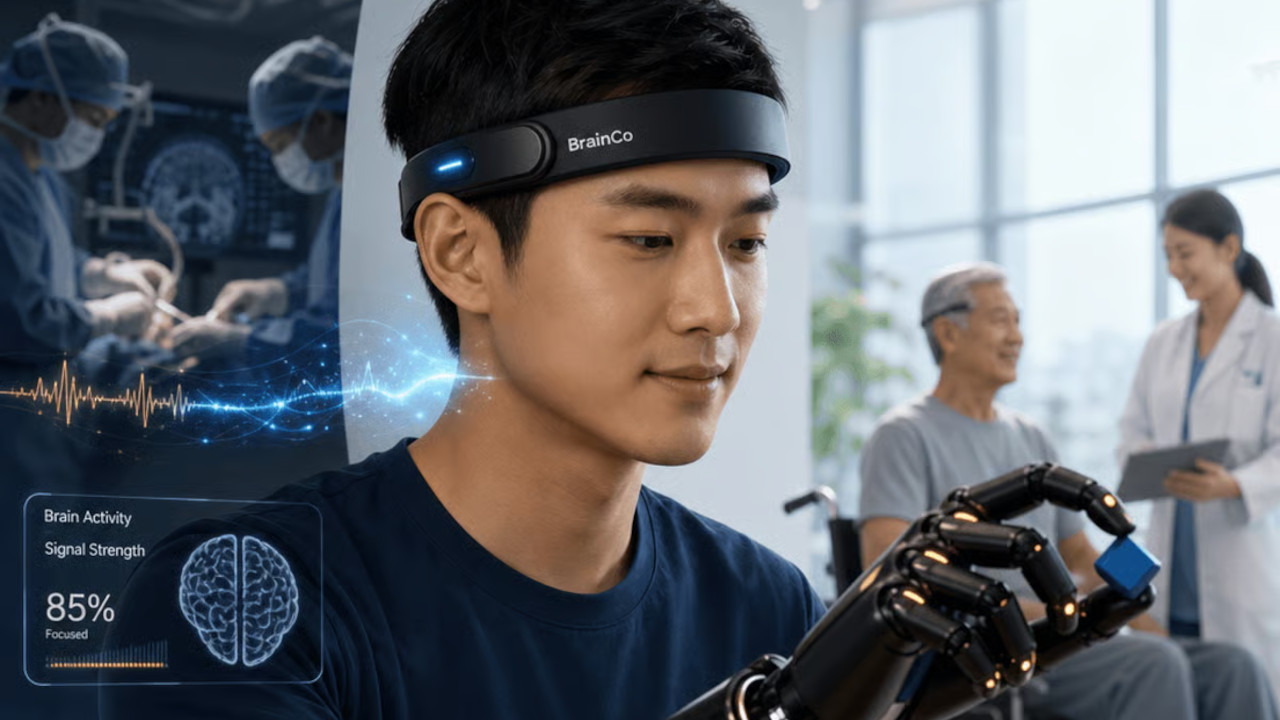
The patient was receiving innovative therapy at a hospital in Tianjin, supported by brain-computer interface technology. The therapy draws on "motor imagery", in which the brain continues to produce movement-related signals even after the body has lost the ability to respond.
Using non-invasive electroencephalogram sensors that capture neural signals from the scalp, the system decodes such signals through algorithms and converts them into commands that activate external stimulators. This creates a feedback loop that gradually rebuilds the brain-body connection.