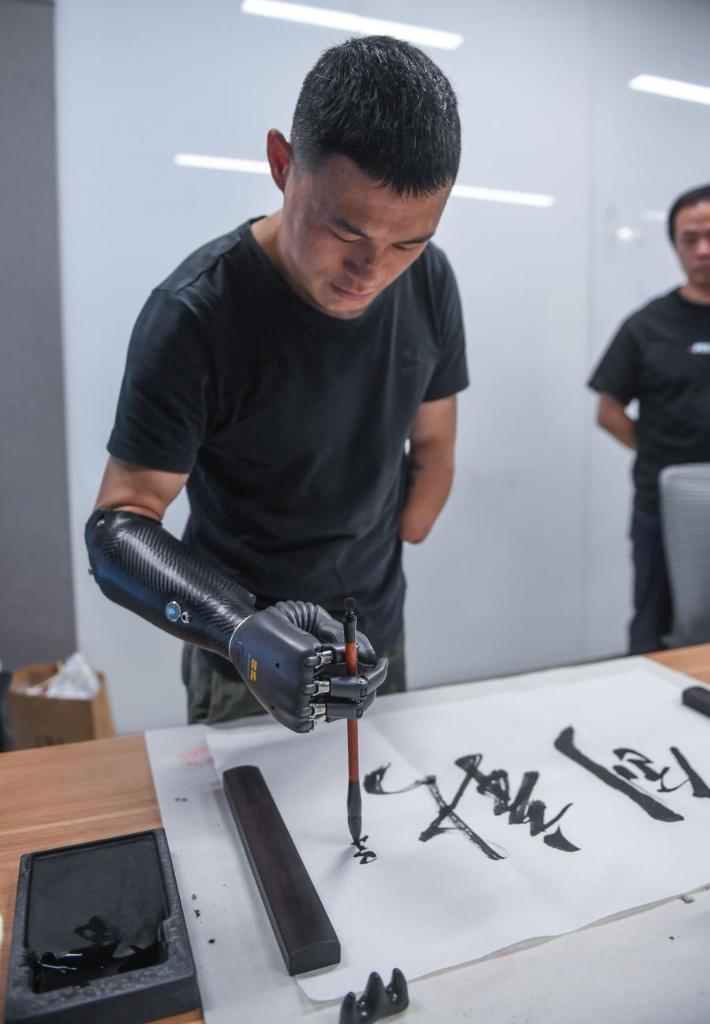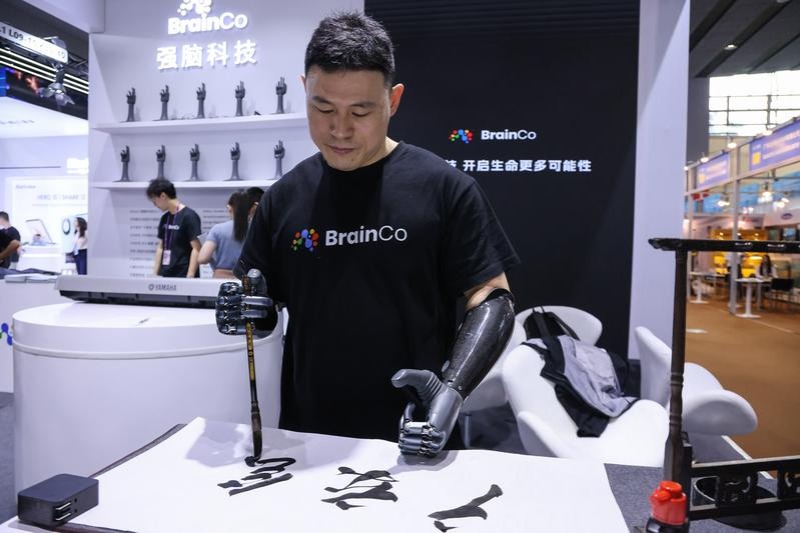
At the Brain-Computer Science Innovation Demonstration Center in the Yuhang district of Hangzhou, in East China's Zhejiang province, an employee of neurotechnology company BrainCo, who lost his arms, has rekindled his passion for calligraphy, using an intelligent bionic hand to hold a brush and write with ink.
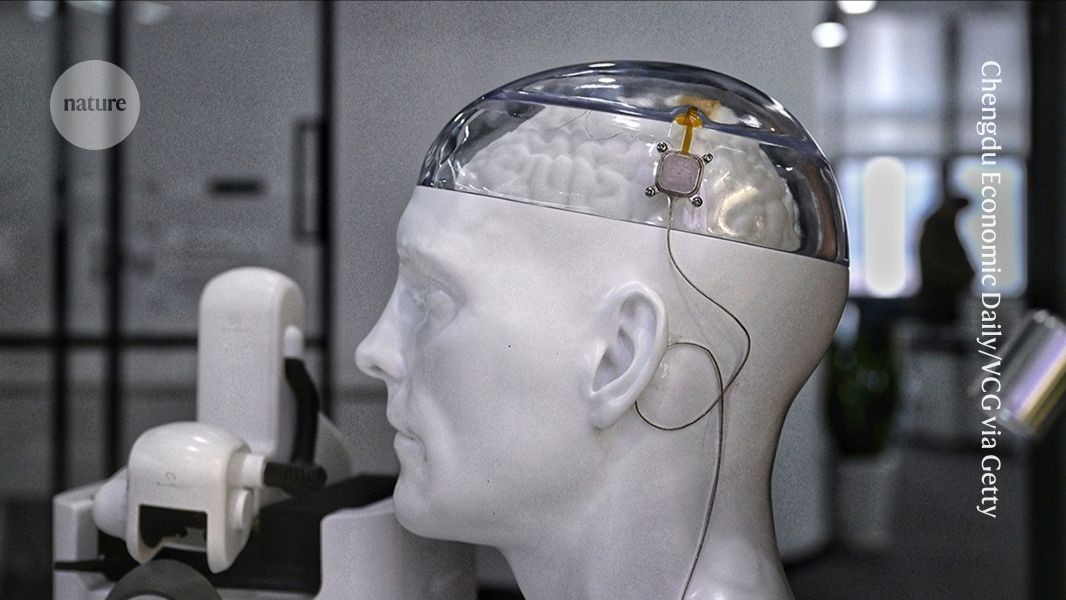
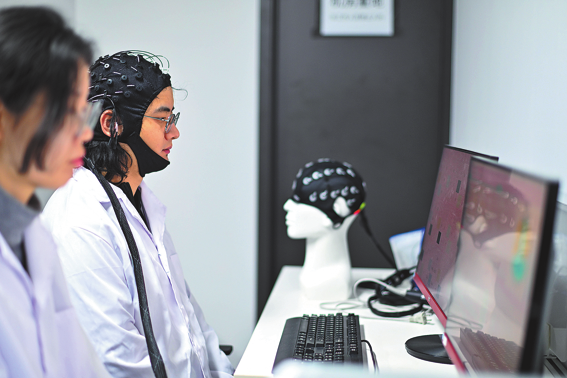
Behind the scenes is BrainCo's non-invasive brain-computer interface technology. Priced at only one-fifth to one-seventh of comparable foreign products, the bionic hands reflect how Chinese private companies are translating cutting-edge technologies into practical use and broader markets.
"BrainCo's dexterous hands have already been adopted by a number of humanoid robot companies, becoming a core component of embodied AI. Their applications have expanded from medical rehabilitation to industrial deployment," said Han Bicheng, founder and CEO of BrainCo, adding that their products have reached markets in more than 35 countries and regions.
The company's growth comes as China is giving greater policy support to industries of the future. The 15th Five-Year Plan (2026-30) explicitly lists brain-computer interfaces among six future industries, positioning the sector as a new engine of economic growth.