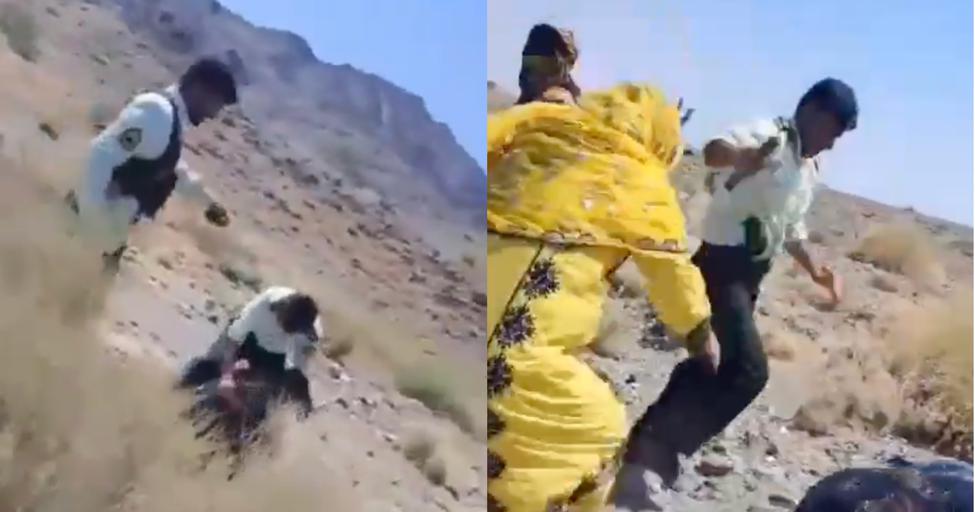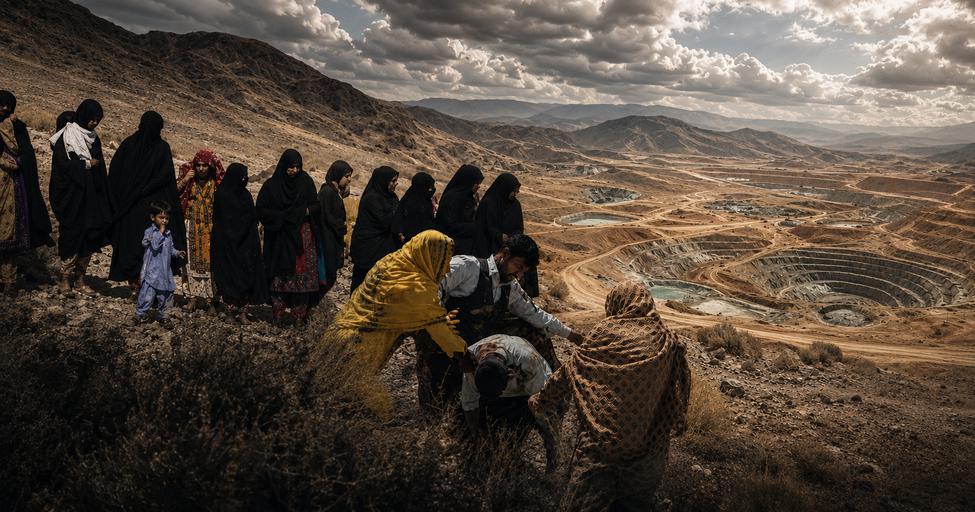
A protest by local women against the drying up of natural springs in the villages of Taftan, Sistan, and Baluchestan, allegedly caused by mining operations at the Anjirok gold mine, was violently suppressed by law enforcement officers in late June. This was not the first time opposition had flared up; protests against the Taftan gold mine had previously forced temporary suspensions of operations.
In a recent escalation on July 4, Karimbakhsh Kordi Tamandani, a teacher and environmental activist campaigning against mining in the area, was summoned to court following a legal complaint filed by Ali Kordi, the parliamentary representative for Khash. Tamandani has no prior judicial record, and the only legal scrutiny he has faced stems directly from his peaceful protests against extraction at Taftan’s Anjirok gold mine.
Residents of villages and settlements near the Anjirok excavation site told IranWire that, despite media attention being given to other environmental crises across Iran, domestic state media outlets have completely ignored the drying up of the natural springs that sustain Taftan’s agricultural orchards.
The inhabitants of the Taftan region are predominantly pastoralists, orchardists, and farmers who cultivate pomegranates, apricots, cherries, and apples. However, since 2022, the depletion of the springs has completely wiped out the region’s apricot harvest.